That first little squeak of a plastic skewer sliding through a cube of cheddar — the kind that makes you brace for a toddler meltdown before the food even hits the table — still takes me straight to my sister’s kitchen last spring. Her three-year-old was going through what she called “the beige food phase,” and honestly, I’d watched her serve chicken nuggets five nights in a row. I get it. You do what works. But I showed up with a bag of grapes, some cheese blocks, and a handful of those little wooden skewers I’d grabbed from the party aisle. I didn’t say a word. I just started threading fruit onto sticks in a pattern — red, orange, yellow, green, blue, purple — and before I’d finished the second kabob, that kid had abandoned her toy truck and was standing at my elbow, watching like I was performing magic.
That’s the thing about these easy rainbow fruit and cheese kabobs for kids. They bypass the negotiation entirely. There’s something about food on a stick that flips a switch in a child’s brain — suddenly it’s not “eating vegetables,” it’s a project. A pattern. A tiny edible rainbow they helped build. My niece ended up eating cantaloupe that day, which she’d refused for six months straight, just because it was wedged between a strawberry and a piece of Colby Jack. I didn’t even mention that it was healthy. I didn’t have to.
These rainbow fruit and cheese kabobs aren’t fancy — they’re the opposite of fancy, actually. They’re the snack you throw together when you’re tired, when the kids are cranky, when you need something that feels fun without requiring a trip to a specialty grocery store. They’re the lunchbox surprise that makes other parents ask, “Wait, you made that?” and you get to shrug and say it took five minutes. And honestly? That feeling never gets old.
Why You’ll Love This Recipe
Let’s be real — getting kids to eat fruit and cheese together without a fight can feel like a small miracle. But these kabobs? They deliver every single time. I’ve tested them at birthday parties, playdates, and quiet Tuesday afternoons when everyone’s a little stir-crazy, and they’ve never failed to disappear. Here’s why they work:
- Quick & Easy: You can assemble a whole batch in under 10 minutes. No cooking, no heating, no complicated steps — just wash, cut, thread, and serve. Perfect for those afternoons when hangry kids are circling the kitchen.
- Simple Ingredients: Everything comes from a regular grocery store. No specialty items, no obscure produce. You probably already have cheese and fruit in your fridge right now.
- Perfect for Lunchboxes & Parties: These kabobs pack beautifully for school lunches, make a colorful addition to birthday parties, and work just as well for a quiet afternoon snack. I’ve brought them to potlucks and watched adults grab them too — they’re just that visually appealing.
- Crowd-Pleaser: I’ve served these to picky eaters, adventurous toddlers, and even teenagers who claim they don’t like fruit. The rainbow pattern and the “food on a stick” factor win over almost everyone. My nephew, who once declared cheese “disgusting,” ate three kabobs in one sitting.
- Unbelievably Customizable: This isn’t a rigid recipe — it’s a framework. Swap in whatever fruit is in season, use whatever cheese your kids tolerate, change the colors around. It’s forgiving, flexible, and impossible to mess up.
What makes these kabobs different from every other fruit-and-cheese platter? It’s the presentation, honestly. The rainbow order does something to a kid’s brain — it makes eating feel like a game. And when you let them help assemble their own, they’re way more likely to actually eat what they’ve made. I’ve seen a child who refused strawberries for a year pop one into her mouth just because it was part of “her” rainbow. That’s not magic — that’s just smart parenting, disguised as a snack.
This recipe is the kind that makes you close your eyes after the first bite — not because it’s gourmet, but because it worked. Because the kids are happy, the kitchen is clean, and you actually pulled off something that feels both healthy and fun. It’s comfort food for the parent, reimagined as a colorful stick of fruit and cheese.
What Ingredients You Will Need
This recipe uses simple, wholesome ingredients to deliver bold color and satisfying texture without any fuss. Most of these are pantry staples or fridge regulars, so you can probably make these kabobs right now without a grocery run.
Fruit Ingredients
- Strawberries – fresh, hulled and halved if large (adds bright red color and natural sweetness; I prefer local berries when they’re in season)
- Cantaloupe or Mandarin Oranges – cantaloupe cut into 1-inch cubes, or use canned mandarin oranges drained well (brings the orange section of the rainbow; cantaloupe holds up better on skewers)
- Pineapple – fresh, cut into 1-inch chunks (provides yellow color and tropical sweetness; canned chunks work in a pinch, just pat them dry)
- Green Grapes or Kiwi – green grapes are easiest, or peel and slice kiwi into rounds then quarter them (adds the green segment; grapes are less messy for little hands)
- Blueberries – fresh (brings the blue/purple section; look for firm, plump berries that aren’t squishy)
- Blackberries or Purple Grapes – blackberries add deep purple color; purple grapes work well too and are less likely to stain fingers
Cheese Ingredients
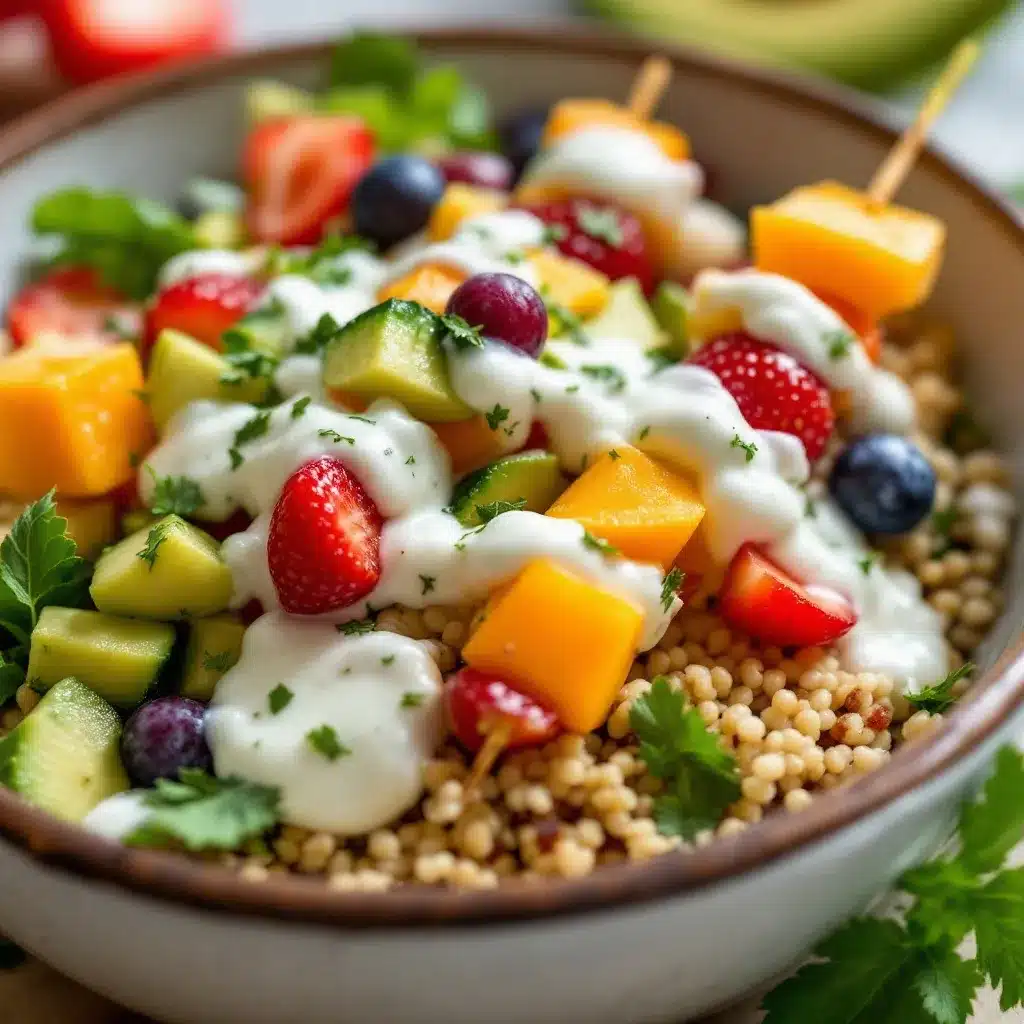
- Cheddar Cheese – block-style, cut into 1-inch cubes (mild or sharp both work; I recommend Cabot or Tillamook for consistent texture)
- Colby Jack or Mozzarella – cut into cubes (Colby Jack adds nice color variation; mozzarella is milder for sensitive palates)
- String Cheese – pulled apart into bite-sized pieces (fun for kids to help with, and it’s already portioned)
Optional Add-Ins
- Mini Marshmallows – for a sweet treat between fruit pieces (use sparingly if watching sugar)
- Pretzel Sticks – for a salty crunch element (thread onto skewers between fruit)
- Yogurt Drops – freeze small dollops of Greek yogurt for a creamy addition (my kids love these as “clouds” in their rainbow)
Substitution Guidance: If you need a dairy-free option, use vegan cheese cubes or skip the cheese entirely and add extra fruit. For lower sugar, focus on berries and limit sweeter fruits like pineapple. Seasonal swaps work beautifully — in summer, use fresh peaches instead of cantaloupe; in fall, try apple cubes tossed in lemon juice to prevent browning. I’ve also made these with only fruit when I ran out of cheese, and the kids didn’t complain one bit.
Sourcing Tip: Look for firm fruit that isn’t overripe — it holds up better on skewers and doesn’t turn mushy in lunchboxes. For cheese, buying blocks and cutting your own cubes is cheaper than pre-cut options, and you control the size.
Equipment Needed
You don’t need much for these kabobs, which is part of why I make them so often. Here’s what you’ll want on hand:
- Wooden Skewers or Plastic Picnic Sticks – 6 to 8 inches long work best. I prefer the short ones for little hands. If using wooden skewers, snip off the pointed tips with kitchen shears so nobody gets poked. You can find packs of 100 at any grocery store for a few dollars.
- Cutting Board – a large, stable board makes prep faster. I use a bamboo one that doesn’t dull my knives.
- Sharp Knife – a good chef’s knife or paring knife for cutting fruit and cheese into uniform cubes. Dull knives are more dangerous than sharp ones, honestly.
- Melon Baller (Optional) – if you want perfectly round fruit pieces, a melon baller creates uniform spheres that look extra polished on skewers. Not necessary, but fun.
- Small Bowls – for organizing your fruit and cheese by color before threading. This makes assembly faster and keeps things tidy.
- Paper Towels – pat fruit dry before threading to help the skewers grip better and prevent slippery pieces.
- Container with Lid – for storing assembled kabobs in the fridge. A rectangular glass dish works perfectly.
Budget-Friendly Tip: Don’t own skewers? Use clean chopsticks or even sturdy pretzel sticks as edible skewers. I’ve also seen parents use clean drinking straws cut in half — they work surprisingly well and are dishwasher safe for reuse.
Maintenance Note: Wooden skewers can splinter after a few uses if you try to wash and reuse them. I recommend using them once and composting them afterward. Plastic reusable skewers are worth the investment if you make these kabobs regularly — I bought a set of 12 on Amazon for under $10 and they’ve lasted two years.
Preparation Method
These rainbow fruit and cheese kabobs come together in about 10 minutes of active prep. I’ve broken it down into clear steps so you can work efficiently, especially if little helpers are hovering nearby.
- Wash and dry all fruit thoroughly. Rinse strawberries, grapes, blueberries, and blackberries under cool water. Pat everything dry with paper towels — wet fruit makes the skewers slippery and can lead to sad, sliding pieces. For strawberries, hull them by cutting off the green tops, then halve any large berries so they’re roughly the same size as your cheese cubes.
- Cut fruit into uniform pieces. Aim for 1-inch chunks for most fruit. Cube cantaloupe and pineapple into pieces that match your cheese cubes in size. If using kiwi, peel it first, slice into rounds, then quarter each round. Grapes can stay whole if they’re small, but halve larger ones for younger kids to prevent choking. This step takes about 3-4 minutes, and uniform sizes make the rainbow pattern look intentional and beautiful.
- Cut cheese into 1-inch cubes. If using block cheddar or Colby Jack, slice the block into 1-inch thick strips, then cut those strips into cubes. For string cheese, simply pull apart into bite-sized pieces. I like to keep cheese cubes slightly smaller than fruit pieces so the colors pop more. Place cheese in a separate bowl. This takes about 2 minutes.
- Arrange ingredients by color. Set out small bowls or arrange piles on your cutting board in rainbow order: red (strawberries), orange (cantaloupe), yellow (pineapple), green (grapes or kiwi), blue (blueberries), purple (blackberries). Place cheese cubes in a separate bowl — I like to alternate cheese with fruit on the skewers, but you can also group all the fruit colors together for a pure rainbow effect.
- Thread the skewers in rainbow order. Starting from the bottom of the skewer (the blunt end), thread one piece of each color in order: red, orange, yellow, green, blue, purple. I usually add a cheese cube between every two fruit pieces for balance. Leave about half an inch of empty skewer at the bottom so little hands have something to hold. For younger kids, you can thread just fruit and skip the cheese, or make shorter skewers with only 4-5 pieces.
- Repeat until all ingredients are used. A standard batch of 12 kabobs uses about 2 cups of each fruit and 1 cup of cheese cubes. You’ll get a rhythm going after the first few — my five-year-old can thread her own now with minimal supervision. Let kids help with this part! It keeps them occupied and makes them more likely to eat the finished product.
- Chill before serving (optional but recommended). Place assembled kabobs in a single layer in a covered container and refrigerate for 15-20 minutes. This helps the fruit and cheese firm up slightly, making the skewers easier to handle. If you’re packing for lunchboxes, this step also ensures everything stays cold until lunchtime.
- Serve and watch them disappear. Arrange kabobs on a platter in a fan pattern or stand them upright in a tall cup for a festive presentation. I like to serve them with a small bowl of yogurt or cream cheese dip on the side for extra fun.
Sensory Cue: When you’re threading, you should feel the skewer slide through fruit with gentle resistance — if it crushes the fruit, your pieces are too soft or you’re pushing too hard. The cheese should feel firm but give slightly. A perfectly threaded kabob holds its shape when you lift it vertically without pieces sliding down.
Time-Saving Tip: Wash and cut fruit the night before, storing each type in separate sealed containers in the fridge. In the morning, all you have to do is thread — it takes less than 5 minutes. I do this on Sunday evenings for the whole week’s lunchboxes.
Cooking Tips & Techniques
I’ve made these kabobs at least fifty times, and I’ve definitely learned a few things the hard way. Here’s what I wish someone had told me before my first attempt:
Keep pieces uniform. This is the single most important tip. When fruit and cheese are cut to roughly the same size, the kabobs look professional and stay balanced. I learned this after making a batch where the cantaloupe was twice the size of the blueberries — the skewers looked lopsided and the kids kept grabbing the biggest pieces first. Use a ruler if you have to, or just eyeball it consistently.
Pat everything dry. Wet fruit creates a slip-and-slide situation on skewers. I once made kabobs with freshly washed grapes that hadn’t been dried, and half the pieces slid off when I tried to arrange them on a platter. Pat each fruit type dry with paper towels before cutting, and again after cutting if they’re particularly juicy.
Snip those skewer tips. If you’re using wooden skewers, cut off the pointed ends with kitchen shears before letting kids handle them. I forgot to do this once and my nephew poked himself in the palm — not seriously, but it was enough to make him wary of the kabobs for weeks. Rounded ends are safer and still work perfectly.
Let kids assemble their own. This is less a technique and more a parenting hack, but it works. When kids build their own rainbow patterns, they eat more. I set out bowls of pre-cut fruit and cheese and let my kids thread their own skewers — my daughter always makes a “purple-heavy” kabob with extra blueberries, and that’s fine. Ownership over the process increases willingness to try new foods.
Don’t overpack the skewers. Leave a little space between pieces so the kabob looks airy and colorful. Cramming pieces together makes them harder to eat and increases the chance of fruit sliding off. I aim for 6-8 pieces per skewer for small children, and 8-10 for older kids and adults.
Make extra for yourself. These kabobs aren’t just for kids. I always assemble a few extra skewers for the adults — sometimes with a drizzle of honey or a sprinkle of chili powder on the fruit. They make a surprisingly elegant appetizer for grown-up gatherings.
Variations & Adaptations
One of the best things about this recipe is how flexible it is. I’ve tried dozens of variations over the years, and here are my favorites:
Dietary Variations
- Dairy-Free: Skip the cheese entirely and double up on fruit, or use dairy-free cheese cubes made from coconut or cashews. Violife and Daiya both make decent block cheeses that cube well. I’ve also used avocado chunks as a creamy replacement — they add healthy fats and a beautiful green color.
- Low-Sugar: Focus on berries (strawberries, blueberries, blackberries) and skip sweeter fruits like pineapple and cantaloupe. Add cucumber chunks for extra crunch without sugar. My diabetic aunt loves this version.
- Nut-Free: These kabobs are naturally nut-free, which makes them perfect for school lunchboxes and nut-free classrooms. Just double-check that your cheese is processed in a nut-free facility if allergies are severe.
Seasonal Variations
- Summer: Use fresh peaches, watermelon, and cherries. Thread watermelon cubes carefully as they’re more delicate. Add fresh mint leaves between pieces for a refreshing twist.
- Fall: Apple cubes (tossed in lemon juice to prevent browning), pear chunks, and pomegranate arils. The pomegranate seeds add a beautiful pop of red and a fun texture. Pair with sharp cheddar for a classic flavor combo.
- Winter: Mandarin orange segments, kiwi, and frozen grapes (thawed slightly). The citrus adds brightness to gray winter days. I’ve also used star fruit for a fun shape.
- Spring: Fresh strawberries, rhubarb (cooked lightly and cooled), and honeydew melon. Add edible flowers like pansies or violets between pieces for a gorgeous presentation at Easter brunch.
Flavor Twists
- Savory Version: Swap fruit for cherry tomatoes, cucumber chunks, and bell pepper pieces. Use mozzarella balls and fresh basil leaves. Thread in a pattern — red, green, white — for an Italian-inspired appetizer.
- Breakfast Kabobs: Use pancake or waffle cubes, fresh fruit, and cream cheese cubes. Drizzle with maple syrup before serving. My kids beg for these on Saturday mornings.
- Dessert Kabobs: Thread marshmallows, brownie bites, and strawberries. Serve with a chocolate dipping sauce. These are a hit at birthday parties.
Serving & Storage Suggestions
These rainbow fruit and cheese kabobs are best served chilled or at room temperature — never hot, obviously, since there’s nothing cooked here. Here’s how to make them shine:
Serving Temperature: I prefer serving them straight from the fridge on warm days, or letting them sit at room temperature for 10 minutes before serving if the kids are sensitive to cold food. The cheese softens slightly at room temperature, which some kids prefer.
Presentation Ideas: Arrange kabobs in a fan pattern on a large white platter for maximum color contrast. Or stand them upright in a tall glass or mason jar filled with rice or beans to hold them in place — this looks especially festive at parties. For lunchboxes, I place 2-3 kabobs in a small container with a tight lid, sometimes with a small container of yogurt dip on the side.
Complementary Dishes: These kabobs pair beautifully with easy cold pepperoni pasta salad for a complete lunch that kids actually eat. They also work well alongside peanut butter banana sushi roll-ups for a fun, no-cook lunch combination. For a heartier meal, serve with creamy no-mayo chicken salad wraps — the colors of the kabobs brighten up the plate beautifully.
Storage Instructions: Store assembled kabobs in an airtight container in the refrigerator for up to 2 days. Place a paper towel at the bottom of the container to absorb excess moisture. Do not freeze — the fruit becomes mushy and unappetizing upon thawing.
Reheating: You don’t need to reheat these, but if you’ve refrigerated them and want to take the chill off, let them sit at room temperature for 15 minutes before serving. The cheese will soften slightly and the fruit flavors will be more pronounced.
Flavor Development: These kabobs are actually best within the first 24 hours. After that, the fruit starts releasing juices that can make the cheese slightly slippery. If you’re prepping for a party, assemble them no more than 24 hours in advance and keep them well-covered in the fridge.
Nutritional Information & Benefits
These rainbow fruit and cheese kabobs are a nutritional powerhouse disguised as a fun snack. Here’s a rough breakdown for one kabob (using 6 pieces of fruit and 2 cheese cubes):
- Calories: Approximately 120-150 per kabob
- Protein: 5-7 grams (from cheese)
- Carbohydrates: 15-20 grams (natural sugars from fruit)
- Fiber: 3-4 grams
- Fat: 6-8 grams (from cheese)
- Calcium: 15-20% of daily value
- Vitamin C: 30-50% of daily value (from strawberries, cantaloupe, and pineapple)
Health Benefits: The rainbow of fruit provides a wide range of antioxidants and vitamins. Strawberries and blueberries are packed with vitamin C and flavonoids that support immune health. Cantaloupe offers beta-carotene for eye health. Pineapple contains bromelain, an enzyme that aids digestion. The cheese adds calcium and protein for growing bones and sustained energy.
Dietary Considerations: This recipe is naturally gluten-free, nut-free, and egg-free. It can be made dairy-free by omitting the cheese or using plant-based alternatives. The sugar content comes entirely from natural fruit sugars, making it a healthier alternative to processed snacks. Always check cheese labels for vegetarian rennet if that’s a concern.
Personal Wellness Perspective: I love that these kabobs let me feel good about what my kids are eating without turning snack time into a battle. The colors make it fun, the protein keeps them full, and I don’t have to hide anything or negotiate. That’s a win in my book.
Conclusion
These easy rainbow fruit and cheese kabobs for kids have become a staple in my kitchen for a reason — they’re fast, fun, and actually healthy. No hidden ingredients, no complicated techniques, no special equipment. Just colorful fruit, good cheese, and a few minutes of your time. The first time I made them for my niece, I watched her eat three different fruits she’d been refusing for months. That’s not a coincidence — it’s the power of presentation and the magic of food on a stick.
I love that this recipe adapts to whatever you have on hand, whatever season it is, and whatever your kids are willing to try. It’s forgiving enough for a tired Tuesday and impressive enough for a birthday party. And honestly? It makes me feel like a good parent, which is maybe the best part.
I’d love to hear how these turn out for you — what fruit combinations did your kids love? Did they help assemble their own? Drop a comment below and share your rainbow creations. And if you’re looking for more easy, kid-friendly recipes that actually work, check out our full recipe collection for more ideas. Happy snacking!
Frequently Asked Questions
Can I make these kabobs the night before?
Yes, you can assemble them up to 24 hours in advance. Store them in an airtight container in the refrigerator with a paper towel at the bottom to absorb moisture. The fruit may release some juice overnight, so they’re best within 12-18 hours of assembly.
What are the best fruits for kabobs that won’t turn brown?
Berries (strawberries, blueberries, blackberries), grapes, and melons like cantaloupe and honeydew hold their color well. If using apples or pears, toss them in lemon juice or pineapple juice to prevent browning. Pineapple and kiwi also stay vibrant for hours after cutting.
How do I keep the fruit from sliding off the skewers?
Pat your fruit completely dry before threading — moisture creates slip. Cut pieces into uniform sizes so they grip each other. Leave a small gap between pieces rather than cramming them together. For extra security, you can add a small marshmallow or cheese cube at the end to act as a stopper.
Are these kabobs safe for toddlers?
Yes, with a few modifications. Use short skewers (4-6 inches) with pointed tips snipped off. Cut fruit into small, toddler-safe pieces — halve grapes and blueberries, cut cheese into small cubes. Supervise toddlers while they eat, and consider serving the fruit and cheese deconstructed on a plate if you’re concerned about skewer safety.
Can I use frozen fruit for these kabobs?
Fresh fruit works best because it holds its shape on skewers. Frozen fruit becomes mushy as it thaws and can make the kabobs messy. If you only have frozen fruit, thaw it completely, pat it very dry, and use it within an hour of assembling. Berries tend to hold up better than frozen melon or pineapple.
Pin This Recipe!
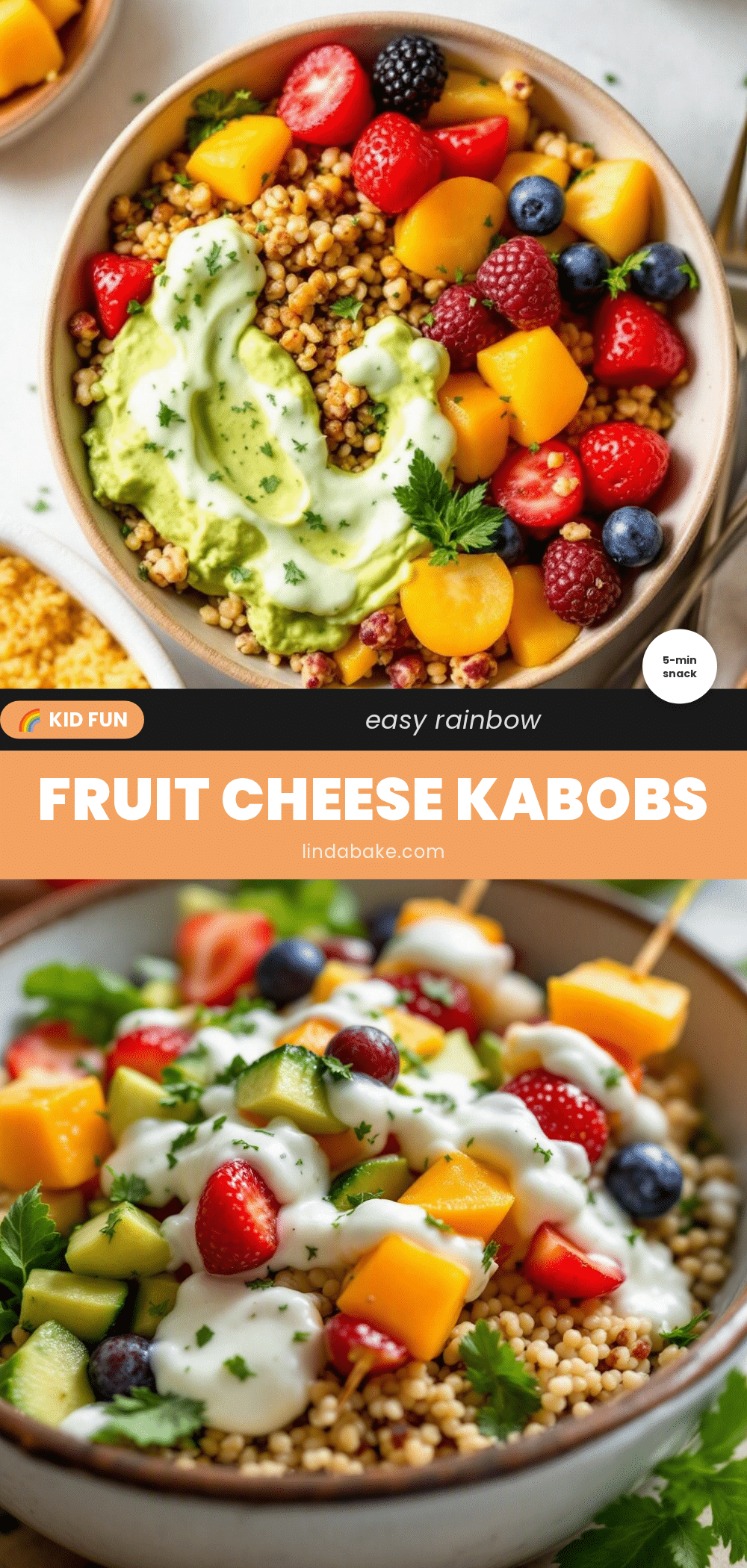
Easy Rainbow Fruit & Cheese Kabobs: Healthy Kid Snack
These colorful fruit and cheese kabobs are a quick, healthy snack that kids love. With a rainbow pattern and food on a stick, they make eating fun and are perfect for lunchboxes, parties, or a simple afternoon treat.
- Prep Time: 10 minutes
- Cook Time: 0 minutes
- Total Time: 10 minutes
- Yield: 12 servings
- Category: Snack
- Cuisine: American
Ingredients
- Strawberries, fresh, hulled and halved if large
- Cantaloupe or Mandarin Oranges, cut into 1-inch cubes (or canned mandarin oranges, drained)
- Pineapple, fresh, cut into 1-inch chunks
- Green Grapes or Kiwi (green grapes are easiest; kiwi peeled and sliced)
- Blueberries, fresh
- Blackberries or Purple Grapes
- Cheddar Cheese, block-style, cut into 1-inch cubes
- Colby Jack or Mozzarella, cut into cubes
- String Cheese, pulled apart into bite-sized pieces
- Mini Marshmallows (optional)
- Pretzel Sticks (optional)
- Yogurt Drops (optional)
Instructions
- Wash and dry all fruit thoroughly. Rinse strawberries, grapes, blueberries, and blackberries under cool water. Pat everything dry with paper towels. Hull strawberries and halve any large berries.
- Cut fruit into uniform pieces, aiming for 1-inch chunks. Cube cantaloupe and pineapple to match cheese cubes. If using kiwi, peel, slice into rounds, then quarter each round. Halve large grapes for younger kids.
- Cut cheese into 1-inch cubes. For block cheddar or Colby Jack, slice into 1-inch thick strips, then cut into cubes. For string cheese, pull apart into bite-sized pieces.
- Arrange ingredients by color in small bowls or piles on your cutting board in rainbow order: red (strawberries), orange (cantaloupe), yellow (pineapple), green (grapes or kiwi), blue (blueberries), purple (blackberries). Place cheese cubes in a separate bowl.
- Thread the skewers in rainbow order, starting from the blunt end. Add one piece of each color in order: red, orange, yellow, green, blue, purple. Add a cheese cube between every two fruit pieces for balance. Leave about half an inch of empty skewer at the bottom.
- Repeat until all ingredients are used. A standard batch of 12 kabobs uses about 2 cups of each fruit and 1 cup of cheese cubes.
- Chill before serving (optional but recommended). Place assembled kabobs in a single layer in a covered container and refrigerate for 15-20 minutes.
- Serve and watch them disappear. Arrange kabobs on a platter in a fan pattern or stand them upright in a tall cup. Serve with a small bowl of yogurt or cream cheese dip if desired.
Notes
Pat fruit completely dry before threading to prevent slipping. Snip pointed tips off wooden skewers for safety. Let kids help assemble their own kabobs to increase willingness to try new foods. Store in an airtight container in the refrigerator for up to 2 days. Best within 24 hours of assembly.
Nutrition
- Serving Size: 1 kabob
- Calories: 135
- Sugar: 12
- Sodium: 180
- Fat: 7
- Saturated Fat: 4
- Carbohydrates: 17
- Fiber: 3
- Protein: 6
Keywords: rainbow kabobs, fruit and cheese kabobs, healthy kid snack, easy snack, lunchbox idea, no-cook snack, kid-friendly, rainbow fruit skewers