That thin, caramelized edge on the salmon where it meets the hot pan—the part that lifts up with a tiny, satisfying crackle—that’s what I was chasing. Honestly, everything else about this easy lemon garlic salmon sheet pan dinner is just a bonus. The asparagus gets those same blistered spots, sweet and almost nutty, while the lemon slices soften into something jammy and edible. I’ve made versions of this meal more times than I can count, tweaking oven temps and oil amounts, all because of that one textural detail. It’s the kind of weeknight dinner that feels like you cheated somehow, because the oven does all the work while you unload the dishwasher or answer a text. And when you pull that pan out, steam rising, and see that perfect crackling edge on the fish? That’s the moment you remember why cooking at home is worth it. Not because it’s fancy, but because it’s yours.
I stumbled onto this combination during a particularly chaotic spring. You know those weeks where grocery shopping feels like a marathon and cooking feels like a chore? I had a salmon filet, a bunch of asparagus that was starting to look sad, and a lemon that had rolled to the back of the fridge. I threw it all on a pan, crossed my fingers, and realized I’d accidentally created my go-to dinner. The lemon garlic salmon sheet pan dinner I keep coming back to, even when I’m not in a rush. It’s the meal I make when I want to feel like I have my life together, even if I’m eating it standing at the counter.
Why You’ll Love This Recipe
I’ve tested this recipe at least a dozen times, adjusting temperatures and timing to get that perfect balance of flaky fish and tender-crisp asparagus. Here’s why it’s become my most-requested weeknight meal:
- Quick & Easy : From fridge to table in about 25 minutes. No marinating, no complicated steps, no waiting around.
- Simple Ingredients : You probably have garlic, lemon, and olive oil in your kitchen right now. The salmon and asparagus are the only things you might need to grab.
- Perfect for Busy Weeknights : One pan means minimal cleanup. You can even line the pan with parchment for an almost-zero-wash experience.
- Crowd-Pleaser : Even my friend who claims she doesn’t like fish asks for this. The garlic-lemon flavor is approachable, not fishy at all.
- Unbelievably Delicious : That crackling edge on the salmon, the blistered asparagus tips, the soft roasted lemon—it’s simple food that tastes anything but.
What makes this version different from the hundreds of sheet pan salmon recipes out there? It’s the technique. Most recipes tell you to toss everything on the pan at once, which gives you overcooked asparagus or undercooked salmon. I stagger the timing so the asparagus gets a head start, then the salmon joins the party at just the right moment. The result is everything cooked perfectly, no compromises. And the garlic? I use thin slices instead of minced—they get crispy and almost chip-like in the oven, which is way more interesting than burnt minced garlic.
This isn’t just a recipe—it’s the kind of meal that makes you feel like you’ve got your life together. It’s comfort food that happens to be healthy, fast, and impressive enough for company. That first bite, where the lemon brightness hits your tongue right after that salty, crispy salmon edge? That’s the moment you’ll understand why I keep coming back.
What Ingredients You Will Need
This recipe uses simple, wholesome ingredients that work together to create something genuinely delicious without any fuss. Most of these are pantry staples, which makes this an easy last-minute dinner.
- Salmon filets : 4 (6-ounce) filets, skin on or off—your preference. I like skin-on for extra crispiness, but skinless works fine too. Look for filets that are roughly the same thickness for even cooking. If you can, buy wild-caught for better flavor and texture.
- Asparagus : 1 pound, tough ends trimmed. Thicker spears hold up better to high heat and get that nice blistered exterior. Thin asparagus works but will cook faster, so keep an eye on it.
- Lemons : 2 large. One for juicing, one for slicing and roasting. The roasted lemon slices become soft and almost candy-like—don’t skip them.
- Garlic : 4-5 cloves, thinly sliced. Sliced, not minced. Thin slices get crispy in the oven, while minced tends to burn. Trust me on this.
- Olive oil : 3 tablespoons, plus more for drizzling. Use good-quality extra virgin here—it’s a key flavor component.
- Kosher salt : 1 teaspoon, plus more for seasoning.
- Black pepper : 1/2 teaspoon, freshly ground.
- Fresh dill : 2 tablespoons, chopped (optional but wonderful).
- Red pepper flakes : 1/4 teaspoon (optional, for heat).
- Honey : 1 tablespoon (optional, for a touch of sweetness to balance the lemon).
I recommend using Meyer lemons if you can find them—they’re sweeter and less acidic, which makes the roasted slices absolutely delicious. For the salmon, I’ve had great results with both fresh and properly thawed frozen filets. Just make sure to pat them dry before seasoning, or you’ll end up steaming instead of roasting.
If you want to switch things up, this recipe works beautifully with trout or arctic char instead of salmon. The cooking time might shift by a minute or two, so keep an eye on it. And if you’re not an asparagus fan, try broccolini or green beans—they roast similarly and taste great with the lemon-garlic treatment.
Equipment Needed
You don’t need much for this one, which is part of the appeal.
- Sheet pan : A half-sheet pan (18×13 inches) is ideal. Avoid dark, non-stick pans—they absorb heat differently and can burn your food. I use a simple aluminum sheet pan from the restaurant supply store, and it’s perfect.
- Parchment paper : Optional but recommended for easy cleanup. Just don’t use wax paper—it’ll melt in the oven.
- Chef’s knife : For slicing garlic and trimming asparagus.
- Cutting board : Any sturdy board will do.
- Measuring spoons : For oil and seasonings.
- Small bowl : For mixing the garlic-lemon oil.
- Tongs : For flipping the asparagus halfway through.
- Instant-read thermometer : Not strictly necessary, but it takes the guesswork out of cooking salmon to perfection. I use a Thermapen and it’s never let me down.
If you don’t have a sheet pan, a large baking dish will work in a pinch, though the edges won’t get as crispy. And if you’re budget-conscious, skip the fancy thermometer and just look for the salmon to flake easily with a fork—it’s a reliable method that doesn’t cost a thing.
Preparation Method
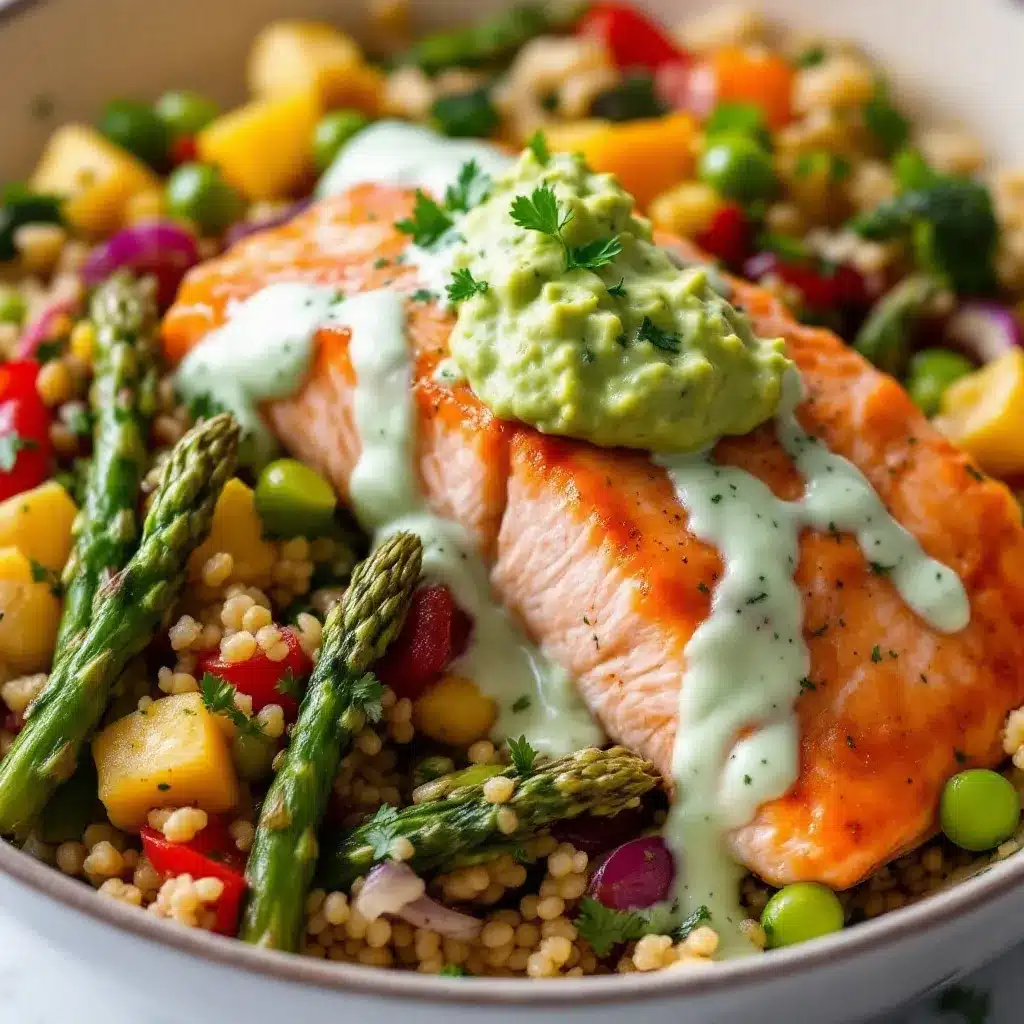
This comes together in about 25 minutes, start to finish. The key is timing—getting the asparagus in first, then adding the salmon at the right moment. Here’s how it works:
- Preheat your oven to 400°F (200°C). Position a rack in the middle of the oven. While it heats, line your sheet pan with parchment paper if you’re using it.
- Prepare the asparagus. Rinse 1 pound of asparagus and snap off the tough ends—they’ll naturally break where the woody part ends. Pat dry with a clean towel. Place the asparagus on the sheet pan and drizzle with 1 tablespoon of olive oil. Season with a pinch of salt and pepper. Toss to coat, then spread them in a single layer. Roast for 8 minutes.
- While the asparagus roasts, prepare the salmon. Pat 4 salmon filets dry with paper towels. Season both sides with 1/2 teaspoon of salt and 1/4 teaspoon of pepper. In a small bowl, combine 2 tablespoons of olive oil, the juice of 1 lemon, and the thinly sliced garlic cloves. Stir in the honey if you’re using it.
- Add the salmon to the pan. After 8 minutes, remove the sheet pan from the oven. Push the asparagus to the sides to make room for the salmon in the center. Place the salmon filets skin-side down (if they have skin) in the middle of the pan. Pour the garlic-lemon oil mixture over the salmon, making sure each filet gets some garlic slices on top. Arrange the sliced lemon rounds around the salmon and asparagus.
- Roast everything together. Return the pan to the oven and roast for another 10-12 minutes, depending on the thickness of your salmon. For medium-rare (my preference), cook until the internal temperature reaches 125°F (52°C). For medium, aim for 130-135°F (54-57°C). The asparagus should be tender-crisp with blistered tips.
- Finish and serve. Remove the pan from the oven. Let it rest for 2-3 minutes—this lets the salmon finish cooking gently and the juices redistribute. Sprinkle with fresh dill and red pepper flakes if you’re using them. Serve the salmon with the roasted asparagus and lemon slices on the side.
A few things I’ve learned the hard way: Don’t overcrowd the pan. If your asparagus or salmon are touching, they’ll steam instead of roast, and you’ll lose that beautiful caramelization. If you’re cooking for a crowd, use two pans. Also, don’t skip patting the salmon dry—moisture is the enemy of a good crust. And those roasted lemon slices? They’re not just garnish. Squeeze them over the finished dish for an extra hit of bright, mellow lemon flavor.
Cooking Tips & Techniques
After making this recipe more times than I can count, I’ve picked up a few tricks that make a real difference.
Get the pan hot. A hot sheet pan means better browning. If you’re worried about the salmon sticking, preheat the pan in the oven for 5 minutes before adding the asparagus. Just be careful when you add the oil—it’ll sizzle.
Don’t move the salmon. Once you place the filets on the pan, leave them alone. Let them develop that crust. If you try to flip them too early, they’ll stick and fall apart. Trust the process.
Watch your garlic. Thin slices are the way to go—they get golden and crispy without burning. If you use minced garlic, it’ll burn in the time it takes to roast the salmon. I learned this the hard way, and my kitchen smelled like burnt garlic for days.
Use a thermometer. Salmon goes from perfect to dry in about 30 seconds. An instant-read thermometer takes the guesswork out. I pull mine at 125°F for medium-rare, and it’s always perfect. If you don’t have a thermometer, look for the salmon to flake easily with a fork and have a slightly translucent center.
Season in layers. Don’t just dump all the salt on at the end. Season the asparagus before it goes in, season the salmon before you add the oil, and finish with a sprinkle of flaky salt at the table. Each layer adds depth.
Make it a complete meal. While the sheet pan does its thing, you can cook a quick side of rice or quinoa. I love serving this over a bed of fluffy rice to soak up the lemony garlic oil. If you’re looking for another one-pan wonder, you might enjoy this easy Thai coconut curry pulled pork—it’s a different vibe but equally hands-off.
Variations & Adaptations
This recipe is endlessly adaptable, which is why I never get tired of it. Here are some ways I’ve switched it up:
Lemon Herb Version : Swap the dill for fresh thyme or rosemary. Add a sprig of each to the pan while roasting—the aromatics infuse the oil and make everything taste more complex.
Spicy Cajun Style : Replace the lemon juice with a tablespoon of Cajun seasoning mixed into the olive oil. Skip the honey, add an extra pinch of cayenne, and serve with a squeeze of lime instead of lemon. It’s a completely different dish, but just as fast.
Mediterranean Twist : Add halved cherry tomatoes and sliced red onion to the asparagus during the initial roast. Swap the dill for oregano, and crumble feta cheese over the finished dish. The salty feta against the bright lemon is incredible.
Low-Carb / Keto Friendly : This recipe is already naturally low-carb, but you can make it even more keto-friendly by drizzling melted butter over the salmon instead of olive oil. The butter adds richness and helps the garlic crisp up beautifully.
Dairy-Free / Gluten-Free : This recipe is naturally both, so no adjustments needed. Just make sure your honey is pure and your spices are certified gluten-free if that’s a concern.
I once made a version with mango salsa on top—just diced mango, red onion, cilantro, and lime juice—and it was a total game-changer. The sweetness of the mango played off the savory salmon perfectly. If you’re into that flavor combo, you’ll probably love this refreshing mango jalapeño agua fresca as a drink pairing.
Serving & Storage Suggestions
This dish is best served fresh from the oven, but there are a few ways to enjoy it that I’ve discovered through trial and error.
Serving Temperature : Serve the salmon warm, right off the pan. The contrast between the hot, flaky fish and the cool, bright lemon is part of the magic. If you’re making this for a crowd, you can keep the pan warm in a 200°F oven for up to 15 minutes while you finish other dishes.
What to Serve With It : This sheet pan dinner is a complete meal on its own, but I love adding a simple side. A bed of fluffy rice, quinoa, or crusty bread to soak up the lemony garlic oil is perfect. A simple green salad with a vinaigrette also works beautifully. For a heartier meal, try serving it alongside this harissa lamb meatballs with couscous—the spicy lamb and bright salmon are a surprising but delicious pairing.
Storage : Leftover salmon and asparagus keep in the refrigerator for up to 3 days in an airtight container. The texture won’t be quite as good as fresh, but it’s still delicious cold or gently reheated. I actually love cold leftover salmon flaked over a salad for lunch the next day.
Reheating : The best way to reheat is in a low oven (300°F) for about 5-7 minutes. The microwave works in a pinch, but it’ll dry out the salmon and make the asparagus soggy. If you’re in a hurry, flake the cold salmon into a warm bowl of rice or quinoa and call it a day.
Freezer : I don’t recommend freezing the cooked dish—the texture of both the salmon and asparagus will suffer. However, you can freeze the raw salmon filets and use them straight from the freezer (just increase the roasting time by a few minutes).
Nutritional Information & Benefits
This meal is as good for you as it is delicious. Here’s a rough breakdown per serving (one salmon filet plus asparagus):
| Nutrient | Amount |
|---|---|
| Calories | 380 |
| Protein | 35g |
| Fat | 22g |
| Saturated Fat | 4g |
| Carbohydrates | 8g |
| Fiber | 3g |
| Sugar | 4g |
| Sodium | 450mg |
| Vitamin D | 15mcg |
| Calcium | 60mg |
| Iron | 2mg |
Health Benefits : Salmon is packed with omega-3 fatty acids, which support heart and brain health. Asparagus is a great source of fiber, folate, and vitamins A, C, and K. Lemon and garlic add antioxidants and anti-inflammatory properties. This meal is naturally gluten-free, low-carb, and dairy-free, making it suitable for a wide range of dietary needs. It’s also relatively low in calories for such a satisfying meal—perfect if you’re watching your intake without sacrificing flavor.
Allergen Note : Fish is a common allergen. If you’re serving someone with a fish allergy, substitute with chicken breast or firm tofu (adjust cooking time accordingly). The recipe is free of dairy, eggs, nuts, soy, and gluten.
Conclusion
This easy lemon garlic salmon sheet pan dinner is proof that simple food, done right, is the most satisfying kind of cooking. It’s fast enough for a Tuesday night, impressive enough for company, and healthy enough that you can feel good about eating it. The crackling edge on the salmon, the blistered asparagus, the soft roasted lemon—every element works together to create something that tastes way more complex than the ingredient list suggests.
I hope you make this recipe and make it your own. Add extra garlic if you’re a garlic lover (I always do). Swap in whatever vegetables you have on hand. Serve it over rice, quinoa, or just eat it straight off the pan—I won’t judge. And if you come up with a variation that blows your mind, I’d love to hear about it. Drop a comment below and tell me how it went. Did you try the Cajun version? The Mediterranean twist? Did you eat it standing at the counter like I sometimes do? Share your story—I’m genuinely curious.
Until next time, happy cooking. And remember: that perfect crackling edge is worth chasing.
Frequently Asked Questions
Can I use frozen salmon for this recipe?
Yes, absolutely. Just make sure to thaw it completely in the refrigerator overnight, then pat it very dry with paper towels before seasoning. Frozen salmon releases a lot of water as it thaws, and excess moisture will prevent that beautiful golden crust from forming. If you’re in a rush, you can thaw it in cold water for about 30 minutes, but pat it dry thoroughly.
How do I know when the salmon is done?
The most reliable method is using an instant-read thermometer. Insert it into the thickest part of the filet—you’re looking for 125°F for medium-rare, 130-135°F for medium. If you don’t have a thermometer, look for the salmon to flake easily with a fork and have a slightly translucent center. The residual heat will continue cooking it after you pull it from the oven, so don’t wait until it’s fully opaque throughout.
Can I use other vegetables instead of asparagus?
Definitely. Broccolini, green beans, zucchini slices, or cherry tomatoes all work beautifully. Just adjust the initial roasting time based on the vegetable’s density. Green beans and broccolini need about the same time as asparagus. Zucchini and tomatoes need less time—add them when you add the salmon. Thicker vegetables like carrots or potatoes need more time and should be pre-roasted for 15-20 minutes before adding the salmon.
What can I substitute for lemon?
Lime is the best substitute—it’s equally bright and acidic. Use lime juice in the oil mixture and roast lime slices alongside the salmon. Orange works too, but it’s sweeter and milder, so you might want to add a splash of vinegar for acidity. If you don’t have any citrus, a splash of white wine or champagne vinegar mixed with olive oil is a decent backup.
How do I prevent the garlic from burning?
The trick is slicing the garlic thinly rather than mincing it. Thin slices get golden and crispy, while minced garlic burns easily under high heat. If you’re worried about it, you can add the garlic halfway through the salmon’s cooking time, or scatter it over the salmon after the first 5 minutes of roasting. And don’t let the garlic sit directly on the pan surface—place it on top of the salmon or asparagus where it’s slightly protected.
Pin This Recipe!
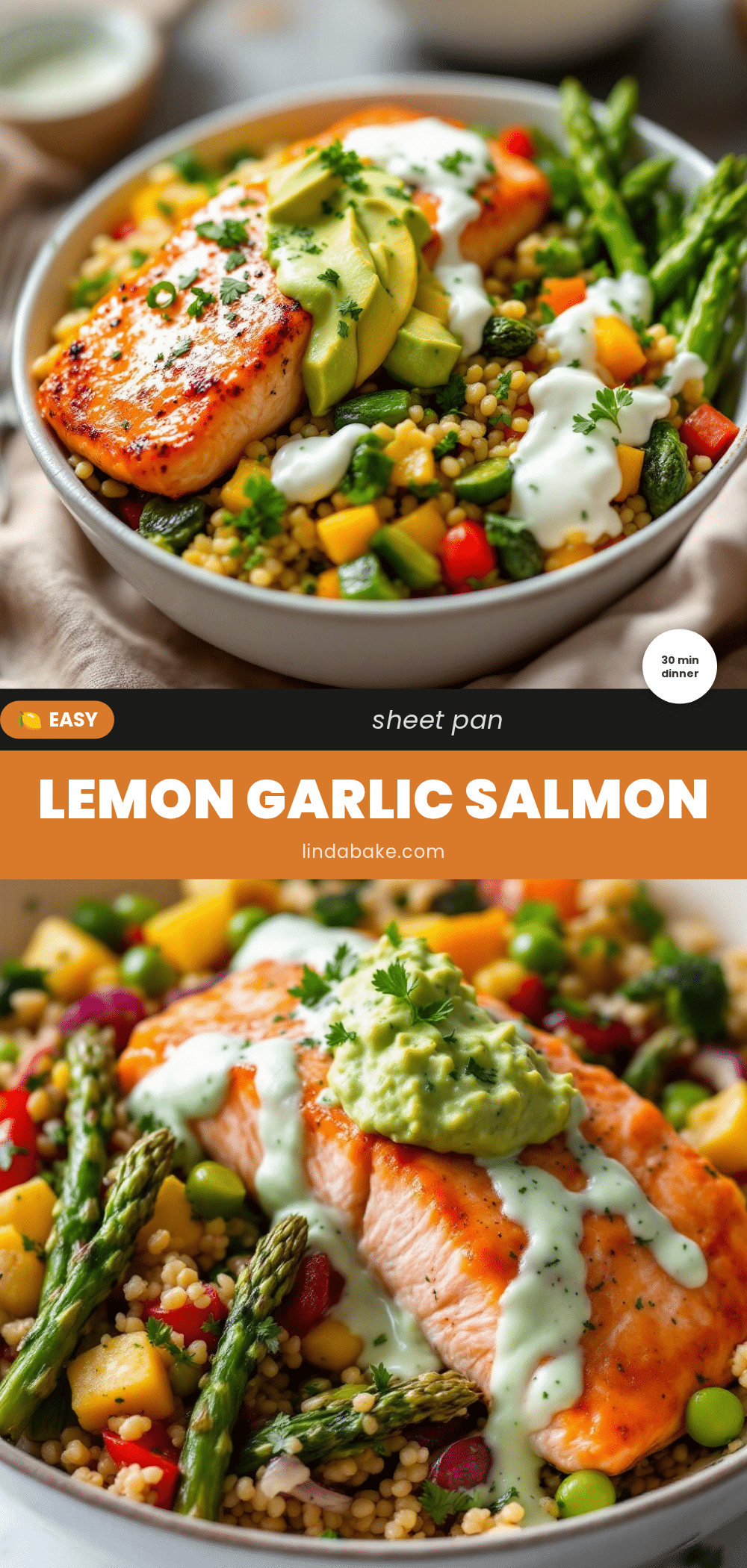
Quick Easy Lemon Garlic Salmon Sheet Pan Dinner

A quick and easy sheet pan dinner featuring perfectly roasted salmon and asparagus with crispy garlic and jammy lemon slices. Ready in about 25 minutes with minimal cleanup.
- Prep Time: 10 minutes
- Cook Time: 18-20 minutes
- Total Time: 25 minutes
- Yield: 4 servings 1x
- Category: Main Course
- Cuisine: American
Ingredients
- 4 (6-ounce) salmon filets, skin on or off
- 1 pound asparagus, tough ends trimmed
- 2 large lemons (1 juiced, 1 sliced)
- 4–5 cloves garlic, thinly sliced
- 3 tablespoons olive oil, plus more for drizzling
- 1 teaspoon kosher salt, plus more for seasoning
- 1/2 teaspoon freshly ground black pepper
- 2 tablespoons fresh dill, chopped (optional)
- 1/4 teaspoon red pepper flakes (optional)
- 1 tablespoon honey (optional)
Instructions
- Preheat your oven to 400°F (200°C). Position a rack in the middle of the oven. Line a sheet pan with parchment paper if desired.
- Rinse 1 pound of asparagus and snap off the tough ends. Pat dry. Place on the sheet pan, drizzle with 1 tablespoon olive oil, season with a pinch of salt and pepper, and toss to coat. Spread in a single layer. Roast for 8 minutes.
- While the asparagus roasts, pat 4 salmon filets dry with paper towels. Season both sides with 1/2 teaspoon salt and 1/4 teaspoon pepper. In a small bowl, combine 2 tablespoons olive oil, juice of 1 lemon, and thinly sliced garlic cloves. Stir in honey if using.
- After 8 minutes, remove the sheet pan from the oven. Push asparagus to the sides to make room for the salmon in the center. Place salmon filets skin-side down (if skin-on) in the middle. Pour the garlic-lemon oil mixture over the salmon, ensuring each filet gets some garlic slices on top. Arrange sliced lemon rounds around the salmon and asparagus.
- Return the pan to the oven and roast for another 10-12 minutes, depending on thickness. For medium-rare, cook until internal temperature reaches 125°F (52°C); for medium, 130-135°F (54-57°C). Asparagus should be tender-crisp with blistered tips.
- Remove from oven. Let rest for 2-3 minutes. Sprinkle with fresh dill and red pepper flakes if using. Serve salmon with roasted asparagus and lemon slices on the side.
Notes
For best results, pat salmon dry before seasoning to ensure a good crust. Slice garlic thinly rather than mincing to prevent burning. Don’t overcrowd the pan—use two pans if needed. Roasted lemon slices are edible and add a mellow sweetness. Leftovers keep in the refrigerator for up to 3 days.
Nutrition
- Serving Size: 1 salmon filet plus
- Calories: 380
- Sugar: 4
- Sodium: 450
- Fat: 22
- Saturated Fat: 4
- Carbohydrates: 8
- Fiber: 3
- Protein: 35
Keywords: salmon, sheet pan dinner, lemon garlic, asparagus, quick dinner, healthy, weeknight meal