The third batch in as many weeks, and I finally stopped stirring long enough to taste what I’d been chasing. That first spoonful—warm, thick, with that deep rusty sweetness that only comes from letting tomatoes talk to heat for a long time—made me laugh out loud in my empty kitchen. Which is weird, right? Getting emotional over a pot of sauce. But that’s what happens when you spend three weekends tweaking the same thing, convinced you can get it just right.
I started with a bushel of Romas from the farmer’s market—twenty pounds of those firm, egg-shaped beauties—because I wanted a perfect slow-simmered Roma tomato canning sauce that didn’t taste like it came from a jar. The first batch was too watery. The second was fine, but it lacked that soul. The third? That’s the one I’m giving you here. It’s not fancy. It’s not complicated. But it is exactly what a homemade sauce should be: rich, balanced, and shelf-stable enough to make you feel like a pantry hero in January.
And let’s be honest—there’s something deeply satisfying about seeing those jars line up on your counter, knowing you made them yourself. This isn’t about impressing anyone. It’s about having a taste of summer waiting for you when the snow flies.
Why You’ll Love This Recipe
I’ve tested this sauce more times than I care to admit, and here’s what I know for sure: it works. Every. Single. Time. This perfect slow-simmered Roma tomato canning sauce has earned its spot in my annual canning rotation, and I think it’ll earn one in yours too.
- Simple, Real Ingredients – No weird additives, no preservatives. Just tomatoes, aromatics, and a little patience.
- Made for Canning – This recipe is specifically formulated for water bath canning, so you can stock your pantry with confidence.
- Deep, Slow-Cooked Flavor – That two-hour simmer is non-negotiable. It concentrates the tomatoes and builds layers of savory sweetness.
- Budget-Friendly – When Romas are in season, they’re cheap. You can put up a year’s worth of sauce for pocket change.
- Completely Customizable – Keep it plain for cooking, or add herbs, garlic, or a pinch of heat. This base works for everything.
- Incredibly Satisfying – There’s a quiet pride that comes from opening a jar of your own sauce in February. Trust me.
This isn’t just another canning recipe. It’s the one I’ve refined until I couldn’t make it better. No watery results, no bland sauce, no wasted tomatoes. Just a reliable, delicious way to preserve the season.
What Ingredients You Will Need
This recipe uses straightforward ingredients, but each one plays a role. Here’s what you’ll need to make your own perfect slow-simmered Roma tomato canning sauce.
- Roma tomatoes (10 pounds) – Look for firm, deep-red Romas. They have less water and fewer seeds than other varieties, which means a thicker sauce with less simmering time. I prefer locally grown ones from the farmer’s market when they’re in season.
- Onions (2 large, yellow or sweet) – Yellow onions add a mellow sweetness that balances the acidity of the tomatoes. Dice them fine so they melt into the sauce.
- Garlic cloves (8-10, minced) – Fresh garlic is non-negotiable here. Pre-minced stuff from a jar will give you a flat, bitter flavor. Use the real thing.
- Extra-virgin olive oil (¼ cup) – A good-quality olive oil adds richness and helps sauté the aromatics. Don’t skimp on this.
- Lemon juice, bottled (2 tablespoons per pint jar) – This is crucial for safe canning. Bottled lemon juice has a consistent acidity level that fresh lemons can’t guarantee. Use it exactly as directed.
- Salt (2 teaspoons, or to taste) – I use fine sea salt. It dissolves evenly and doesn’t add any mineral aftertaste.
- Dried oregano (1 teaspoon, optional) – Adds a classic Italian note. Leave it out if you want a plain sauce you can season later.
- Fresh basil leaves (½ cup, packed) – Stirred in at the end, fresh basil brightens the whole pot. You can also add a sprig during simmering and remove it before canning.
- Bay leaves (2) – They add subtle depth. Remember to fish them out before you blend or can.
- Black pepper (½ teaspoon, freshly ground) – A little warmth without heat.
Ingredient Notes: If you can’t find Romas, San Marzano tomatoes are an excellent substitute. They’re meaty and sweet, though they cost more. For a lower-acid sauce, you can add a pinch of sugar—about 1 teaspoon—but I find the long simmer tames the acidity naturally. And please, don’t skip the bottled lemon juice. It’s not about flavor; it’s about food safety.
Equipment Needed
You don’t need a professional kitchen to make this sauce, but a few specific tools make the job easier and safer.
- Large stockpot (12-quart or larger) – You need room for all those tomatoes. A heavy-bottomed pot prevents scorching.
- Water bath canner – A dedicated canning pot with a rack is ideal, but any deep pot that can hold your jars submerged by at least an inch of water will work.
- Canning jars (pint or quart size) – Use standard Mason jars with new lids and clean bands. Check for cracks or chips.
- Jar lifter – This is non-negotiable. Trying to grab hot jars with tongs is a disaster waiting to happen.
- Canning funnel – Makes filling jars neat and reduces mess. Your future self will thank you.
- Food mill or immersion blender – A food mill removes skins and seeds in one step. An immersion blender works if you don’t mind a smoother texture with seeds.
- Large bowl and clean towels – For holding jars and catching drips.
- Sharp knife and cutting board – For prepping tomatoes and aromatics.
Budget Tip: If you don’t own a food mill, you can blanch and peel the tomatoes by hand, then pulse the sauce with an immersion blender. It takes a little longer but works just fine. I did it that way for years before I invested in a food mill.
Preparation Method
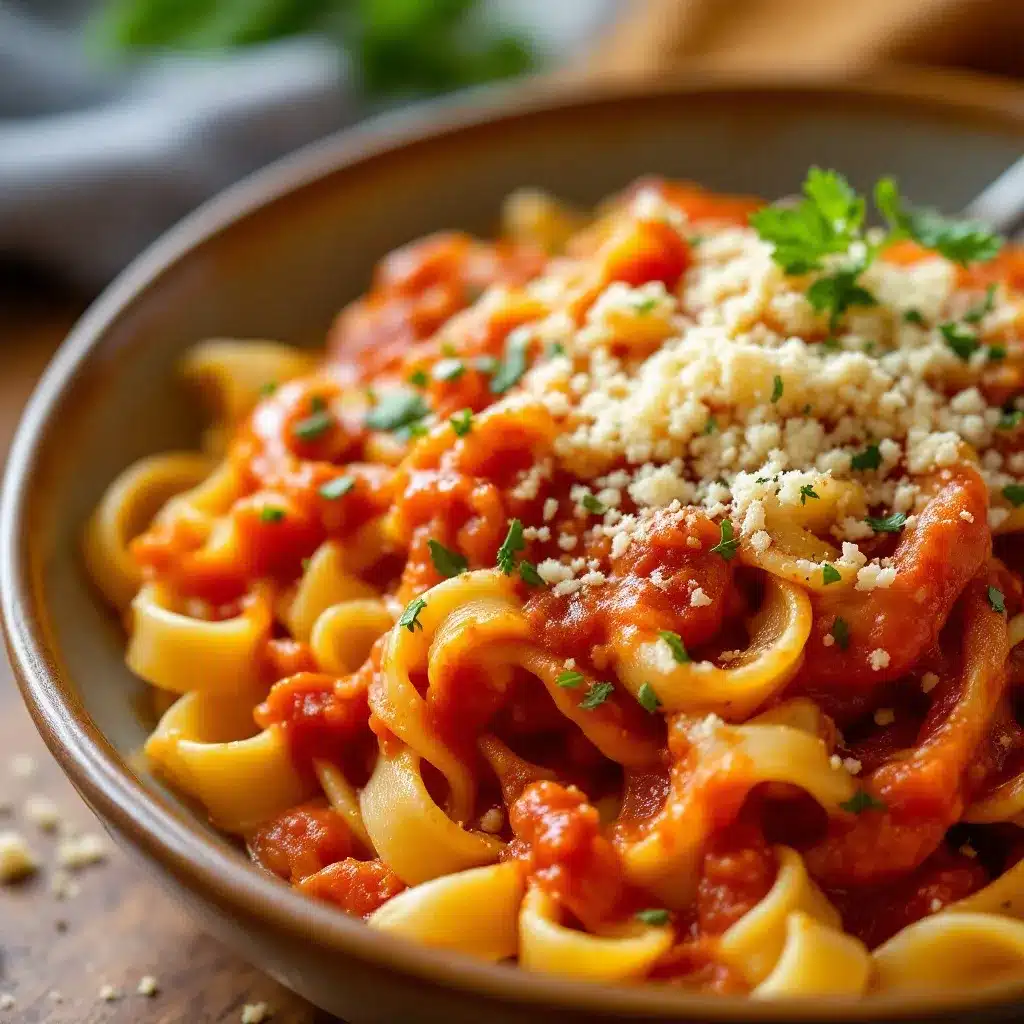
Making this perfect slow-simmered Roma tomato canning sauce takes time, but most of it is hands-off. Here’s how to do it.
- Prepare the tomatoes. Wash your Romas thoroughly. Cut a small X on the bottom of each one. Bring a large pot of water to a boil and prepare an ice bath. Blanch the tomatoes in batches for 30-45 seconds, then transfer them to the ice water. The skins will slip right off. Core the tomatoes and quarter them.
- Cook the aromatics. In your large stockpot, heat the olive oil over medium heat. Add the diced onions and cook until soft and translucent, about 8 minutes. Add the minced garlic and cook for another minute until fragrant. Don’t let the garlic brown—it will turn bitter.
- Add the tomatoes and herbs. Add the quartered tomatoes to the pot, along with the salt, oregano, bay leaves, and a few basil sprigs if you have them. Stir everything together.
- Simmer, simmer, simmer. Bring the sauce to a gentle boil, then reduce the heat to low. Let it simmer uncovered for 2 to 2½ hours, stirring occasionally. You’ll notice the sauce thickening and darkening as the water evaporates. The smell at this point is incredible.
- Remove the bay leaves and basil. Fish them out with a spoon. They’ve done their job.
- Blend or mill the sauce. If you’re using a food mill, run the sauce through it to remove seeds and skins. If you’re using an immersion blender, pulse until you reach your desired consistency. I like mine slightly chunky.
- Taste and adjust. Give the sauce a taste. Add more salt or pepper if needed. If it tastes too acidic, a pinch of sugar can help balance it.
- Prepare your canning station. Wash your jars, lids, and bands in hot soapy water. Keep the jars hot in a 200°F oven or a pot of simmering water. Place the lids in a small bowl of hot water to soften the sealing compound.
- Fill the jars. Add 2 tablespoons of bottled lemon juice to each pint jar (or 4 tablespoons per quart). Using your canning funnel, ladle the hot sauce into the jars, leaving ½ inch of headspace. Run a clean spatula or bubble remover along the inside of the jar to release air bubbles.
- Wipe and seal. Wipe the rims of the jars with a clean, damp cloth. Center a lid on each jar and screw on the band until fingertip-tight—don’t overtighten.
- Process in a water bath. Place the jars in your canner, ensuring they’re covered by at least 1 inch of water. Bring to a full rolling boil and process for 35 minutes for pints, 40 minutes for quarts (adjust for altitude if needed).
- Cool and check seals. Turn off the heat and let the jars sit in the water for 5 minutes. Remove them with a jar lifter and place them on a towel-lined counter. Let them cool completely for 12-24 hours. You should hear the satisfying “pop” as each jar seals. Press the center of each lid—if it doesn’t flex, it’s sealed.
Pro Tip: Label your jars with the date. I learned this the hard way when I found a mystery jar of sauce in my pantry and couldn’t remember if it was from last summer or the one before.
Cooking Tips & Techniques
After making this perfect slow-simmered Roma tomato canning sauce more times than I can count, I’ve collected a few hard-won tips.
Don’t Rush the Simmer – I know it’s tempting to cut the simmering time short, but that two-hour window is where the magic happens. The tomatoes need time to break down and concentrate. If you’re short on time, make a quick marinara instead—this sauce is a weekend project.
Watch for Scorching – Tomato sauce loves to burn on the bottom of the pot. Stir it every 15-20 minutes, especially toward the end when it’s thicker. If you do scorch it, don’t scrape the burnt bits into the sauce. Pour the unburnt sauce into a clean pot and carry on.
Use a Heavy-Bottomed Pot – This is one of those tips that sounds fussy but actually matters. A thin pot will give you uneven heat and more scorching. I use a 12-quart enameled cast iron dutch oven, and it distributes heat beautifully.
Multitask Smartly – While the sauce simmers, prep your jars and clean your kitchen. You’ll thank yourself when it’s time to fill and process. I also like to chop extra onions and garlic for the week ahead while I’m standing at the counter.
My Biggest Failure – I once forgot to add the lemon juice before processing. I realized it when I opened a jar three months later and found the sauce had darkened and developed an off-flavor. It wasn’t spoiled, but it wasn’t good. Don’t skip the acid—it’s not optional.
Variations & Adaptations
This base recipe is incredibly flexible. Here are a few ways to change it up.
- Spicy Arrabbiata Style – Add 1-2 teaspoons of red pepper flakes along with the garlic. The heat infuses beautifully during the long simmer.
- Roasted Tomato Version – For an even deeper flavor, halve the Romas and roast them at 400°F for 45 minutes before adding them to the pot. This adds a smoky sweetness that’s absolutely stunning.
- Herb-Infused – Add a bundle of fresh thyme, rosemary, and parsley tied with kitchen twine. Simmer it with the sauce and remove before canning. It’s like having a Provencal garden in a jar.
- No-Salt Option – Omit the salt entirely if you’re watching your sodium. The sauce will still be delicious; just season it when you cook with it later.
- Low-Acid Adjustment – If you find tomato sauce too acidic, add ½ teaspoon of baking soda per quart of sauce before simmering. It will foam up, so use a large pot. This neutralizes some of the acid without affecting the flavor.
My Personal Favorite: I love adding a whole carrot, peeled and halved, to the pot during simmering. It adds natural sweetness without sugar. I remove it before canning, and nobody ever knows it was there.
Serving & Storage Suggestions
This sauce is incredibly versatile. Here’s how to use and store it.
Serving Ideas: Use it on pasta, of course, but don’t stop there. It’s fantastic on pizza, as a base for shakshuka, spooned over meatballs, or as a dipping sauce for crusty bread. I also love it in recipes like Thai coconut curry pulled pork—the sweetness of the tomatoes pairs beautifully with the warm spices.
Storage: Sealed jars of this sauce will keep in a cool, dark pantry for up to 18 months. Once opened, refrigerate and use within 5-7 days. You can also freeze it in quart-sized freezer bags for up to 6 months—just lay them flat to save space.
Reheating: Pour the sauce into a saucepan and warm it over medium-low heat, stirring occasionally. If it’s too thick, add a splash of pasta water or broth. The flavor actually deepens after a few days in the fridge, so leftovers are a gift.
Flavor Note: This sauce mellows and sweetens over time. I always save a few jars for at least three months—they’re noticeably better than the ones I open right away.
Nutritional Information & Benefits
This sauce is naturally healthy and packed with good stuff.
Per ½ cup serving (approximate):
- Calories: 45
- Fat: 2g
- Carbohydrates: 7g
- Fiber: 2g
- Sugar: 4g (natural)
- Protein: 1g
- Sodium: 180mg
Health Benefits: Roma tomatoes are rich in lycopene, a powerful antioxidant linked to heart health and reduced inflammation. Cooking tomatoes actually increases the bioavailability of lycopene, so this sauce is even more beneficial than raw tomatoes. Garlic and onions add immune-supporting compounds, and olive oil provides healthy monounsaturated fats.
Dietary Notes: This sauce is naturally gluten-free, vegan, dairy-free, and nut-free. It’s also low in calories and sugar compared to store-bought sauces, which often hide added sugar and preservatives.
Allergen Warning: None of the common allergens are present, but always check your bottled lemon juice for additives if you have sensitivities.
Conclusion
Making your own perfect slow-simmered Roma tomato canning sauce is one of those kitchen projects that feels both practical and deeply satisfying. It’s not hard. It just takes a little time and a willingness to trust the process. And the payoff? Jars of rich, honest sauce that taste like summer, ready whenever you need them.
I love this recipe because it reminds me that good food doesn’t need to be complicated. It just needs to be made with care. Whether you’re a seasoned canner or a first-timer, I hope you give this a try. Customize it however you like—add more garlic, skip the herbs, make it spicy. It’s your sauce now.
I’d love to hear how it turns out for you. Drop a comment below or tag me in your photos. And if you’re looking for another easy, crowd-pleasing recipe, you might enjoy this spicy Korean-Mexican street corn dip—it’s a completely different vibe but just as rewarding.
Happy canning, friends. Your pantry is about to get a whole lot more delicious.
Frequently Asked Questions
Can I use other tomato varieties besides Romas?
Yes, but Romas are ideal because they’re meaty and low-moisture. If you use beefsteak or heirloom tomatoes, you’ll need to simmer the sauce longer to evaporate the extra water.
Do I have to peel the tomatoes?
Yes, for a smooth sauce. Tomato skins become tough and papery after cooking, and they don’t break down. Blanching makes peeling quick and easy.
Why do I need bottled lemon juice instead of fresh?
Bottled lemon juice has a standardized acidity level (usually 5%), which is essential for safe water bath canning. Fresh lemons vary in acidity and could make your sauce unsafe for shelf storage.
How do I adjust for high altitude?
If you’re above 1,000 feet, you need to increase processing time. For 1,001-3,000 feet, add 5 minutes. For 3,001-6,000 feet, add 10 minutes. For 6,001-8,000 feet, add 15 minutes. Always consult a trusted canning guide for your specific elevation.
Can I double this recipe?
Absolutely. Just make sure your pot is large enough—you don’t want it more than half full to start, because the sauce will bubble up. I’ve made double batches in my 12-quart pot with no issues.
Pin This Recipe!
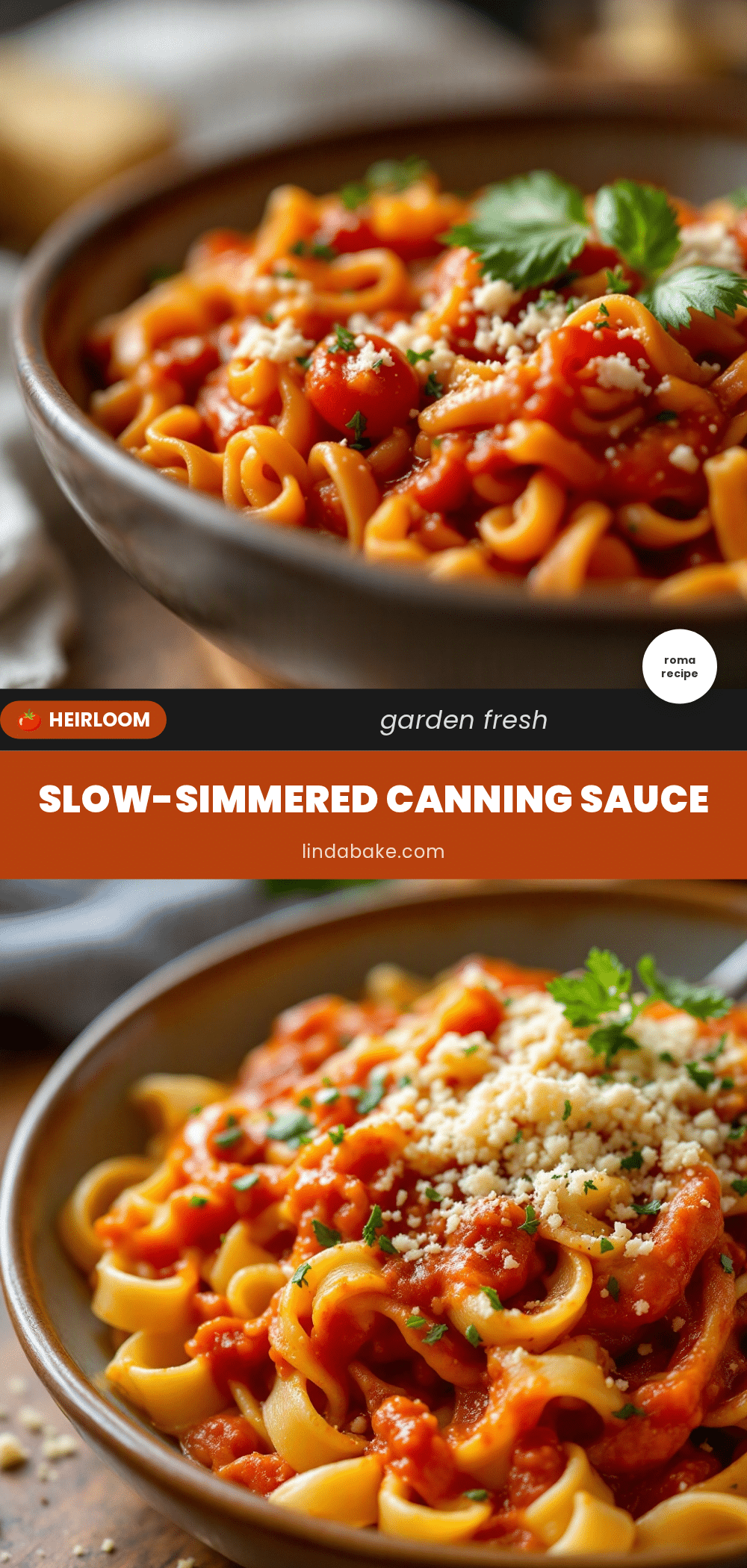
Perfect Slow-Simmered Roma Tomato Canning Sauce (Easy)

A rich, balanced, and shelf-stable homemade tomato sauce made with Roma tomatoes, aromatics, and a long simmer. Perfect for water bath canning, this recipe yields jars of deep, slow-cooked flavor that taste like summer in January.
- Prep Time: 30 minutes
- Cook Time: 2 hours 30 minutes
- Total Time: 3 hours
- Yield: 6-8 pints 1x
- Category: Main Course
- Cuisine: Italian
Ingredients
- 10 pounds Roma tomatoes
- 2 large yellow or sweet onions, diced
- 8–10 garlic cloves, minced
- 1/4 cup extra-virgin olive oil
- 2 tablespoons bottled lemon juice per pint jar
- 2 teaspoons fine sea salt
- 1 teaspoon dried oregano (optional)
- 1/2 cup packed fresh basil leaves
- 2 bay leaves
- 1/2 teaspoon freshly ground black pepper
Instructions
- Prepare the tomatoes: Wash Romas, cut a small X on the bottom of each, blanch in boiling water for 30-45 seconds, then transfer to an ice bath. Slip off skins, core, and quarter.
- Cook the aromatics: In a large stockpot, heat olive oil over medium heat. Add diced onions and cook until soft and translucent, about 8 minutes. Add minced garlic and cook for 1 minute until fragrant.
- Add tomatoes and herbs: Add quartered tomatoes, salt, oregano, bay leaves, and a few basil sprigs. Stir together.
- Simmer: Bring to a gentle boil, then reduce heat to low. Simmer uncovered for 2 to 2½ hours, stirring occasionally, until thickened and darkened.
- Remove bay leaves and basil: Fish them out with a spoon.
- Blend or mill: Run sauce through a food mill to remove seeds and skins, or use an immersion blender to reach desired consistency.
- Taste and adjust: Add more salt or pepper if needed. A pinch of sugar can balance acidity.
- Prepare canning station: Wash jars, lids, and bands in hot soapy water. Keep jars hot in a 200°F oven or simmering water. Soften lids in hot water.
- Fill jars: Add 2 tablespoons bottled lemon juice per pint jar (4 tablespoons per quart). Ladle hot sauce into jars, leaving ½ inch headspace. Remove air bubbles.
- Wipe and seal: Wipe rims with a clean, damp cloth. Center lid on each jar and screw on band until fingertip-tight.
- Process in water bath: Place jars in canner, cover with at least 1 inch of water. Bring to a full rolling boil and process for 35 minutes for pints, 40 minutes for quarts (adjust for altitude).
- Cool and check seals: Turn off heat, let jars sit in water for 5 minutes. Remove with jar lifter and place on towel-lined counter. Cool completely for 12-24 hours. Check seals—lids should not flex when pressed.
Notes
Don’t skip the bottled lemon juice—it ensures safe acidity for canning. For a lower-acid sauce, add ½ teaspoon baking soda per quart before simmering. A whole peeled carrot added during simmering adds natural sweetness. Label jars with the date. Sealed jars keep up to 18 months in a cool, dark pantry.
Nutrition
- Serving Size: 1/2 cup
- Calories: 45
- Sugar: 4
- Sodium: 180
- Fat: 2
- Carbohydrates: 7
- Fiber: 2
- Protein: 1
Keywords: Roma tomato sauce, canning sauce, homemade tomato sauce, slow-simmered sauce, water bath canning, pantry staple, summer preservation