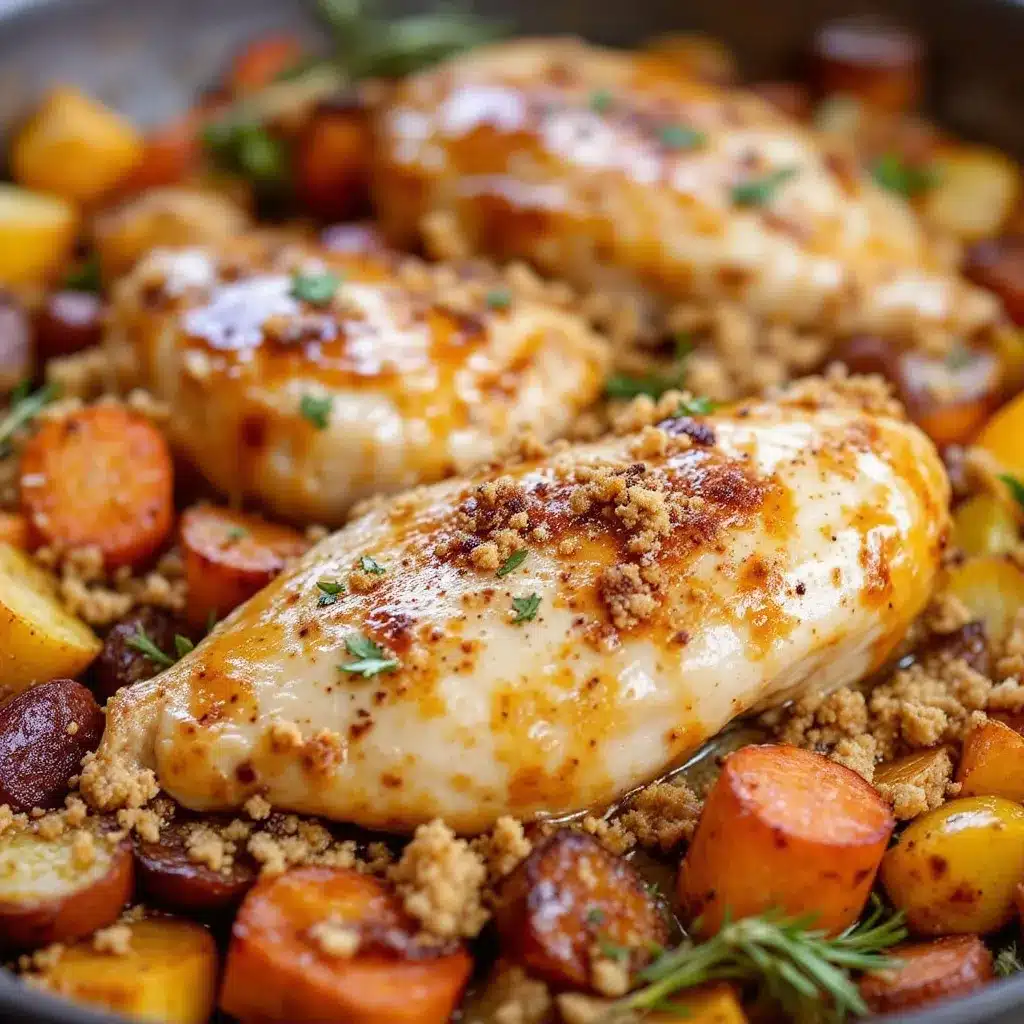
I want maple Dijon chicken right now, but I also want it to be the kind of dinner that doesn’t leave me scrubbing pans for twenty minutes afterward. That’s the whole thought. One pan. Sweet and tangy chicken. Roasted root vegetables that soak up all that glossy, sticky sauce. And honestly? It’s the kind of meal that makes you feel like you actually have your life together on a Tuesday night.
This recipe came to life on a chilly October evening when I had a chicken, a bunch of carrots, and a half-used bottle of maple syrup staring at me from the pantry. I had just finished a long day of testing recipes (and failing at a few), and I needed something that felt both comforting and effortless. I threw everything onto a sheet pan, whisked together a simple maple Dijon dressing, and crossed my fingers. The result was so good I actually ate it standing at the counter—straight from the pan. That’s when I knew I had something worth sharing.
What I love most about this easy one-pan maple Dijon chicken and root vegetables is how the flavors deepen as they roast. The chicken gets golden and caramelized on the edges, the vegetables turn tender and sweet, and the whole thing comes together with almost zero active effort. It’s the kind of dinner that works for busy weeknights, lazy Sundays, or any time you need a warm, satisfying meal without a pile of dishes. And if you’re anything like me, that last part is a total game-changer.
Why You’ll Love This Recipe
Let’s be real—there are a million chicken dinner recipes out there. But this one stands out because it actually delivers on its promises. No complicated steps, no obscure ingredients, and definitely no disappointing results. Here’s why this recipe earns a permanent spot in your weekly rotation:
- One Pan, Minimal Mess: Everything cooks on a single sheet pan. That means less time washing dishes and more time actually enjoying your meal. I’ve tested this recipe multiple times, and I can confirm—the cleanup is genuinely a breeze.
- Bold Flavor Without the Fuss: The maple Dijon combination hits that perfect sweet-tangy balance. It’s sophisticated enough for guests but simple enough for a Tuesday. The mustard adds a subtle kick while the maple syrup brings natural sweetness that caramelizes beautifully in the oven.
- Perfect for Meal Prep: This dish reheats exceptionally well. The flavors actually deepen overnight, making leftovers something to look forward to. I often double the recipe just so I have extra for lunch the next day.
- Naturally Gluten-Free and Dairy-Free: No modifications needed. This recipe works as-is for anyone avoiding gluten or dairy, which makes it perfect for serving a crowd with different dietary needs.
- Flexible and Forgiving: You can swap in whatever root vegetables you have on hand. Sweet potatoes, parsnips, turnips—they all work beautifully. The recipe adapts to what’s in your crisper drawer without sacrificing flavor.
I’ve made this dish for family dinners, casual get-togethers, and even a holiday brunch. Every single time, someone asks for the recipe. And every single time, they’re shocked at how simple it is. That’s the magic of this dish—it looks and tastes like you spent hours in the kitchen, but really, you just let the oven do all the heavy lifting.
What Ingredients You Will Need
This recipe uses simple, wholesome ingredients to deliver bold flavor and satisfying texture without the fuss. Most of these are pantry staples or easy to find at any grocery store. Here’s what you’ll need:
For the Chicken & Vegetables
- 4 bone-in, skin-on chicken thighs (about 1.5 pounds) — Bone-in thighs stay juicy during roasting, and the skin gets beautifully crispy. You can use boneless thighs if needed, but reduce cooking time by about 10 minutes.
- 3 medium carrots, peeled and cut into 2-inch chunks — Carrots add natural sweetness that pairs perfectly with the maple Dijon glaze.
- 2 medium parsnips, peeled and cut into 2-inch chunks — Parsnips have a slightly peppery, earthy flavor that balances the sweetness. If you can’t find parsnips, use extra carrots or sweet potatoes.
- 1 large sweet potato, peeled and cut into 1-inch cubes (about 2 cups) — Sweet potatoes caramelize beautifully and soak up the sauce like a dream.
- 1 medium red onion, cut into wedges — Red onion adds a mild sweetness when roasted and a pop of color to the dish.
- 3 cloves garlic, smashed — Whole smashed garlic cloves roast into soft, sweet morsels that you can eat right along with the vegetables.
- 2 tablespoons olive oil — Helps everything roast evenly and get those gorgeous golden edges.
- Salt and black pepper, to taste — Don’t skimp here; proper seasoning makes all the difference.
For the Maple Dijon Glaze
- 3 tablespoons pure maple syrup — Use the real stuff, not pancake syrup. Pure maple syrup has a complex, woodsy sweetness that makes this dish shine. I prefer Grade A dark amber for its robust flavor.
- 2 tablespoons Dijon mustard — Dijon adds tanginess and a subtle heat that cuts through the sweetness. I recommend Grey Poupon or Maille for consistent results.
- 1 tablespoon whole-grain mustard — This adds texture and little bursts of mustard seeds. If you don’t have it, just use an extra tablespoon of Dijon.
- 1 tablespoon apple cider vinegar — A splash of acidity brightens the whole dish and balances the sweetness of the maple syrup.
- 1 teaspoon dried thyme — Thyme pairs beautifully with both chicken and root vegetables. Fresh thyme works too—use 1 tablespoon of fresh leaves.
- 1 teaspoon smoked paprika — Smoked paprika adds depth and a subtle smoky flavor that makes the dish feel extra cozy.
- ½ teaspoon garlic powder — For an extra layer of savory flavor that blends seamlessly into the glaze.
For Garnish (Optional but Recommended)
- Fresh parsley or thyme, chopped — A sprinkle of fresh herbs right before serving adds color and freshness.
- Flaky sea salt — A pinch of Maldon or similar flaky salt right at the end adds a lovely crunch and burst of saltiness.
Ingredient Tip: For the best texture, look for root vegetables that are firm and free of soft spots. If you’re short on time, you can buy pre-cut vegetables from the grocery store—just make sure the pieces are roughly the same size for even roasting.
Equipment Needed
One of the best things about this recipe is how little equipment it requires. Here’s what you’ll need:
- Large rimmed baking sheet (18×13 inches or similar) — A rimmed sheet pan prevents juices from spilling into your oven. I use a heavy-duty aluminum sheet pan for even heat distribution. If you don’t have a large sheet pan, you can use two smaller ones, just rotate them halfway through cooking.
- Parchment paper or aluminum foil — Lining your pan makes cleanup even easier. I prefer parchment paper because nothing sticks to it, and it’s non-toxic at high temperatures.
- Mixing bowl — For whisking together the maple Dijon glaze. Any medium bowl will do.
- Whisk — A small whisk works perfectly for combining the glaze ingredients. A fork works in a pinch.
- Chef’s knife and cutting board — For prepping the vegetables. A sharp knife makes a world of difference when cutting sweet potatoes and parsnips.
- Measuring spoons — For accurate measurements of the glaze ingredients. I’ve learned the hard way that eyeballing maple syrup can lead to overly sweet results.
- Tongs — For turning the chicken and vegetables halfway through roasting. Tongs give you better control than a spatula.
- Instant-read thermometer (optional but recommended) — To ensure the chicken reaches a safe internal temperature of 165°F (74°C). This takes the guesswork out of cooking chicken.
Budget-Friendly Tip: You don’t need fancy equipment for this recipe. A basic sheet pan from the dollar store works fine—just keep an eye on it to make sure it doesn’t warp in the oven. I used a cheap pan for years before upgrading, and the recipe always turned out great.
Preparation Method
This recipe comes together in about an hour, with only about 15 minutes of active prep time. The oven does the rest. Here’s how to make it:
- Preheat your oven to 425°F (220°C). Position a rack in the middle of the oven. Getting the oven nice and hot is key for caramelizing the vegetables and crisping the chicken skin.
- Prepare the vegetables. Wash and peel the carrots, parsnips, and sweet potato. Cut them into roughly 2-inch chunks—try to keep them similar in size so they cook evenly. Cut the red onion into wedges, leaving the root end intact so the layers stay together. Smash the garlic cloves with the flat side of your knife.
- Season the vegetables. Place all the cut vegetables on your lined baking sheet. Drizzle with 2 tablespoons of olive oil, then sprinkle with salt and black pepper. Toss everything with your hands to coat evenly, then spread the vegetables in a single layer, leaving space in the center for the chicken.
- Make the maple Dijon glaze. In a small bowl, whisk together the maple syrup, Dijon mustard, whole-grain mustard, apple cider vinegar, dried thyme, smoked paprika, and garlic powder. The mixture should be smooth and slightly thick. Taste it—you should get a nice balance of sweet, tangy, and savory. Adjust with a pinch of salt if needed.
- Prep the chicken. Pat the chicken thighs dry with paper towels. This step is crucial for crispy skin. Season both sides generously with salt and black pepper. Place the chicken thighs skin-side up in the center of the baking sheet, nestled among the vegetables.
- Apply the glaze. Brush or spoon about two-thirds of the maple Dijon glaze over the chicken thighs, making sure to coat the skin evenly. Drizzle the remaining glaze over the vegetables. Use your hands or a spatula to toss the vegetables gently, ensuring they’re all coated.
- Roast for 30 minutes. Place the sheet pan in the preheated oven and roast for 30 minutes. The kitchen will start smelling incredible about 15 minutes in—that’s the maple syrup caramelizing.
- Flip and baste. After 30 minutes, remove the pan from the oven. Use tongs to flip the chicken thighs over, then brush them with the pan juices. Toss the vegetables to coat them in the accumulated juices. Return the pan to the oven.
- Roast for another 15-20 minutes. Continue roasting until the chicken reaches an internal temperature of 165°F (74°C) and the vegetables are tender and caramelized. The chicken skin should be golden brown and crispy, and the vegetables should be easily pierced with a fork.
- Rest and serve. Remove the pan from the oven and let it rest for 5 minutes. This allows the juices to redistribute throughout the chicken. Sprinkle with fresh parsley or thyme and a pinch of flaky sea salt if desired. Serve directly from the pan or transfer to a platter.
Sensory Cue: At the 30-minute mark, you should see the edges of the vegetables starting to brown and caramelize. The chicken skin should look glossy and golden. When you flip the chicken, the underside should be lightly browned. The pan juices should be bubbling and slightly thickened.
Pro Tip: If your vegetables are browning too quickly but the chicken isn’t done yet, tent the pan loosely with aluminum foil for the last 10 minutes of cooking. This prevents the vegetables from burning while the chicken finishes cooking.
Cooking Tips & Techniques
Over the years, I’ve made this recipe more times than I can count. Here are the lessons I’ve learned along the way—including a few mistakes so you don’t have to make them yourself:
- Don’t overcrowd the pan. This is the number one mistake people make with sheet pan dinners. If the chicken and vegetables are too close together, they’ll steam instead of roast. You want space between each piece for air to circulate. If your pan is too small, use two pans or cook in batches.
- Pat the chicken dry. I know it seems like an extra step, but it makes a huge difference. Wet skin won’t crisp up in the oven. Take the extra 30 seconds to blot the chicken thighs dry with paper towels before seasoning.
- Cut vegetables uniformly. I learned this one the hard way after serving a pan with burnt sweet potato cubes and undercooked parsnips. Take the time to cut everything into similar-sized pieces. It makes for even cooking and a better overall dish.
- Use an instant-read thermometer. Chicken thighs are forgiving, but undercooked chicken is still undercooked chicken. I use my thermometer every single time. It takes the guesswork out of the equation and guarantees perfect results. If you don’t have one, the juices should run clear when you pierce the thickest part of the thigh.
- Let it rest. I know it’s tempting to dig in right away, but resting the chicken for 5 minutes makes it noticeably juicier. The carryover cooking also brings the chicken up to the perfect temperature.
- Save the pan juices. After you’ve plated everything, pour any remaining pan juices over the chicken and vegetables. That liquid gold is packed with flavor from the maple Dijon glaze and the rendered chicken fat. Don’t waste it.
- Timing strategy. If you’re making this for a weeknight dinner, prep the vegetables and make the glaze the night before. Store them separately in the fridge. When you get home from work, all you have to do is toss everything on a pan and roast. Dinner is ready in under an hour with minimal effort.
Variations & Adaptations
This recipe is incredibly versatile. Here are some of my favorite ways to change it up:
- Swap the protein. Not in the mood for chicken? This glaze works beautifully with pork chops, salmon fillets, or even tofu. For pork chops, follow the same cooking method but reduce the time to about 25-30 minutes depending on thickness. For salmon, roast at 400°F (200°C) for 15-20 minutes. For tofu, press and cube extra-firm tofu, toss with the glaze, and roast for 25-30 minutes.
- Change up the vegetables. This recipe is perfect for using up whatever root vegetables you have. Try butternut squash, rutabaga, celery root, or even Brussels sprouts (add those in the last 15 minutes so they don’t burn). In the summer, I sometimes swap in zucchini and bell peppers—just reduce the cooking time since they cook faster.
- Make it spicy. Add ½ teaspoon of red pepper flakes or a minced chipotle pepper in adobo sauce to the glaze for a smoky-spicy kick. The heat pairs surprisingly well with the sweetness of the maple syrup.
- Herb variations. Not a fan of thyme? Try rosemary, sage, or a blend of Italian herbs. Each brings a different character to the dish. Rosemary is especially lovely with the root vegetables.
- Add a crunch. Sprinkle toasted pecans or walnuts over the finished dish for a textural contrast. The nuts get slightly toasted from the residual heat and add a wonderful crunch against the tender vegetables.
- Low-carb adaptation. Replace the sweet potato and parsnips with lower-carb options like cauliflower florets, broccoli, or radishes. The cooking time stays roughly the same, though cauliflower may cook a few minutes faster.
Personal Variation: My favorite twist on this recipe is adding a handful of fresh cranberries during the last 15 minutes of roasting. The cranberries burst and release their tart juices, which balances the sweetness of the maple syrup perfectly. It turns this into a holiday-worthy dish that’s still effortless enough for a regular dinner.
Serving & Storage Suggestions
This dish is satisfying enough to stand on its own, but it also pairs beautifully with a few simple sides. Here’s how I like to serve and store it:
Serving Suggestions
- Serve hot from the oven. The chicken skin is crispiest right out of the oven, and the vegetables are at their most tender. I like to transfer everything to a warm platter and pour the pan juices over the top.
- Pair with a simple green salad. A light salad with a lemon vinaigrette cuts through the richness of the roasted chicken and vegetables. I often serve this alongside a simple arugula salad with shaved Parmesan.
- Add a grain. Serve over fluffy quinoa, couscous, or crusty bread to soak up the pan juices. The maple Dijon sauce is too good to leave behind. If you’re looking for inspiration, this dish pairs wonderfully with the harissa lamb meatballs with couscous I make—the same couscous works beautifully here.
- Garnish thoughtfully. A sprinkle of fresh herbs and a pinch of flaky sea salt right before serving makes the dish look restaurant-worthy. It’s a small touch that makes a big impression.
Storage Instructions
- Refrigerator: Store leftovers in an airtight container for up to 4 days. The flavors actually deepen as they sit, making the leftovers even more delicious. I’ve been known to make this recipe specifically for next-day lunches.
- Freezer: This dish freezes well for up to 3 months. Let it cool completely, then transfer to a freezer-safe container. To thaw, place in the refrigerator overnight.
- Reheating: The best way to reheat is in a 350°F (175°C) oven for about 10-15 minutes, or until heated through. This helps restore some of the crispiness to the chicken skin. You can also reheat in the microwave, but the skin won’t be as crispy. If using the microwave, cover with a damp paper towel to prevent the chicken from drying out.
- Flavor development: If you’re meal-prepping, I actually recommend making this a day ahead. The flavors meld together overnight, and the dish tastes even better the next day. Just reheat gently to avoid drying out the chicken.
Nutritional Information & Benefits
This recipe is packed with wholesome ingredients that nourish your body while satisfying your taste buds. Here’s a breakdown of what you’re getting:
| Nutrient | Amount Per Serving (1 chicken thigh + 1 cup vegetables) |
|---|---|
| Calories | 485 |
| Protein | 32g |
| Fat | 22g |
| Saturated Fat | 5g |
| Carbohydrates | 38g |
| Fiber | 6g |
| Sugar | 18g |
| Sodium | 520mg |
Health Benefits: Sweet potatoes are loaded with vitamin A and fiber, which support eye health and digestion. Carrots provide beta-carotene and antioxidants. Chicken thighs offer high-quality protein and essential B vitamins. Maple syrup contains antioxidants and minerals like zinc and manganese, though it should be enjoyed in moderation. This meal is naturally gluten-free and dairy-free, making it suitable for many dietary needs.
Dietary Considerations: This recipe is gluten-free, dairy-free, and nut-free. For a lower-sugar option, reduce the maple syrup to 2 tablespoons—the natural sweetness of the roasted vegetables will still shine through. If you’re watching your sodium, reduce the added salt and rely more on the herbs and spices for flavor.
Personal Note: I love that this dish feels indulgent while still being packed with vegetables and lean protein. It’s the kind of meal that satisfies a comfort food craving without leaving you feeling heavy or guilty. That balance is something I always aim for in my cooking.
Conclusion
This easy one-pan maple Dijon chicken and root vegetables is the kind of recipe that makes you wonder why you ever bothered with complicated dinners. It’s simple enough for a busy weeknight, impressive enough for company, and delicious enough that you’ll find yourself craving it on a regular basis. The combination of sweet maple syrup, tangy Dijon mustard, and perfectly roasted vegetables is truly something special.
I love this recipe because it reminds me that good food doesn’t have to be complicated. Sometimes the best meals come from throwing a few simple ingredients onto a pan and letting the oven work its magic. It’s honest cooking—the kind that fills your kitchen with amazing smells and leaves you with a warm, satisfied feeling.
I’d love to hear how this recipe turns out for you. Did you try any variations? Swap in different vegetables? Add a spicy kick? Drop a comment below and let me know. And if you’re looking for more easy dinner inspiration, check out my Thai coconut curry pulled pork or this spicy Korean-Mexican street corn dip for another flavor-packed meal that comes together with minimal effort.
Happy cooking, friends! Here’s to more one-pan dinners and fewer dishes.
Frequently Asked Questions
Can I use boneless, skinless chicken thighs instead?
Absolutely. Boneless, skinless thighs will work perfectly, though they’ll cook faster—check for doneness at about 25 minutes total. The skin won’t be crispy since there’s no skin, but the meat will still be juicy and flavorful. You can also use chicken breasts, but reduce the cooking time and watch carefully to prevent drying out.
What can I substitute for maple syrup?
Honey is the best substitute, as it has a similar sweetness and consistency. You can also use agave nectar or brown sugar dissolved in a tablespoon of warm water. Keep in mind that each substitute will change the flavor profile slightly—honey adds floral notes, while brown sugar adds deeper caramel tones.
Can I make this recipe in advance?
Yes! You can prep the vegetables and make the glaze up to 2 days in advance. Store them separately in the refrigerator. When you’re ready to cook, just toss everything on the pan and roast. The dish also reheats beautifully, so you can make it a day ahead and reheat it in the oven before serving.
How do I prevent the vegetables from burning?
If your vegetables are browning too quickly, tent the pan loosely with aluminum foil for the last 10-15 minutes of cooking. You can also cut the vegetables into slightly larger pieces, which will take longer to brown. And make sure your oven temperature is accurate—an oven thermometer is a cheap investment that can save your dinner.
Can I add other vegetables to the pan?
Definitely. This recipe is very flexible. Try adding Brussels sprouts (add them halfway through cooking), butternut squash, turnips, or even apple wedges for extra sweetness. Just make sure to cut them into similar-sized pieces so everything cooks evenly. If you’re adding softer vegetables like zucchini, add them in the last 15-20 minutes of cooking.
Pin This Recipe!
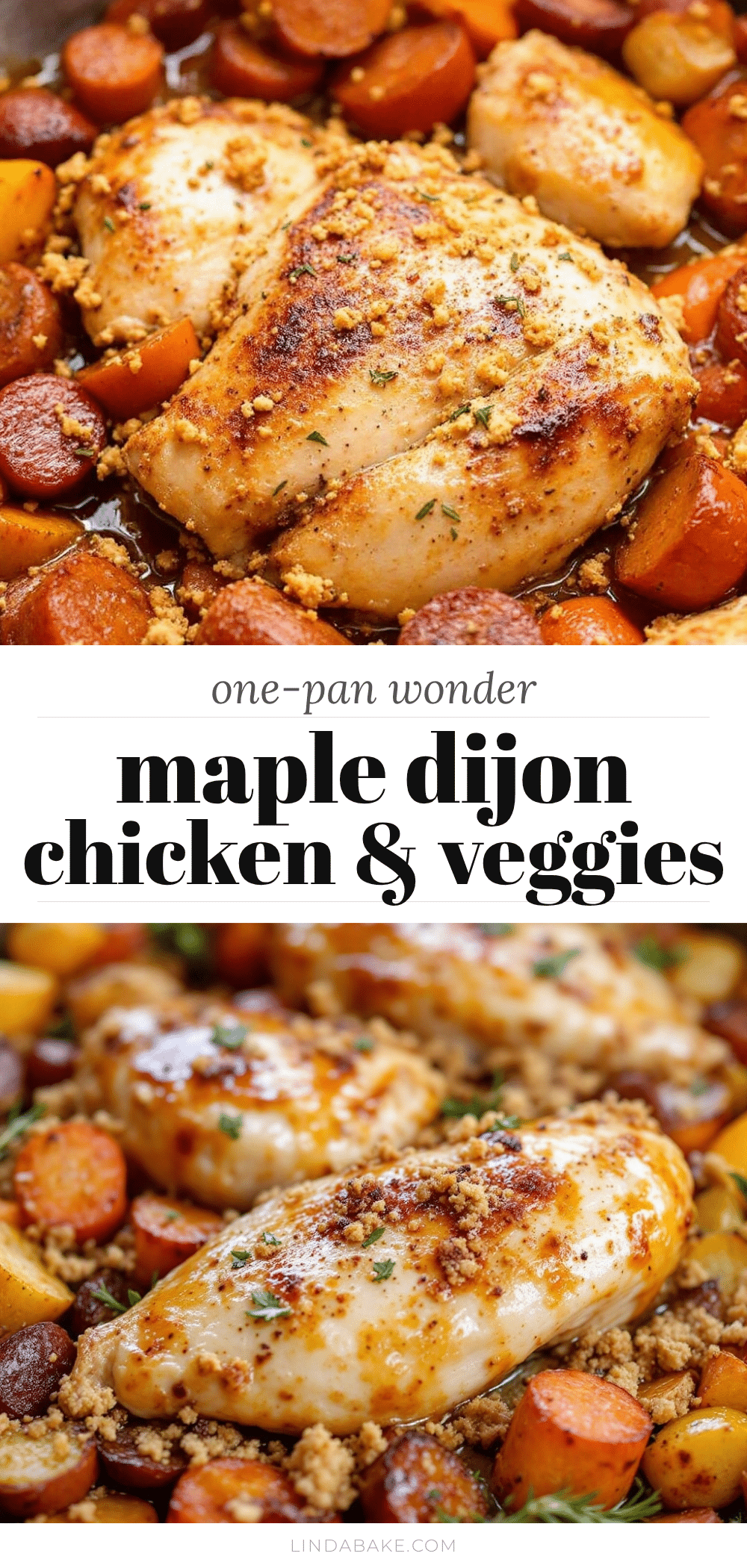
Easy One-Pan Maple Dijon Chicken & Root Vegetables
A simple one-pan dinner featuring sweet and tangy maple Dijon chicken with roasted root vegetables. Minimal prep and cleanup make it perfect for busy weeknights.
- Prep Time: 15 minutes
- Cook Time: 45 minutes
- Total Time: 1 hour
- Yield: 4 servings 1x
- Category: Main Course
- Cuisine: American
Ingredients
- 4 bone-in, skin-on chicken thighs (about 1.5 pounds)
- 3 medium carrots, peeled and cut into 2-inch chunks
- 2 medium parsnips, peeled and cut into 2-inch chunks
- 1 large sweet potato, peeled and cut into 1-inch cubes (about 2 cups)
- 1 medium red onion, cut into wedges
- 3 cloves garlic, smashed
- 2 tablespoons olive oil
- Salt and black pepper, to taste
- 3 tablespoons pure maple syrup
- 2 tablespoons Dijon mustard
- 1 tablespoon whole-grain mustard
- 1 tablespoon apple cider vinegar
- 1 teaspoon dried thyme
- 1 teaspoon smoked paprika
- ½ teaspoon garlic powder
- Fresh parsley or thyme, chopped (for garnish)
- Flaky sea salt (for garnish)
Instructions
- Preheat your oven to 425°F (220°C). Position a rack in the middle of the oven.
- Prepare the vegetables: wash and peel the carrots, parsnips, and sweet potato. Cut them into roughly 2-inch chunks. Cut the red onion into wedges, leaving the root end intact. Smash the garlic cloves with the flat side of your knife.
- Season the vegetables: place all cut vegetables on a lined baking sheet. Drizzle with 2 tablespoons olive oil, sprinkle with salt and black pepper, and toss to coat. Spread in a single layer, leaving space in the center for the chicken.
- Make the maple Dijon glaze: in a small bowl, whisk together maple syrup, Dijon mustard, whole-grain mustard, apple cider vinegar, dried thyme, smoked paprika, and garlic powder.
- Prep the chicken: pat chicken thighs dry with paper towels. Season both sides generously with salt and black pepper. Place skin-side up in the center of the baking sheet.
- Apply the glaze: brush or spoon about two-thirds of the glaze over the chicken thighs. Drizzle the remaining glaze over the vegetables and toss gently to coat.
- Roast for 30 minutes.
- Flip and baste: after 30 minutes, remove the pan from the oven. Flip the chicken thighs over and brush with pan juices. Toss the vegetables to coat. Return to the oven.
- Roast for another 15-20 minutes, until chicken reaches an internal temperature of 165°F (74°C) and vegetables are tender and caramelized.
- Rest and serve: remove from oven and let rest for 5 minutes. Sprinkle with fresh herbs and flaky sea salt if desired. Serve directly from the pan or transfer to a platter.
Notes
For best results, pat chicken dry for crispy skin. Cut vegetables uniformly for even cooking. If vegetables brown too quickly, tent with foil for the last 10 minutes. Leftovers keep in the refrigerator for up to 4 days and reheat well in a 350°F oven.
Nutrition
- Serving Size: 1 chicken thigh + 1
- Calories: 485
- Sugar: 18
- Sodium: 520
- Fat: 22
- Saturated Fat: 5
- Carbohydrates: 38
- Fiber: 6
- Protein: 32
Keywords: one-pan chicken, maple Dijon, sheet pan dinner, roasted root vegetables, gluten-free, dairy-free