That sharp, tangy scent of fermenting cabbage — the kind that clings to your sweater and lingers in your hair long after you’ve left the kitchen — still takes me straight back to a drafty beer hall in Munich. I was twenty-two, shivering in a wool coat that felt two sizes too big, holding a mug of dark lager so heavy my wrist ached. The air was thick with the smell of roasting meat and spiced bread, a chaotic symphony of autumn in full swing. I remember watching a local family share a massive wooden table, their laughter mixing with the clatter of porcelain and the low hum of polka music drifting from a corner stage. They didn’t mind my presence; in fact, the grandmother smiled and nudged a plate of sauerkraut toward me, a silent invitation to join the feast.
It wasn’t just the food that stayed with me, though the bratwurst was undeniably the star of that evening. It was the feeling of belonging to something ancient and communal, a tradition that doesn’t care about your job title or your social media following. It only cares about good food, cold beer, and the company of people who enjoy both. Now, living thousands of miles away from that Bavarian table, I recreate that moment every October. It’s not about perfection. It’s about capturing that specific, smoky comfort in my own kitchen.
When I make this Easy Oktoberfest Bratwurst and Sauerkraut Skillet, I’m not just cooking dinner. I’m bridging the gap between that cold, crisp night in Germany and my warm, cluttered stove at home. The process is simple, almost meditative. You slice the sausages, you sweat the onions until they turn translucent, and you let the sauerkraut bubble away, releasing those complex, sour notes that cut through the richness of the meat. It’s honest cooking. No fancy gadgets, no obscure ingredients found only in specialty shops.
I’ve made this recipe hundreds of times, tweaking the spice blend, swapping the beer, even trying different brands of cabbage. But the core remains the same. It’s a dish that demands to be shared. You’ll find yourself serving it with crusty bread just to soak up every last drop of the pan juices. It’s the kind of meal that feels like a hug from the inside out. And honestly, that’s why I keep coming back to it year after year. It’s not just a recipe; it’s a memory you can eat.
Why You’ll Love This Recipe
Let’s be honest for a second. Cooking German-style meals at home often feels like a lot of work. You worry about grilling the sausages properly, steaming the cabbage separately, and then trying to coordinate two different cooking processes so everything finishes at the same time. It’s stressful. It’s also unnecessary. This skillet method changes the entire game. By cooking everything in one heavy-bottomed pan, you allow the flavors to marry in a way that separate plating never could. The bratwurst releases its natural fats and spices directly into the sauerkraut, creating a unified flavor profile that is deeper and more complex than the sum of its parts.
- One-Pan Wonder: This comes together in under 45 minutes, making it the ultimate solution for busy weeknights or lazy Sunday dinners. You get the full Oktoberfest experience without the cleanup nightmare of multiple pots and pans.
- Pantry Staples: No fancy grocery trips needed. You likely already have sauerkraut, onions, and sausages in your kitchen. If you don’t, they are cheap and easy to find at any standard supermarket.
- Perfect for Game Day: Great for tailgating parties, football watch parties, or cozy autumn evenings when the temperature drops. It’s hearty enough to satisfy big appetites without requiring hours of prep.
- Crowd-Pleaser: Always gets rave reviews from kids and adults alike. Even picky eaters usually warm up to bratwurst when it’s paired with the right amount of sweet caramelized onions.
- Unbelievably Delicious: The texture and flavor combo is next-level comfort food. The snap of the sausage skin against the soft, tangy cabbage creates a satisfying mouthfeel that keeps you coming back for seconds.
What makes this recipe different from the rest is the technique of deglazing. Instead of just boiling the brats, we sear them first to build a fond (those brown bits stuck to the pan), then we add the sauerkraut and beer to lift those flavors. This isn’t just another version of brats and kraut—it’s your best version. It’s the kind of recipe that makes you close your eyes after the first bite. It’s comfort food reimagined—faster, easier, but with the same soul-soothing satisfaction as a trip to the beer garden. It’s perfect for impressing guests without stress, or turning a simple meal into something memorable.
What Ingredients You Will Need
This recipe uses simple, wholesome ingredients to deliver bold flavor and satisfying texture without the fuss. The beauty of this dish lies in its simplicity. You don’t need a dozen spices or hard-to-find condiments. The magic happens through the interaction of high-quality sausage, fermented cabbage, and aromatics. Most of these items are pantry staples or freezer essentials, which makes this a reliable go-to when you’re low on time but high on hunger.
- Bratwurst Sausages: Aim for 6 to 8 fresh, raw bratwursts. Fresh is non-negotiable here. Pre-cooked or smoked sausages won’t give you that juicy interior or the ability to render their fat properly. I recommend looking for brands like Hormel or local butcher-shop sausages for the best texture. Avoid the ones that feel overly firm or dry.
- Sauerkraut: You will need two large jars (about 32 ounces total). Look for raw, refrigerated sauerkraut if you can find it, as it has a livelier, crunchier texture than the shelf-stable canned versions. If you must use canned, rinse it thoroughly to remove excess vinegar and brine, which can make the dish too sour.
- Yellow Onions: Use 2 large yellow onions. Yellow onions provide the best balance of sweetness and pungency when caramelized. Slice them thinly for even cooking. Sweet onions like Vidalia are also a great option if you want a milder flavor profile.
- Butter: Unsalted butter, about 2 tablespoons. This helps to sauté the onions and adds a rich, creamy mouthfeel to the dish. Salted butter works too, but reduce the added salt in the recipe.
- Beer: A light lager or pilsner, about 1 cup. Traditional German beers like Bitburger or Paulaner are ideal, but any crisp lager works. The alcohol cooks off, leaving behind a malty sweetness that complements the cabbage.
- Dijon Mustard: 1 tablespoon. This adds a tangy kick and helps emulsify the pan juices. It’s a classic pairing with bratwurst.
- Caraway Seeds: 1 teaspoon. This is the secret ingredient that screams “Oktoberfest.” Caraway seeds add an earthy, slightly citrusy note that is essential to authentic sauerkraut flavor. If you hate caraway, you can skip it, but I highly encourage you to try it.
- Brown Sugar: 1 tablespoon. A little bit of sugar helps to balance the acidity of the sauerkraut and promotes caramelization in the onions.
- Salt and Black Pepper: To taste. Always season to your preference at the end, as the sauerkraut and mustard already contain sodium.
For the best results, let your sausages come to room temperature before cooking. This helps them cook more evenly and prevents the casings from bursting. Also, don’t skip the rinsing step for the sauerkraut if you are using canned varieties. It makes a huge difference in the final taste.
Equipment Needed
You don’t need much for this recipe, which is part of its appeal. A large, heavy-bottomed skillet or cast-iron pan is essential. Cast iron is my go-to because it retains heat beautifully, allowing for a good sear on the sausages and steady simmering for the cabbage. If you don’t have cast iron, a stainless steel skillet with a thick base works well too.
You will also need a sharp chef’s knife for slicing the onions and sausages, and a wooden spoon or spatula for stirring. A measuring cup is handy for the beer, though eyeballing it is fine. If you prefer, you can use a lid that fits your skillet to help steam the cabbage, but it’s not strictly necessary if you manage the heat correctly.
I’ve tried using non-stick pans for this, but they don’t develop the same fond (browned bits) that adds flavor. If you must use non-stick, just be gentle with your utensils to avoid scratching the surface. For budget-friendly options, any large frying pan over 12 inches will suffice. Just ensure it has high sides to prevent splattering when you add the beer.
Preparation Method

- Prep the Ingredients (5 minutes): Begin by slicing the onions in half from root to tip, then peel off the outer skin. Slice them thinly into half-moons. Rinse the sauerkraut under cold water in a colander and let it drain well. Squeeze out excess liquid with your hands if needed. Pat the bratwursts dry with paper towels. This step is crucial for getting a good sear.
- Sear the Bratwursts (10 minutes): Heat your large skillet over medium-high heat. Add a splash of oil or a knob of butter. Place the bratwursts in the pan, leaving space between them. Cook for 3-4 minutes per side, turning occasionally, until they are browned and crisp on all sides. You don’t need to cook them through yet; just get that color. Remove them from the pan and set them aside on a plate.
- Caramelize the Onions (10 minutes): Reduce the heat to medium. Add the sliced onions to the same pan. Cook them, stirring occasionally, until they are soft and golden brown. This takes patience. Don’t rush it. You want them sweet and jammy, not just translucent. If they start to burn, lower the heat. Sprinkle with a pinch of salt to help draw out moisture.
- Simmer the Sauerkraut (15 minutes): Add the drained sauerkraut to the pan with the onions. Stir in the caraway seeds, brown sugar, and Dijon mustard. Pour in the beer. Stir everything together, scraping up any browned bits from the bottom of the pan. Reduce the heat to low, cover the pan, and let it simmer. This allows the flavors to meld and the cabbage to soften.
- Finish and Serve (5 minutes): After 15 minutes, uncover the pan. If there is still too much liquid, simmer uncovered for a few more minutes to reduce. Return the bratwursts to the pan, nestling them into the sauerkraut mixture. Heat them through for 2-3 minutes. Taste and adjust seasoning with salt and pepper. Serve immediately.
Keep an eye on the liquid level. You want the sauerkraut to be moist but not swimming in broth. If it looks too dry, add a splash of water or more beer. If it’s too wet, just leave the lid off to let it evaporate.
Cooking Tips & Techniques
The biggest mistake people make with bratwurst is piercing the casings. Never poke holes in the sausages with a fork. This lets all the flavorful juices escape into the pan, leaving you with dry, tough meat. Instead, use tongs to turn them gently. Another tip is to not overcrowd the pan when searing the brats. If you have a small skillet, cook them in batches. Crowding lowers the pan temperature and causes the sausages to steam instead of sear.
For the sauerkraut, the key is patience. Many people rinse it too much or not enough. If you use fresh, raw sauerkraut, you don’t need to rinse it at all. For canned, a quick rinse is enough to remove the sharp vinegar bite while keeping some tang. Also, don’t skip the caraway seeds. They are the defining flavor of this dish. If you find them too strong, start with half a teaspoon.
Timing is everything. You want the onions to be fully caramelized before adding the sauerkraut. If you add it too early, the cabbage will cook the onions instead of the other way around, resulting in a mushy texture. Let the onions get that deep golden color first. It makes a world of difference in the sweetness of the final dish.
Variations & Adaptations
This recipe is quite versatile, allowing you to tweak it based on your preferences or dietary needs. For a spicy kick, swap the regular bratwursts for spicy German sausages or add a pinch of red pepper flakes to the sauerkraut. If you want a smokier flavor, use smoked sausage instead of fresh bratwurst, though you won’t need to sear them as long.
For a lighter version, you can use turkey bratwursts, though they won’t have the same rich fat content. You might want to add a bit more butter to compensate. If you are avoiding alcohol, substitute the beer with beef broth or apple cider. Apple cider adds a nice sweetness that pairs well with the cabbage, while broth adds savory depth.
I’ve also tried adding sliced apples to the pan along with the onions. The tartness of Granny Smith apples complements the sauerkraut beautifully. It’s a great way to incorporate more vegetables into the dish. For a gluten-free option, ensure your bratwursts and beer are certified gluten-free, as some sausages contain fillers or breadcrumbs.
Serving & Storage Suggestions
Serve this dish hot, straight from the skillet. It pairs wonderfully with crusty German bread, pretzels, or mashed potatoes. For a complete meal, add a side of green beans or a simple arugula salad to cut through the richness. A cold lager or a crisp pilsner is the traditional beverage choice, but a dry white wine or even iced tea works well too.
Leftovers can be stored in an airtight container in the refrigerator for up to 3 days. The flavors actually improve after a day or two as they continue to meld. To reheat, warm the skillet over medium-low heat with a splash of water or broth to prevent sticking. You can also freeze the mixture for up to 3 months, though the texture of the cabbage may become softer upon thawing.
Nutritional Information & Benefits
This dish is rich in protein and fiber, thanks to the sausages and sauerkraut. Sauerkraut is also a great source of probiotics, which support gut health, especially if you use raw, unpasteurized varieties. However, it can be high in sodium, so those watching their salt intake should rinse the cabbage thoroughly or choose low-sodium options. The dish is naturally gluten-free if you check your sausage labels. It’s a hearty, satisfying meal that provides sustained energy, making it perfect for cooler weather when your body craves warmth and comfort.
Conclusion
This Easy Oktoberfest Bratwurst and Sauerkraut Skillet is more than just a meal; it’s a celebration of simple, honest cooking. It brings the warmth of a German beer garden into your home without the hassle. I hope you try it and create your own memories around this table. Feel free to adjust the spices, swap the sausages, or add your favorite veggies. Cooking is about making it your own. If you make this recipe, I’d love to hear how it turned out. Leave a comment below with your variations or just tell me about your favorite Oktoberfest tradition. Share this post with a friend who needs some comfort food in their life. Happy cooking!
FAQs
Can I use pre-cooked bratwurst for this recipe?
Yes, you can, but the texture and flavor won’t be as good. Fresh bratwursts allow you to sear them and render their fat, which enhances the dish. If you must use pre-cooked, just warm them through in the skillet and skip the initial searing step.
What beer is best for cooking bratwurst?
A traditional German lager or pilsner is ideal. You can also use a light ale or even a dry white wine if you prefer. Avoid heavy stouts or IPAs, as their strong flavors can overpower the delicate taste of the sausage and cabbage.
How do I prevent the sauerkraut from being too sour?
Rinsing canned sauerkraut under cold water helps remove excess vinegar and brine. Adding a little brown sugar or using sweet onions also helps balance the acidity. If you use raw sauerkraut, it tends to be less sour than canned versions.
Can I make this in a slow cooker?
Yes, you can. Brown the sausages first in a pan, then add them to the slow cooker with the onions, sauerkraut, and beer. Cook on low for 4-6 hours. However, the texture of the sausages may become softer, and you won’t get the same caramelized flavor from the onions.
What sides go well with bratwurst and sauerkraut?
Classic sides include German potato salad, mashed potatoes, roasted root vegetables, or crusty bread. A simple green salad with a vinaigrette dressing also works well to balance the richness of the meal.
Pin This Recipe!
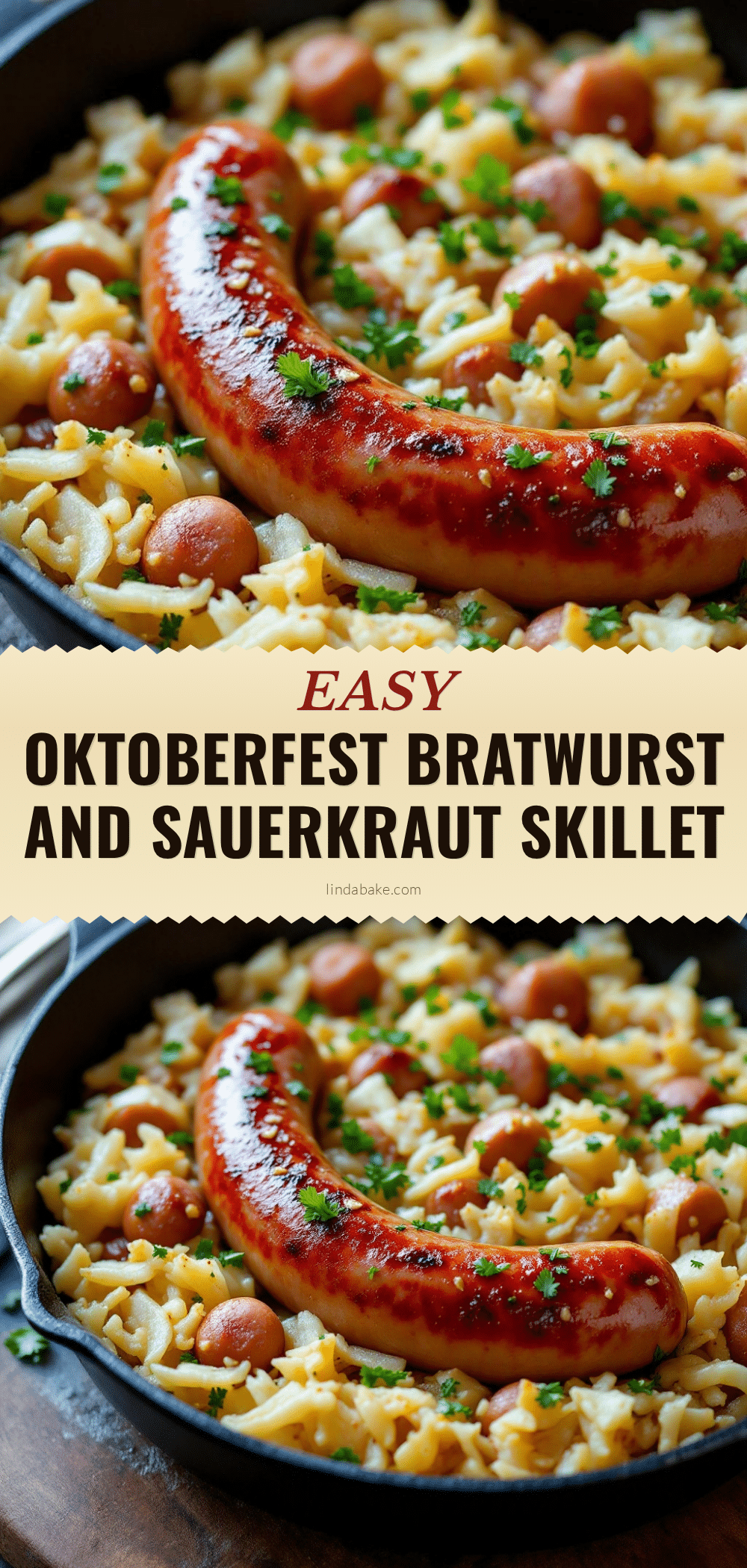
Easy Oktoberfest Bratwurst and Sauerkraut Skillet

A one-pan comfort food dish that sears fresh bratwursts and simmers them with caramelized onions, tangy sauerkraut, and beer for a deep, unified flavor profile.
- Prep Time: 5 minutes
- Cook Time: 40 minutes
- Total Time: 45 minutes
- Yield: 4 servings 1x
- Category: Main Course
- Cuisine: German
Ingredients
- 6 to 8 fresh raw bratwursts
- 32 ounces sauerkraut (2 large jars)
- 2 large yellow onions, thinly sliced
- 2 tablespoons unsalted butter
- 1 cup light lager or pilsner beer
- 1 tablespoon Dijon mustard
- 1 teaspoon caraway seeds
- 1 tablespoon brown sugar
- Salt and black pepper to taste
- Oil or additional butter for searing
Instructions
- Slice onions into half-moons, rinse and drain sauerkraut, and pat bratwursts dry.
- Heat a large heavy-bottomed skillet over medium-high heat with oil or butter.
- Sear bratwursts for 3-4 minutes per side until browned and crisp; remove and set aside.
- Reduce heat to medium and cook onions in the same pan until soft and golden brown (caramelized).
- Add sauerkraut, caraway seeds, brown sugar, and Dijon mustard to the onions.
- Pour in beer, scraping up browned bits from the bottom of the pan.
- Reduce heat to low, cover, and simmer for 15 minutes to meld flavors.
- Uncover, return bratwursts to the pan, and heat through for 2-3 minutes.
- Adjust seasoning with salt and pepper and serve immediately.
Notes
Do not pierce the bratwurst casings to retain juices. If using canned sauerkraut, rinse thoroughly to remove excess vinegar. For a non-alcoholic version, substitute beer with beef broth or apple cider. Leftovers keep in the fridge for up to 3 days.
Nutrition
- Serving Size: 1-2 sausages with sa
- Calories: 650
- Sugar: 12
- Sodium: 1200
- Fat: 45
- Saturated Fat: 15
- Carbohydrates: 25
- Fiber: 6
- Protein: 35
Keywords: Oktoberfest, bratwurst, sauerkraut, skillet, one-pan meal, German food, comfort food, fall recipes, beer brats