I did not trust kabocha squash in curry. Honestly, I thought it sounded like a mistake until I tasted it.
For years, I stuck to butternut squash. It was safe. It was predictable. It behaved. Kabocha looked like a tiny, green-wrapped pumpkin with a hard shell that fought back. I assumed it would be watery or bland in a soup.
My neighbor, Mrs. H, brought over a bowl of this creamy kabocha squash curry soup last autumn. She insisted I try it. I took one spoonful and stopped talking. The texture was unlike anything I expected. It wasn’t just smooth; it was rich, almost like a custard made from vegetables.
The flavor profile was complex. It had that earthy sweetness from the squash, balanced by the warmth of ginger and the depth of soy sauce. It wasn’t spicy, but it wasn’t boring either. It felt like a hug in a bowl.
I went home and bought three kabocha squashes immediately. I was skeptical about the prep, but the payoff was worth every minute of carving. This soup became a staple in my kitchen during the colder months.
It’s not just a recipe; it’s a comfort ritual. Now, whenever the weather turns crisp, I make this creamy kabocha squash curry soup. It’s become my go-to way to warm up without feeling heavy or sluggish.
The conversion was complete. I no longer doubt the kabocha. I trust it completely. And now, so will you.
Why You’ll Love This Recipe
You might be wondering why this specific soup stands out among the hundreds of pumpkin and squash recipes out there. Let’s be honest, there are a lot of options. But this creamy kabocha squash curry soup is different for a few key reasons.
First, the texture is unbeatable. Kabocha squash has a lower water content than butternut or acorn squash. This means you don’t end up with a thin, watery broth. Instead, you get a naturally thick, velvety base that feels indulgent without needing heavy cream. It’s creamy in the truest sense of the word.
Second, the flavor balance is spot-on. Many curry soups can be too spicy or too sweet. This recipe strikes a perfect middle ground. The subtle heat from the curry powder complements the natural sweetness of the squash. It’s sophisticated but approachable.
Here is why this recipe earns its place on your table:
- Quick & Easy: While roasting the squash takes time, the actual cooking process is straightforward. It comes together easily, perfect for a cozy weeknight dinner when you want something special but not complicated.
- Simple Ingredients: You likely already have most of these items in your pantry. Onion, garlic, ginger, curry powder, and vegetable broth are staples. No fancy grocery trips needed.
- Perfect for Meal Prep: This soup tastes even better the next day as the flavors meld together. It’s great for lunch boxes or freezing for later.
- Crowd-Pleaser: Even picky eaters who usually avoid vegetables love this. The sweetness masks the “green” taste, making it a hit with kids and adults alike.
- Unbelievably Delicious: The combination of roasted squash and aromatic spices creates a next-level comfort food experience.
What makes this recipe truly special is the technique. Roasting the squash first concentrates its flavor. Boiling it directly would leave the taste flat. This small step makes a huge difference.
It’s the kind of soup that makes you close your eyes after the first bite. It’s comfort food reimagined—healthy, filling, but with the same soul-soothing satisfaction as a heavy pasta dish.
What Ingredients You Will Need
This recipe uses simple, wholesome ingredients to deliver bold flavor and satisfying texture without the fuss. The beauty of this creamy kabocha squash curry soup lies in its minimalism. You don’t need exotic spices or hard-to-find items.
Here is what you need to gather:
For the Base
- Kabocha Squash: 1 medium squash (about 2-3 lbs), peeled and cubed. This is the star. Look for a squash that feels heavy for its size. I recommend buying from a local Asian market for the freshest options.
- Onion: 1 large yellow onion, diced. Adds sweetness and depth.
- Garlic: 3 cloves, minced. Fresh garlic is non-negotiable here.
- Fresh Ginger: 1 tablespoon, grated. Adds a bright, zesty kick that cuts through the richness.
- Oil: 2 tablespoons olive oil or coconut oil. Coconut oil adds a subtle tropical note that pairs well with curry.
For the Liquid & Flavor

- Vegetable Broth: 4 cups, low-sodium. Use a good quality broth. I prefer Imagine Foods brand for its clean taste.
- Coconut Milk: 1 can (13.5 oz), full-fat. This provides the creamy texture and richness. Do not use light milk if you want that luxurious mouthfeel.
- Curry Powder: 2 tablespoons. Use a mild to medium curry powder. I like McCormick or a local blend.
- Soy Sauce: 1 tablespoon. Adds umami and saltiness.
- Soy Sauce: 1 tablespoon. Adds umami and saltiness.
- Maple Syrup: 1 teaspoon. Optional, but helps balance the spices if your squash isn’t super sweet.
For Garnish
- Green Onions: 2 stalks, sliced. For color and fresh bite.
- Red Pepper Flakes: A pinch. For a little heat.
- Fresh Cilantro: Chopped. For freshness.
If you can’t find kabocha, butternut squash is a decent substitute, but the texture will be slightly less dense. For a dairy-free version, the coconut milk already covers that. For a gluten-free option, ensure your curry powder and soy sauce are certified gluten-free.
Equipment Needed
You don’t need a lot of fancy gadgets to make this soup. A few basic tools will get you there.
- Large Dutch Oven or Heavy-Bottomed Pot: This is essential. I use a 6-quart Le Creuset Dutch oven. It distributes heat evenly, which prevents the squash from burning while sautéing. If you don’t have one, a large stockpot works fine.
- Chef’s Knife and Cutting Board: Kabocha squash can be tough to cut. Use a sharp, sturdy knife. Be careful with the hard skin.
- Immersion Blender or Standard Blender: An immersion blender is my favorite because you can blend directly in the pot. It saves dishes. If using a standard blender, let the soup cool slightly before blending in batches to avoid steam explosions.
- Peeler: A Y-peeler works well for removing the tough skin of the kabocha.
- Measuring Spoons: For accuracy with spices.
A food processor can also work for blending, but the texture might be slightly grainier. For best results, stick to a blender. If your pot is large, make sure your blender jar is big enough to handle the volume.
Preparation Method
Making this creamy kabocha squash curry soup is straightforward. Follow these steps carefully for the best results.
- Prep the Squash (10 minutes): Wash the kabocha squash thoroughly. Using a sharp chef’s knife, cut the squash in half. Scoop out the seeds and stringy pulp with a spoon. Peel the skin off using a Y-peeler or a sharp knife. Cut the flesh into 1-inch cubes. Try to keep the pieces uniform so they cook evenly.
- Roast the Squash (25 minutes): Preheat your oven to 400°F (200°C). Toss the squash cubes with a little oil, salt, and pepper. Spread them on a baking sheet. Roast for 20-25 minutes until tender and slightly caramelized. This step is crucial for flavor. You can skip this and boil the squash, but roasting adds depth.
- Sauté Aromatics (5 minutes): While the squash roasts, heat the oil in your Dutch oven over medium heat. Add the diced onion and cook until translucent, about 3-4 minutes. Add the minced garlic and grated ginger. Cook for another minute until fragrant. Be careful not to burn the garlic.
- Add Spices and Liquid (2 minutes): Stir in the curry powder. Cook for 30 seconds to toast the spices. This releases their oils. Pour in the vegetable broth and scrape up any browned bits from the bottom of the pot.
- Simmer (15 minutes): Add the roasted squash cubes to the pot. Bring to a boil, then reduce heat to low. Cover and simmer for 10-15 minutes. This allows the squash to absorb the curry flavors. The squash should be very soft.
- Blend Until Smooth (3 minutes): Remove from heat. Carefully blend the soup using an immersion blender until completely smooth. If using a standard blender, blend in batches. The soup should be thick and creamy.
- Finish with Coconut Milk (2 minutes): Stir in the coconut milk and soy sauce. Heat gently for 2-3 minutes. Do not boil after adding the coconut milk, or it might split. Taste and adjust seasoning with salt or maple syrup if needed.
- Serve: Ladle into bowls. Garnish with green onions, cilantro, and red pepper flakes.
Total time is about 45-50 minutes. The prep is mostly chopping. The roasting does the heavy lifting for flavor.
Cooking Tips & Techniques
I’ve made this soup enough times to know where things can go wrong. Here are some tips to ensure success.
First, don’t skip the roasting. I tried boiling the squash once to save time. The result was watery and bland. Roasting concentrates the sugars and creates a nutty flavor. It’s worth the extra oven time.
Second, control the heat when blending. If using a standard blender, always vent the lid. Steam builds up fast. I once had soup explode onto my ceiling. Learn from my mistake. Use a towel over the vent.
Third, taste as you go. Curry powders vary in heat and quality. Some are mild, some are fiery. Start with 2 tablespoons. Taste. Add more if you want more spice. The soy sauce adds salt, so be careful with additional salt.
Fourth, if the soup is too thick, add more broth. Kabocha absorbs liquid. If you like a thinner consistency, add hot water or broth until it reaches your preferred texture.
Finally, let it rest. Like many soups, this tastes better after sitting for a few hours. The flavors meld together. If you make it ahead, reheat gently on the stove.
Variations & Adaptations
This recipe is flexible. Here are some ways to customize it.
- Protein Boost: Add cooked chicken, shrimp, or tofu. I like adding cubed firm tofu for a vegetarian protein source. Add it in the last 5 minutes of simmering.
- Spicy Version: Add a diced jalapeño with the onions. Or use a spicy curry powder. A dash of sriracha in the bowl adds heat.
- Green Vegetable Twist: Stir in a handful of spinach or kale at the end. It adds color and nutrients. The spinach wilts quickly.
- Gluten-Free: Use tamari instead of soy sauce. Ensure your curry powder is gluten-free.
- Dairy-Free: This recipe is naturally dairy-free thanks to the coconut milk. No changes needed.
I once added leftover roasted sweet potatoes to this soup. It worked surprisingly well. The sweetness complemented the curry. Don’t be afraid to experiment.
Serving & Storage Suggestions
Serve this creamy kabocha squash curry soup hot. It pairs well with crusty bread or rice. I like serving it with toasted sesame seeds for crunch.
For storage, let the soup cool completely. Transfer to an airtight container. It keeps in the refrigerator for up to 5 days. The flavors actually improve after a day or two.
To freeze, leave out the coconut milk if possible. Freeze the base soup. When reheating, stir in fresh coconut milk. This prevents separation. The soup freezes well for up to 3 months.
Reheat gently on the stove over low heat. Stir frequently. Do not microwave on high, or it might separate. Add a splash of broth if it thickens too much in the fridge.
Nutritional Information & Benefits
This soup is not just delicious; it’s nutritious. Kabocha squash is rich in vitamins A and C. It supports immune health and eye health. It’s also high in fiber, which aids digestion.
The coconut milk provides healthy fats. These fats help your body absorb the fat-soluble vitamins in the squash. The ginger adds anti-inflammatory properties.
Each serving is roughly 250 calories. It’s low in saturated fat if you use light coconut milk, but full-fat adds satiety. It’s a balanced meal that keeps you full.
For those watching sodium, use low-sodium broth and limit the soy sauce. This recipe can fit into various dietary plans, including vegan and gluten-free diets.
Conclusion
This creamy kabocha squash curry soup is a winter winner. It’s comforting, healthy, and surprisingly easy to make. The roasting step makes all the difference.
I hope you try it. Customize it with your favorite add-ins. Add chicken if you’re hungry. Add greens for color. Make it your own.
If you make this, please leave a comment. I love hearing how it turned out for you. Share your variations. You might inspire someone else.
Thanks for reading. Enjoy every spoonful.
Frequently Asked Questions
Can I use butternut squash instead of kabocha?
Yes, butternut squash works well. It is less dense and sweeter. You may need less coconut milk. The texture will be slightly thinner.
How do I peel a kabocha squash?
It’s tough. Use a sharp knife. Cut it in half first. Scoop out seeds. Then peel the skin. A Y-peeler works best. Be careful with your fingers.
Can I make this soup ahead of time?
Yes, it tastes better the next day. Store in the fridge for up to 5 days. Reheat gently on the stove.
Is this soup spicy?
No, it’s mild. The curry powder adds aroma, not heat. Add red pepper flakes or sriracha if you want spice.
Can I freeze this soup?
Yes. Freeze the base without coconut milk. Add fresh coconut milk when reheating. It freezes well for 3 months.
Pin This Recipe!
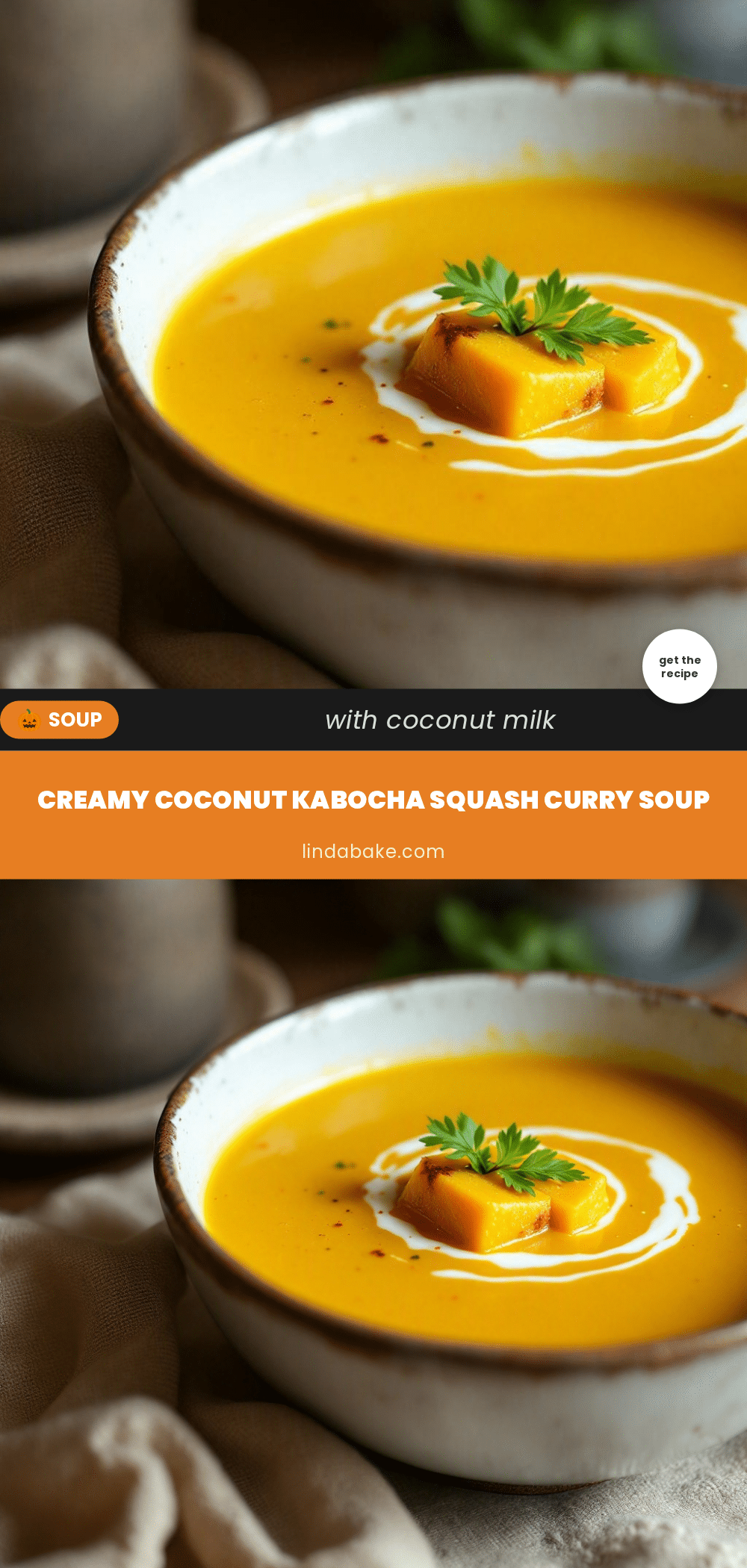
Creamy Kabocha Squash Curry Soup

A rich, velvety soup made with roasted kabocha squash, coconut milk, and aromatic curry spices. This comforting dish offers a perfect balance of earthy sweetness and warmth without being heavy or spicy.
- Prep Time: 10 minutes
- Cook Time: 35 minutes
- Total Time: 45-50 minutes
- Yield: 4 servings 1x
- Category: Main Course
- Cuisine: Asian Fusion
Ingredients
- 1 medium kabocha squash (about 2–3 lbs), peeled and cubed
- 1 large yellow onion, diced
- 3 cloves garlic, minced
- 1 tablespoon fresh ginger, grated
- 2 tablespoons olive oil or coconut oil
- 4 cups low-sodium vegetable broth
- 1 can (13.5 oz) full-fat coconut milk
- 2 tablespoons mild to medium curry powder
- 1 tablespoon soy sauce (or tamari for gluten-free)
- 1 teaspoon maple syrup (optional)
- 2 stalks green onions, sliced
- Pinch of red pepper flakes
- Fresh cilantro, chopped
- Salt and pepper to taste
Instructions
- Preheat oven to 400°F (200°C). Toss cubed kabocha squash with a little oil, salt, and pepper. Roast on a baking sheet for 20-25 minutes until tender and caramelized.
- While squash roasts, heat oil in a large Dutch oven over medium heat. Add diced onion and cook until translucent (3-4 minutes).
- Add minced garlic and grated ginger; cook for 1 minute until fragrant.
- Stir in curry powder and cook for 30 seconds to toast the spices.
- Pour in vegetable broth, scraping up any browned bits from the bottom of the pot.
- Add roasted squash cubes to the pot. Bring to a boil, then reduce heat to low. Cover and simmer for 10-15 minutes until squash is very soft.
- Remove from heat and blend soup until smooth using an immersion blender or standard blender.
- Stir in coconut milk and soy sauce. Heat gently for 2-3 minutes without boiling. Adjust seasoning with salt or maple syrup if needed.
- Ladle into bowls and garnish with green onions, cilantro, and red pepper flakes.
Notes
Roasting the squash is crucial for concentrating flavor and preventing a watery texture. If using a standard blender, vent the lid to avoid steam explosions. For freezing, omit the coconut milk before freezing; add fresh coconut milk when reheating to prevent separation. This soup tastes even better the next day as flavors meld.
Nutrition
- Serving Size: 1 bowl
- Calories: 250
- Sugar: 8
- Sodium: 400
- Fat: 18
- Saturated Fat: 12
- Carbohydrates: 22
- Fiber: 5
- Protein: 4
Keywords: kabocha squash, curry soup, creamy soup, vegan soup, gluten-free, winter comfort food, healthy soup, coconut milk soup