I burned this farro salad three times before I figured out what I was doing wrong. Not the salad itself—I mean the grain. I’d toast it dry in the pan, get distracted by something (usually a kid asking where their other shoe was), and by the time I looked back, the farro smelled like burnt popcorn and my kitchen was filled with this acrid smoke that hung around for hours. The vegetables were fine. The dressing was fine. But that scorched-grain flavor ruined every single batch. I almost gave up on warm fall salads entirely, which is funny because now this cozy warm fall farro salad with roasted root vegetables is the dish I make when I need to remind myself that good food doesn’t have to be complicated—it just has to be made with patience. And a timer. Definitely a timer.
The first time I got it right, I was making dinner for my sister who had just come back from a trip and was complaining about how all the restaurant food she ate made her feel heavy. I wanted something that felt like a hug in a bowl but didn’t leave you reaching for antacids afterward. I had a bag of farro in the pantry, some sad-looking carrots and parsnips that needed using up, and a butternut squash that was staring at me from the counter. I roasted everything low and slow while the farro simmered away on the stove, and when I tossed it all together with a lemon-tahini dressing, something clicked. The nutty chew of the grain, the caramelized sweetness of the roots, that little hit of brightness from the lemon—it all made sense. My sister ate two bowls and asked for the recipe before she left.
That was three falls ago, and I’ve been tweaking it ever since. This version is the one I come back to every year when the leaves start turning and the air gets that crisp bite. It’s forgiving, flexible, and somehow manages to feel both rustic and elegant at the same time. Honestly, it’s the kind of salad that makes you forget you’re eating something healthy.
Why You’ll Love This Recipe
Let me tell you why this warm farro salad has earned a permanent spot in my fall rotation. I’ve tested this recipe more times than I care to count, tweaking roasting times, adjusting the grain-to-veggie ratio, and even swapping in different dressings just to see what sticks.
- Perfect for Meal Prep: This salad actually gets better after a day or two in the fridge. The farro soaks up the dressing and the flavors meld together beautifully. Make it Sunday and eat it all week.
- Simple Ingredients: You probably already have most of these items in your kitchen. Farro, root vegetables, olive oil, a few pantry spices. No weird specialty items that you’ll use once and forget about.
- Great for Entertaining: This is one of those dishes that looks impressive on a Thanksgiving table or at a Friendsgiving gathering, but it’s secretly one of the easiest things you can make. Your guests will think you spent hours on it.
- Crowd-Pleaser: I’ve served this to vegetarians, meat-eaters, picky kids, and health-conscious friends. Everyone finds something to love. The roasted vegetables have that natural sweetness that even vegetable skeptics enjoy.
- Incredibly Satisfying: Unlike some salads that leave you hungry an hour later, this one sticks with you. The farro provides complex carbohydrates and fiber, while the vegetables and tahini add healthy fats and protein.
What makes this recipe different from all the other fall salads out there? It’s the texture. Most warm grain salads end up mushy or dry. This one has distinct layers—chewy farro, tender but not soggy vegetables, crunchy pepitas on top, and a creamy dressing that ties everything together without drowning it. It’s not just another version of a fall salad. It’s the version I actually want to eat.
What Ingredients You Will Need
This recipe relies on simple, wholesome ingredients that do the heavy lifting together. Nothing fancy here—just good produce and pantry staples that come together to create something genuinely memorable.
For the Roasted Root Vegetables
- Butternut squash, 1 medium (about 2 cups cubed) — peeled and cut into ½-inch cubes (look for one that feels heavy for its size; that means it’s dense and sweet)
- Carrots, 3 large (about 1½ cups chopped) — peeled and sliced into ½-inch rounds
- Parsnips, 2 medium (about 1 cup chopped) — peeled and cut into similar-sized pieces as the carrots (if you can’t find parsnips, extra carrots work fine)
- Red onion, 1 medium — cut into wedges (the sweetness comes out beautifully when roasted)
- Olive oil, 3 tablespoons — use a good quality one for roasting; I prefer California Olive Ranch for its balanced flavor
- Dried thyme, 1 teaspoon
- Dried rosemary, ½ teaspoon
- Salt and black pepper, to taste
For the Farro
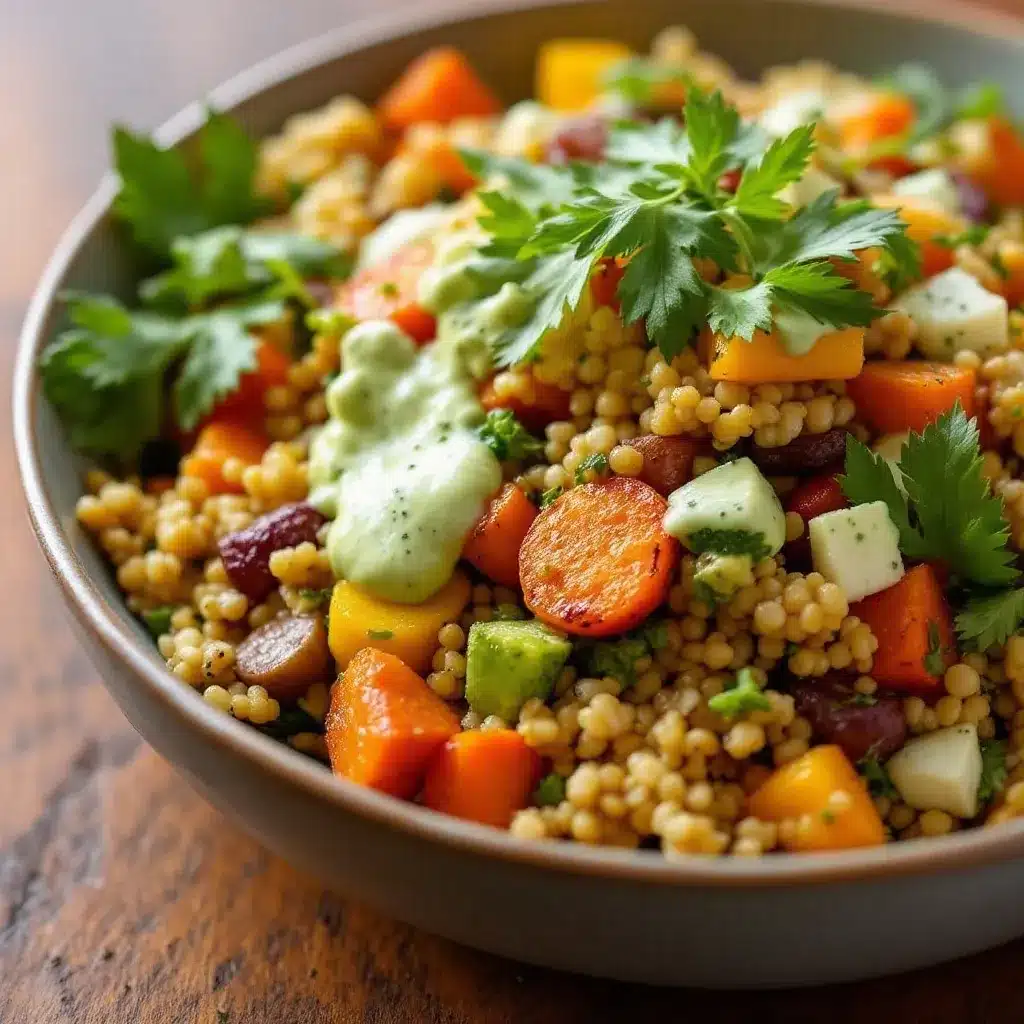
- Semi-pearled farro, 1 cup (I like the Rustichella d’Abruzzo brand — it holds its shape beautifully without getting mushy)
- Water or vegetable broth, 3 cups (broth adds more flavor, but water works in a pinch)
- Bay leaf, 1 (optional, but it adds a subtle earthiness that I love)
- Salt, ½ teaspoon
For the Lemon-Tahini Dressing
- Tahini, ¼ cup (stir it well before measuring — the oil separates naturally)
- Fresh lemon juice, 3 tablespoons (about 1 large lemon)
- Maple syrup, 1 tablespoon (or honey, if you’re not keeping it vegan)
- Garlic, 1 small clove — minced (use a microplane for the smoothest result)
- Warm water, 3-4 tablespoons (add gradually until it reaches a pourable consistency)
- Salt, ¼ teaspoon
For the Topping
- Pepitas, ¼ cup (raw or toasted — I toast mine in a dry pan for 2 minutes until they start popping)
- Fresh parsley, ¼ cup — roughly chopped
- Optional: crumbled feta cheese or goat cheese (if you’re not keeping it vegan)
Equipment Needed
You don’t need a fancy kitchen to make this salad. Here’s what you’ll actually use:
- Large baking sheet (half-sheet pan works best — gives the vegetables room to caramelize instead of steam)
- Medium saucepan with a tight-fitting lid (for cooking the farro)
- Small bowl or jar for the dressing (I use a mason jar and shake it vigorously — fewer dishes)
- Chef’s knife and cutting board (a sharp knife makes cubing squash infinitely less frustrating)
- Vegetable peeler
- Measuring cups and spoons
- Large mixing bowl
- Small skillet (if you’re toasting the pepitas)
If you don’t have a baking sheet, a 9×13 baking dish will work—just keep an eye on the vegetables since they’ll be more crowded and may take longer to brown. And if you’re wondering whether you can skip the pepitas, you can, but honestly, that little crunch on top makes a big difference.
Preparation Method
Step 1: Prep the Vegetables
Preheat your oven to 400°F (200°C). While it’s heating up, peel and cube your butternut squash. I know, peeling squash is the worst part of any recipe—I usually microwave mine for 2 minutes first to soften the skin slightly. Cut the squash in half lengthwise, scoop out the seeds, then peel each half with a vegetable peeler. Cube into ½-inch pieces. Peel the carrots and parsnips, slice them into ½-inch rounds. Cut the red onion into wedges about the same size. Toss everything on the baking sheet with olive oil, thyme, rosemary, salt, and pepper. Spread them in a single layer—crowding leads to steaming, and we want caramelization.
Step 2: Roast the Vegetables
Roast the vegetables for 25-30 minutes, flipping halfway through. You’ll know they’re done when the edges are browned and a fork slides easily into the squash. The parsnips might get done a few minutes before the squash—that’s fine, just pull them out early if needed. I’ve left them in too long before and ended up with burnt edges, so check at the 20-minute mark if your oven runs hot.
Step 3: Cook the Farro
While the vegetables roast, rinse the farro under cold water in a fine-mesh strainer. Add it to your saucepan with 3 cups of water or broth, the bay leaf, and salt. Bring to a boil, then reduce to a simmer, cover, and let it cook for 25-30 minutes. The farro should be tender but still chewy—not mushy. Drain any excess liquid if there’s some left (there usually isn’t much). Remove the bay leaf and set the farro aside, covered, to keep warm.
Here’s the thing about farro: different brands cook differently. Pearled farro cooks faster (about 20 minutes), while whole farro can take 40 minutes or more. If you’re unsure, check the package directions and adjust your timing. I’ve ruined many dinners by assuming all farro cooks the same way.
Step 4: Make the Dressing
In a small bowl or mason jar, combine the tahini, lemon juice, maple syrup, minced garlic, and salt. Whisk or shake until smooth. The tahini will seize up at first—that’s normal. Add warm water one tablespoon at a time, whisking after each addition, until the dressing is smooth and pourable. It should be thick enough to coat the back of a spoon but thin enough to drizzle. Taste and adjust—more lemon if you like it tangier, more maple if you want it sweeter.
Step 5: Toast the Pepitas
In a small dry skillet over medium heat, toast the pepitas for 2-3 minutes, shaking the pan frequently. They’ll start to pop and smell nutty. Remove them from the pan immediately so they don’t burn. I learned this the hard way—they go from perfectly toasted to charcoal in about 30 seconds.
Step 6: Assemble the Salad
In a large mixing bowl, combine the warm farro and roasted vegetables. Pour about three-quarters of the dressing over the top and toss gently to combine. You want everything evenly coated but not swimming in dressing. Taste and add more dressing if needed. Fold in the fresh parsley. Transfer to a serving bowl or platter, top with the toasted pepitas, and add crumbled cheese if using.
Serve warm or at room temperature. The salad will look beautiful with the orange squash, orange carrots, pale parsnips, and deep red onion against the tan farro. The green parsley and pepitas on top add a nice finishing touch.
Cooking Tips & Techniques
After making this salad more times than I can count, here are the things I wish someone had told me:
Don’t skip the low-and-slow roasting. I know we’re all in a hurry, but roasting at 400°F instead of 425°F gives the vegetables time to soften internally while the sugars caramelize on the outside. Higher heat just burns the edges before the centers are done. Trust me on this one—I’ve made that mistake at least five times.
Season the farro cooking water generously. If you’re using plain water, add a full teaspoon of salt. The farro absorbs the seasoning as it cooks, and under-seasoned grain is the number one reason grain salads taste flat. I learned this from a chef friend who told me to “salt your pasta water like the sea, and your farro water like a tidal pool.”
Let the farro rest after cooking. When you drain it, let it sit in the colander for a minute or two. Then return it to the warm pot and let it sit covered for another 5 minutes. This allows the steam to redistribute the moisture evenly, so you don’t end up with dry farro on top and wet farro at the bottom.
Toast the farro if you want extra nuttiness. Before adding liquid, toast the dry farro in the saucepan over medium heat for 2-3 minutes, stirring constantly. It’ll smell like popcorn. Then add your liquid and cook as usual. This adds a deeper, toastier flavor that I absolutely love in this salad.
Make extra dressing. This dressing keeps in the fridge for up to a week, and you’ll want it on everything—roasted vegetables, grain bowls, even as a dip for raw veggies. I always double the dressing recipe because I know I’ll use it.
Variations & Adaptations
This recipe is incredibly flexible. Here are some ways I’ve adapted it over the years:
Make it gluten-free: Swap the farro for brown rice, quinoa, or sorghum. If using quinoa, cook it with vegetable broth for more flavor. The texture will be different—less chewy—but it still works beautifully. I made this for a gluten-free friend last Thanksgiving and she asked for the recipe twice.
Change the vegetables with the season: In early fall, use sweet potatoes and apples instead of squash and parsnips. In winter, try roasted Brussels sprouts and cauliflower. In spring, asparagus and peas work great. Just adjust roasting times based on the vegetable density. Harder vegetables need more time; tender ones need less.
Add protein for a complete meal: Top with grilled chicken, roasted chickpeas, or flaked salmon. The lemon-tahini dressing pairs beautifully with all of them. I’ve also added crispy tofu cubes tossed in soy sauce and sesame oil—that version was a hit with my vegetarian friends.
Try a different dressing: If you’re not in the mood for tahini, a simple balsamic vinaigrette works wonderfully. Mix 3 tablespoons olive oil, 2 tablespoons balsamic vinegar, 1 teaspoon Dijon mustard, and a pinch of salt. It’s brighter and tangier, and it lets the roasted vegetable flavor shine through more.
Add dried fruit for sweetness: Dried cranberries, chopped dried apricots, or golden raisins add little bursts of sweetness that contrast nicely with the savory vegetables. Add them right before serving so they don’t get soggy.
If you enjoy hearty, satisfying salads like this one, you might also love my fresh quinoa avocado sushi salad bowl for another grain-based meal that’s packed with flavor.
Serving & Storage Suggestions
This salad is best served warm, right after assembly, when the farro is still tender and the vegetables are at their peak caramelized sweetness. But honestly, I love it at room temperature too. The flavors actually deepen as it sits.
For serving: Pile it onto a large platter or into a wide shallow bowl. Sprinkle the pepitas and parsley on top right before serving so they stay crunchy and bright. If you’re adding cheese, crumble it over the top rather than mixing it in—it looks prettier and lets people choose their own adventure. This salad pairs beautifully with a simple roasted chicken or a bowl of soup. I’ve served it alongside creamy hatch green chile chicken enchiladas for a fall dinner that felt both cozy and special.
For storage: Keep leftovers in an airtight container in the refrigerator for up to 4 days. The farro will absorb some of the dressing as it sits, so the salad will be less saucy on day two. That’s fine—just add a splash of olive oil or a squeeze of lemon when you reheat it to bring it back to life.
For reheating: Microwave individual portions for 1-2 minutes, stirring halfway through. Or reheat in a skillet over medium heat with a tablespoon of water or broth, covered, for about 3-4 minutes. The stovetop method gives you more control and prevents the farro from drying out.
Freezer note: I don’t recommend freezing this salad. The vegetables get mushy when thawed, and the tahini dressing separates. If you want to meal prep, cook the farro and roast the vegetables separately, then combine fresh when you’re ready to eat.
Nutritional Information & Benefits
This isn’t just a delicious salad—it’s genuinely good for you. Here’s what you’re getting in each serving (based on 4 servings):
- Calories: Approximately 380-420 per serving
- Protein: 10-12 grams (from farro and tahini)
- Fiber: 8-10 grams (farro is a whole grain, and the vegetables add more)
- Healthy fats: 15-18 grams (olive oil, tahini, pepitas)
- Vitamin A: Over 100% of your daily needs (from the butternut squash and carrots)
- Vitamin C: 20-25% of your daily needs (from the lemon juice and vegetables)
Farro is an ancient grain that’s packed with magnesium, zinc, and B vitamins. It has a lower glycemic index than white rice or pasta, which means it keeps your blood sugar stable and keeps you full longer. The tahini adds calcium and healthy fats, while the pepitas provide iron and plant-based protein.
This salad is naturally vegan, dairy-free, and nut-free. If you’re watching your sodium, reduce the salt in the farro cooking water and use a low-sodium vegetable broth. The dressing is also easy to make oil-free by omitting the olive oil from the vegetables (just roast with a little vegetable broth instead) and using a tahini-only dressing.
For another meal that’s both nourishing and satisfying, try my easy Thai coconut curry pulled pork—it’s a completely different flavor profile but just as comforting.
Conclusion
This cozy warm fall farro salad with roasted root vegetables is the kind of recipe that makes you look forward to colder weather. It’s hearty enough to be a meal on its own, elegant enough to serve to guests, and simple enough to throw together on a busy weeknight. The nutty farro, caramelized vegetables, creamy tahini dressing, and crunchy pepitas come together in a way that feels both rustic and refined.
I love that this salad doesn’t try to be anything it’s not. It’s not pretending to be a light summer dish or a heavy winter stew. It’s exactly what fall should taste like—earthy, sweet, warm, and comforting. Every time I make it, I’m reminded that good food doesn’t need to be complicated. It just needs to be made with care and shared with people you love.
I’d love to hear how this turns out for you. Did you add anything fun? Swap out a vegetable? Make it your own? Drop a comment below and let me know. And if you’re looking for more cozy fall recipes, check out my best copycat pumpkin cream cheese muffins for a sweet treat that pairs perfectly with this salad. Happy cooking, friends!
Frequently Asked Questions
Can I use a different grain instead of farro?
Absolutely. Brown rice, quinoa, sorghum, or even barley all work well. Just adjust the cooking time based on the grain you choose. Quinoa cooks in about 15 minutes, while brown rice takes closer to 40. The texture will be different, but the overall dish will still be delicious.
How do I keep the vegetables from getting soggy?
Don’t overcrowd the baking sheet. Spread the vegetables in a single layer with a little space between each piece. If they’re too close together, they steam instead of roast, and you’ll end up with soft, pale vegetables instead of caramelized ones. Use two baking sheets if you need to.
Can I make this salad ahead of time?
Yes, but with one caveat: keep the dressing separate until you’re ready to serve. Cook the farro and roast the vegetables up to 3 days in advance, store them separately in the fridge, then toss everything together with the dressing right before serving. The pepitas should also be added just before serving so they stay crunchy.
Is this recipe gluten-free?
Farro is a type of wheat, so it contains gluten. If you need a gluten-free version, substitute with brown rice, quinoa, or certified gluten-free oats. The rest of the ingredients are naturally gluten-free, so it’s an easy swap.
What can I use instead of tahini in the dressing?
If you don’t have tahini or want a different flavor, try using almond butter, sunflower seed butter, or even Greek yogurt (if you’re not keeping it vegan). Each will give the dressing a slightly different flavor profile, but all work well. For a completely different approach, a simple balsamic vinaigrette is also delicious.
For more recipe inspiration, browse all my recipes here—there’s something for every season and craving.
Pin This Recipe!
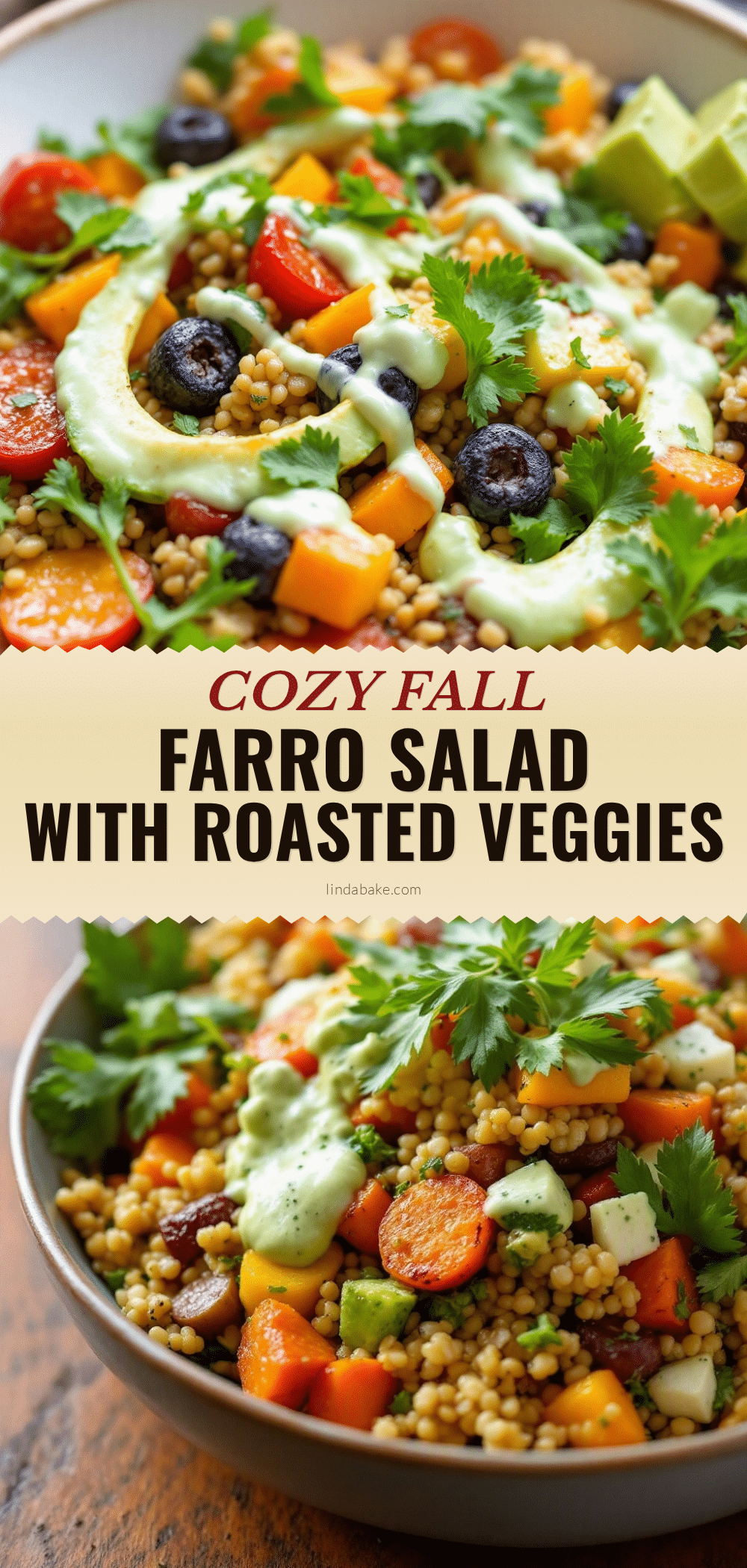
Cozy Warm Fall Farro Salad with Roasted Root Vegetables
A hearty and satisfying warm farro salad featuring roasted root vegetables, a creamy lemon-tahini dressing, and crunchy pepitas. Perfect for fall meal prep or entertaining, this vegan and gluten-free adaptable dish is both rustic and elegant.
- Prep Time: 15 minutes
- Cook Time: 30 minutes
- Total Time: 45 minutes
- Yield: 4 servings 1x
- Category: Main Course
- Cuisine: American
Ingredients
- 1 medium butternut squash (about 2 cups cubed), peeled and cut into ½-inch cubes
- 3 large carrots (about 1½ cups chopped), peeled and sliced into ½-inch rounds
- 2 medium parsnips (about 1 cup chopped), peeled and cut into similar-sized pieces as carrots
- 1 medium red onion, cut into wedges
- 3 tablespoons olive oil
- 1 teaspoon dried thyme
- ½ teaspoon dried rosemary
- Salt and black pepper to taste
- 1 cup semi-pearled farro
- 3 cups water or vegetable broth
- 1 bay leaf (optional)
- ½ teaspoon salt
- ¼ cup tahini, stirred well
- 3 tablespoons fresh lemon juice (about 1 large lemon)
- 1 tablespoon maple syrup (or honey for non-vegan)
- 1 small garlic clove, minced
- 3–4 tablespoons warm water
- ¼ teaspoon salt
- ¼ cup pepitas (raw or toasted)
- ¼ cup fresh parsley, roughly chopped
- Optional: crumbled feta cheese or goat cheese (omit for vegan)
Instructions
- Preheat oven to 400°F (200°C). Peel and cube butternut squash into ½-inch pieces. Peel carrots and parsnips, slice into ½-inch rounds. Cut red onion into wedges. Toss vegetables on a large baking sheet with olive oil, thyme, rosemary, salt, and pepper. Spread in a single layer.
- Roast vegetables for 25-30 minutes, flipping halfway through, until edges are browned and squash is tender. Check at 20 minutes if oven runs hot.
- While vegetables roast, rinse farro under cold water. In a medium saucepan, combine farro, 3 cups water or broth, bay leaf, and salt. Bring to a boil, reduce to a simmer, cover, and cook for 25-30 minutes until tender but chewy. Drain any excess liquid, remove bay leaf, and keep covered.
- In a small bowl or mason jar, combine tahini, lemon juice, maple syrup, minced garlic, and salt. Whisk or shake until smooth. Add warm water 1 tablespoon at a time until smooth and pourable. Adjust seasoning to taste.
- In a small dry skillet over medium heat, toast pepitas for 2-3 minutes, shaking frequently, until they start to pop and smell nutty. Remove immediately.
- In a large mixing bowl, combine warm farro and roasted vegetables. Pour about three-quarters of the dressing over and toss gently. Add more dressing if needed. Fold in fresh parsley.
- Transfer to a serving bowl or platter. Top with toasted pepitas and crumbled cheese if using. Serve warm or at room temperature.
Notes
Don’t skip low-and-slow roasting at 400°F for best caramelization. Season farro cooking water generously. Let farro rest after cooking for even moisture. Toast farro before cooking for extra nuttiness. Make extra dressing—it keeps for a week. For gluten-free, substitute farro with brown rice, quinoa, or sorghum. Store leftovers in an airtight container for up to 4 days; reheat with a splash of olive oil or lemon. Not recommended for freezing.
Nutrition
- Serving Size: 1 serving (about 2 c
- Calories: 400
- Sugar: 12
- Sodium: 450
- Fat: 16
- Saturated Fat: 2
- Carbohydrates: 55
- Fiber: 9
- Protein: 11
Keywords: farro salad, roasted root vegetables, fall salad, warm grain salad, vegan, gluten-free adaptable, meal prep, healthy, tahini dressing