The oven door was still warm from the turkey when I heard the garage door rumble open. It was 4 PM on Thanksgiving, and my brother-in-law’s car pulled into the driveway three hours earlier than he promised. He’s gluten-intolerant, and honestly, the last thing I wanted was for him to feel like an afterthought at the dinner table. I rushed to the kitchen, heart pounding, and opened the pantry. The usual cornbread cubes were gone, used up in yesterday’s breakfast muffins. The bread box was empty. Panic set in for about thirty seconds.
I grabbed a bag of gluten-free cornbread mix from the back of the cupboard—the kind you bake in a skillet, not the pre-crumbled stuff. It was a gamble. Gluten-free bread can get soggy or tough, but I had no choice. I mixed it with plenty of sage, sausage, and broth, trying to make it work. When he sat down and took a bite, his eyes actually widened. He didn’t even notice it wasn’t the “real” thing. That moment stuck with me. I realized this gluten-free sage and sausage stuffing didn’t just save the day; it became the best part of the meal.
Now, I make it every single year. It’s not just a substitute; it’s a contender on its own. The texture holds up, the flavor is bold, and you don’t need a dozen ingredients to make it taste amazing. It’s resourceful cooking at its finest, born from a little chaos and a lot of love.
Why You’ll Love This Recipe
Let’s be real for a second. Most gluten-free stuffings are a disappointment. They’re either mushy, bland, or taste like cardboard. This recipe fixes all of that. It’s the kind of dish that makes you close your eyes after the first bite because it hits all the right notes. Here is why this gluten-free sage and sausage stuffing deserves a spot in your rotation:
- Quick & Easy: You can have this on the table in under 45 minutes. It’s perfect for busy weeknights or when you’re hosting last-minute guests. No fancy techniques required.
- Simple Ingredients: You likely already have most of these items in your kitchen. It’s about five ingredients, max. No trips to a specialty store needed.
- Perfect for Any Occasion: While it’s a Thanksgiving hero, it’s great for potlucks, cozy winter dinners, or even as a side dish for buffalo chicken dip nights.
- Crowd-Pleaser: Kids love the savory sausage, and adults love the herbaceous sage. It gets rave reviews from everyone, gluten-free or not.
- Unbelievably Delicious: The combo of crispy cornbread edges and juicy sausage is next-level comfort food. It’s hearty, warm, and satisfying.
What makes this recipe different is the method. Instead of trying to mimic traditional bread, we lean into the cornbread base. We toast it slightly before adding liquid, which prevents that dreaded soggy texture. It’s a simple trick, but it changes everything. This isn’t just another gluten-free recipe; it’s the best version of stuffing you’ll ever eat. It’s comfort food reimagined—simpler, faster, but with the same soul-soothing satisfaction.
What Ingredients You Will Need
This recipe uses simple, wholesome ingredients to deliver bold flavor and satisfying texture without the fuss. The beauty here is that you don’t need a specialty store. Everything is accessible, and the flavors are robust enough to stand on their own. We are focusing on savory, herbal, and slightly salty notes to create a balanced side dish.
- Gluten-Free Cornbread: This is the star. I recommend using a high-quality mix like Jiffy or a homemade skillet cornbread. The cornbread provides a sturdy base that holds up to the broth without turning into mush. Look for a mix that doesn’t have too much sugar in it.
- Breakfast Sausage: Pork sausage with sage is the traditional choice. It adds fat and savory depth. You can use mild or hot, depending on your preference. If you need a turkey option, that works too, but pork has more flavor.
- Dried Sage: Fresh sage is great, but dried sage has a more concentrated flavor that stands up better to baking. Use about a tablespoon. It’s the herb that defines stuffing, so don’t skip it.
- Chicken Broth: Use a low-sodium version so you can control the saltiness. It adds moisture and umami. Vegetable broth works if you want a vegetarian option, though the sausage flavor will be less prominent.
- Butter: Just a little bit of butter helps to toast the cornbread and add richness. Salted butter is fine since the broth is low-sodium.
For the best results, ensure your cornbread is crumbled into small, bite-sized pieces. If you’re using a box mix, bake it in a square pan and let it cool completely before crumbling. This step is crucial for the right texture. You can also swap the sausage for bacon if you want a smokier flavor, or add some diced apples for a touch of sweetness.
Equipment Needed
You don’t need anything fancy to make this stuffing. A standard 9×13 baking dish is perfect. If you have a larger dish, you can double the recipe easily. A large skillet is essential for cooking the sausage and heating the broth. I prefer cast iron for this because it retains heat well, but any heavy-bottomed pan works.
A wooden spoon is great for stirring the mixture without scratching your pan. If you’re making the cornbread from scratch, you’ll need a mixing bowl and a whisk. For crumbling the cornbread, your hands are the best tool. It’s faster and gives you better control over the crumb size.
If you don’t have a baking dish, you can cook this entirely in the skillet on the stovetop. It’s a great option if you’re short on oven space. Just make sure your skillet has a lid to trap the steam and cook the cornbread through. Budget-friendly and simple, just like the recipe itself.
Preparation Method

Follow these steps to create the perfect gluten-free sage and sausage stuffing. The process is straightforward, but attention to detail makes the difference.
- Prepare the Cornbread (10 minutes): If you are making cornbread from scratch, bake it according to the package directions. Let it cool completely. This is important; warm cornbread will turn to mush when you crumble it. Once cool, crumble it into a large bowl. Aim for pieces about the size of a dime. You want some small crumbs and some larger chunks for texture.
- Cook the Sausage (5 minutes): Heat a large skillet over medium heat. Add the sausage, breaking it up with a wooden spoon as it cooks. Cook until browned and no longer pink. If there is excessive grease, drain it off, but leave a little bit for flavor. The fat from the sausage will help coat the cornbread.
- Combine Dry Ingredients (2 minutes): Sprinkle the dried sage over the cooked sausage in the skillet. Stir for 30 seconds to toast the herbs. This releases the essential oils and makes the flavor pop. Pour this mixture over the crumbled cornbread in your large bowl. Toss to combine.
- Add the Broth (2 minutes): Pour the chicken broth over the cornbread and sausage mixture. Add the butter on top. Gently fold everything together. You want the liquid to be absorbed, but the cornbread should still look a bit dry on top. It should look moist but not swimming in broth.
- Bake the Stuffing (20 minutes): Preheat your oven to 350°F (175°C). Transfer the mixture to your greased 9×13 baking dish. Spread it out evenly. Bake for 20 minutes. The top should be slightly crispy, and the edges should be golden brown. If you like a crunchier top, broil for the last 2 minutes, but watch it closely so it doesn’t burn.
- Rest and Serve: Let the stuffing rest for 5 minutes after taking it out of the oven. This allows the flavors to meld and the texture to set. Serve warm.
The key here is not to over-mix. You want distinct pieces of cornbread, not a paste. If it looks too dry after baking, you can add a splash more broth. If it’s too wet, bake it for an extra 5 minutes to crisp up the edges.
Cooking Tips & Techniques
I’ve made this stuffing many times, and I’ve learned a few things along the way. First, don’t rush the crumbling process. If your cornbread pieces are too big, the stuffing will be uneven. Too small, and it gets mushy. Aim for that middle ground. Second, taste the sausage before you add salt. Sausage is usually salty enough, so you might not need any extra salt in the broth. Always start with low-sodium broth and adjust to taste.
Another tip is to toast the cornbread slightly before crumbling if you have time. Put the crumbled cornbread on a baking sheet and bake it at 300°F for 10 minutes. This dries it out just enough to absorb the broth without getting soggy. It’s a small step that makes a huge difference in texture.
Multitasking is your friend here. While the stuffing is baking, you can be plating the main dish or making the gravy. This stuffing holds well in the oven on warm. If you need to keep it warm for a while, cover it loosely with foil. It won’t get soggy if you do this.
Common mistake: adding too much broth. Gluten-free cornbread can be thirstier than wheat bread, but it’s easy to overdo it. Add the broth gradually if you’re unsure. You can always add more, but you can’t take it out. Trust your eyes. The mixture should look moist but not wet.
Variations & Adaptations
This recipe is a canvas for your own ideas. Here are a few ways to customize it:
- Vegetarian Version: Skip the sausage and use extra butter or olive oil. Add diced mushrooms or celery for texture. You can also add some roasted vegetables like squash or sweet potatoes for a fall twist.
- Spicy Kick: Use hot sausage instead of mild. Add a pinch of red pepper flakes to the broth. This pairs well with green chile dishes.
- Sweet & Savory: Add chopped apples or dried cranberries to the mixture before baking. The sweetness balances the savory sage and saltiness of the sausage. It’s a classic combo for a reason.
- Herb Swap: If you don’t like sage, try thyme or rosemary. Both work well with chicken broth and cornbread. You can also use a mix of dried herbs for a more complex flavor profile.
I once made this with bacon instead of sausage. It was smoky and delicious, but I had to add a bit more broth because bacon is leaner. It’s a great option if you want a different flavor profile. You can also use gluten-free bread cubes if you prefer, but cornbread gives a unique texture that I really enjoy.
Serving & Storage Suggestions
Serve this stuffing hot, right out of the oven. It pairs beautifully with roasted turkey, ham, or even just a simple salad. For a complete meal, try it alongside bacon-wrapped little smokies for a party appetizer spread.
Leftovers store well in the refrigerator. Place them in an airtight container for up to 3 days. To reheat, you can use the microwave for a quick lunch, or put it in a skillet on the stovetop with a little bit of broth to revive the moisture. The oven is best for reheating larger portions. Cover with foil and bake at 350°F for 15-20 minutes.
You can also freeze this stuffing. Freeze it in portions for easy meals later. Thaw in the fridge overnight and reheat as described above. The flavor actually gets better after a day or two as the herbs have time to infuse. It’s a great make-ahead dish for busy holidays.
Nutritional Information & Benefits
This gluten-free sage and sausage stuffing is not only delicious but also offers some nutritional benefits. Cornbread is a good source of carbohydrates for energy. The sausage provides protein and fat, which help keep you full. Sage has anti-inflammatory properties and adds a unique flavor without extra calories.
If you use low-sodium broth, you can control the salt content, making it suitable for those watching their sodium intake. For a lighter option, use lean turkey sausage and reduce the amount of butter. The recipe is naturally gluten-free, making it safe for those with celiac disease or gluten sensitivity. Just ensure your cornbread mix is certified gluten-free.
It’s a comforting dish that doesn’t leave you feeling weighed down. The balance of herbs and savory elements makes it satisfying without being overly heavy. It’s a great way to enjoy traditional flavors while adhering to dietary restrictions.
Conclusion
This gluten-free sage and sausage stuffing is a game-changer. It’s easy, delicious, and perfect for any occasion. I hope you try it and enjoy it as much as I do. Feel free to customize it with your favorite herbs or add-ins. It’s a versatile recipe that adapts to your needs.
If you make this recipe, please leave a comment below. I’d love to hear how it turned out for you. Share your variations and tips with the community. And don’t forget to share your photos on social media. I love seeing your creations.
Thank you for reading. Happy cooking!
Frequently Asked Questions
Can I use fresh sage instead of dried?
Yes, but you’ll need about three times as much fresh sage as dried. Chop it finely so it distributes evenly. Fresh sage has a milder flavor, so you might need to add a bit more.
Is this recipe dairy-free?
The base recipe is dairy-free if you use dairy-free butter or oil. Check your cornbread mix to ensure it doesn’t contain milk powder. Most basic mixes are dairy-free, but always read the label.
Can I make this ahead of time?
Yes, you can assemble the stuffing the night before and refrigerate it. When you’re ready to cook, just add a few extra minutes to the baking time since it’s cold from the fridge. This is great for freeing up oven space on Thanksgiving.
What kind of cornbread mix do you recommend?
I recommend Jiffy or a homemade skillet cornbread. Both work well. Avoid mixes that are very sweet, as you want a savory base. Look for mixes with simple ingredients.
Can I freeze this stuffing?
Yes, this stuffing freezes well. Portion it out and freeze in airtight containers. It will keep for up to 3 months. Thaw in the fridge and reheat in the oven or on the stovetop.
Pin This Recipe!
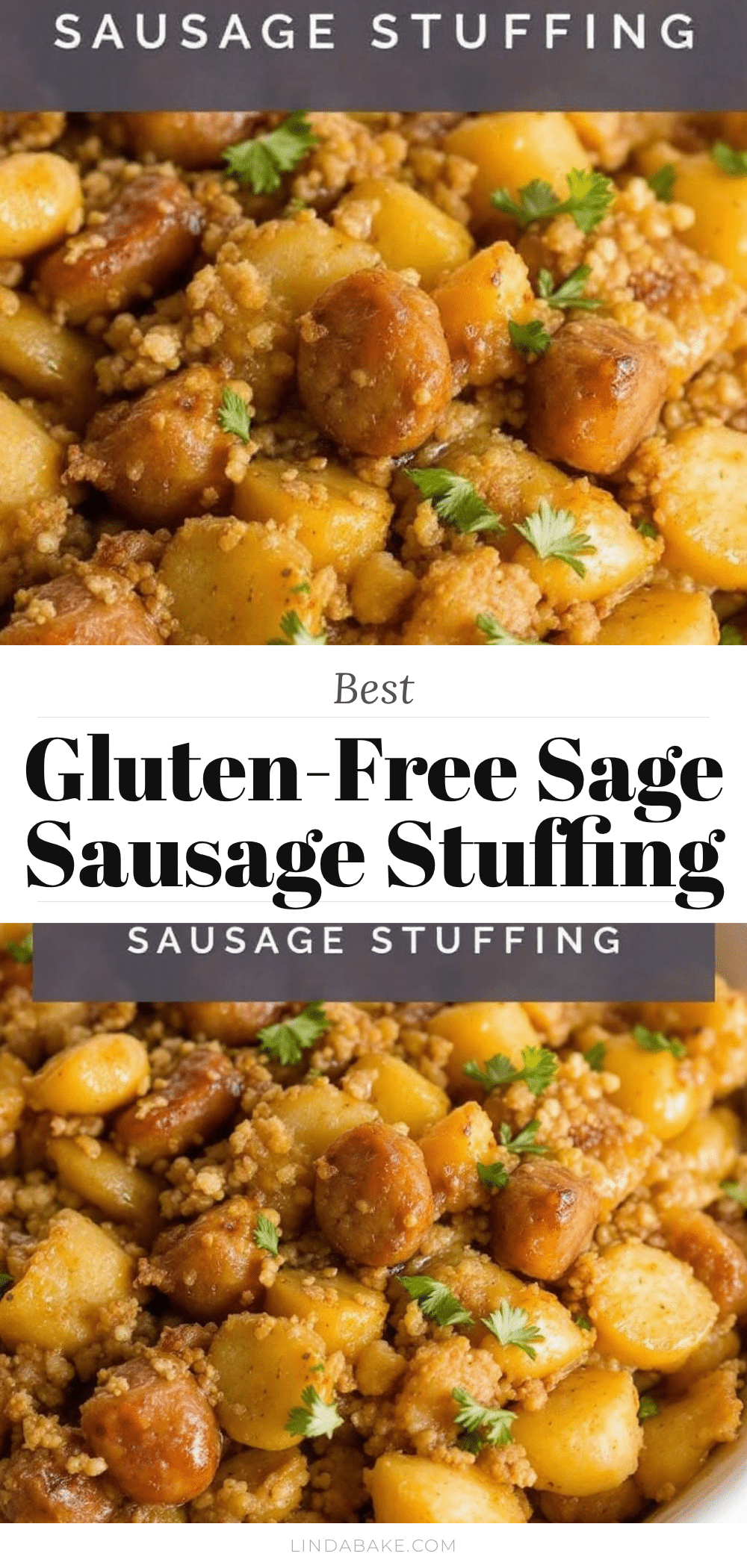
Best Gluten-Free Sage and Sausage Stuffing

A quick, easy, and delicious gluten-free stuffing made with cornbread, sausage, and sage. This recipe avoids soggy textures by toasting the cornbread and delivers bold flavor in under 45 minutes.
- Prep Time: 10 minutes
- Cook Time: 30 minutes
- Total Time: 45 minutes
- Yield: 8 servings
- Category: Side Dish
- Cuisine: American
Ingredients
- Gluten-free cornbread (baked and crumbled into bite-sized pieces)
- Breakfast sausage (pork or turkey)
- Dried sage
- Low-sodium chicken broth
- Butter
Instructions
- Bake cornbread according to package directions, let it cool completely, and crumble it into a large bowl into pieces about the size of a dime.
- Heat a large skillet over medium heat and cook the sausage, breaking it up with a wooden spoon, until browned and no longer pink. Drain excessive grease but leave some for flavor.
- Sprinkle dried sage over the cooked sausage in the skillet and stir for 30 seconds to toast the herbs. Pour this mixture over the crumbled cornbread and toss to combine.
- Pour chicken broth over the cornbread and sausage mixture. Add butter on top and gently fold everything together until the liquid is absorbed but the cornbread still looks slightly dry on top.
- Preheat oven to 350°F (175°C). Transfer the mixture to a greased 9×13 baking dish and spread evenly.
- Bake for 20 minutes until the top is slightly crispy and edges are golden brown. Optionally broil for the last 2 minutes for extra crunch.
- Let the stuffing rest for 5 minutes before serving warm.
Notes
Ensure cornbread is completely cool before crumbling to prevent mushiness. Toasting the cornbread slightly before adding liquid helps prevent sogginess. Use low-sodium broth to control saltiness. Can be made ahead and refrigerated overnight; add extra baking time if cold. Freezes well for up to 3 months.
Nutrition
- Serving Size: 1 cup
- Calories: 280
- Sugar: 3
- Sodium: 450
- Fat: 18
- Saturated Fat: 6
- Carbohydrates: 22
- Fiber: 2
- Protein: 10
Keywords: gluten-free, stuffing, sage, sausage, cornbread, Thanksgiving, holiday side dish, easy recipe, 5-ingredient