The bubbles. That’s what I was after. Not the golden crust, not the herb-freckled surface, though those matter too. But the bubbles — those irregular, blistered pockets of air trapped in the dough, the ones that make you wonder how something so simple can look so alive. This rosemary garlic sourdough focaccia bread is obsessed with those bubbles, and honestly, everything else follows from there.
I’ve been chasing that perfect focaccia texture for years. The kind where you tear off a piece and it sighs under your fingers, the crumb open and elastic, the bottom crisp enough to scrape against your teeth. And the flavor — well, that’s where the sourdough starter comes in. It adds a tang that commercial yeast just can’t fake, a depth that makes you slow down and actually taste what you’re eating. The garlic roasts right into the dough, mellowing out, and the rosemary — fresh, not dried — leaves little green needles scattered across the surface like confetti.
This wasn’t a recipe I planned. It came from a Sunday afternoon when my starter was bubbling over and I had a bunch of rosemary threatening to wilt in the fridge. I’d been meaning to make a sandwich loaf, but the focaccia dough practically made itself — slack, sticky, forgiving. That first batch had too much garlic (lesson learned) and not enough salt (another lesson). But the texture was there. That open, airy crumb I’d been chasing. So I kept at it, batch after batch, until the proportions felt right.
Now this is the one I make when I want bread that feels special without the fuss of shaping loaves. It’s the kind of bread that makes you close your eyes after the first bite — not because it’s fancy, but because it’s honest. Good olive oil, good salt, good technique. That’s all it takes.
Why You’ll Love This Recipe
I’ve tested this rosemary garlic sourdough focaccia bread more times than I can count, and every batch taught me something. Here’s why this version is the one you’ll want to make on repeat:
- Simple Ingredients: Flour, water, starter, olive oil, garlic, rosemary, salt. That’s it. No special bread flour required — all-purpose works beautifully.
- Minimal Hands-On Time: The dough does most of the work while you go about your day. A few stretches, a patient wait, and you’re rewarded with bakery-level bread.
- Forgiving Dough: This isn’t a finicky recipe. The dough is wet and slack, which means it’s hard to overwork and easy to handle with oiled hands.
- Perfect for Beginners: If you’re new to sourdough, this is a confidence-building recipe. No shaping, no scoring — just stretch, dimple, and bake.
- Next-Level Flavor: The fermented tang of sourdough pairs beautifully with roasted garlic and piney rosemary. It’s the kind of bread that steals the show at dinner.
What makes this different from other focaccia recipes is the sourdough starter. It adds complexity that commercial yeast can’t replicate — a subtle acidity that balances the richness of olive oil. I’ve tested this with both active starter and discard, and both work, though active starter gives you a slightly more open crumb. The garlic gets scattered on top before baking, where it roasts into sweet, jammy pockets. And the rosemary? Fresh only. Dried rosemary in focaccia tastes like pine needles — trust me on this one.
This is the bread you make when you want to impress without stress. It’s comfort food reimagined — rustic, aromatic, and deeply satisfying. The kind that makes a simple dinner feel like an occasion.
What Ingredients You Will Need
This rosemary garlic sourdough focaccia bread uses a short list of ingredients, each playing a specific role in the final texture and flavor. Here’s what you’ll need and why each one matters:
- Bread flour or all-purpose flour (500g / about 4 cups): Bread flour gives a chewier crumb, but all-purpose works perfectly too. I’ve used both and the difference is subtle — go with what you have.
- Active sourdough starter (200g / about 1 cup, fed and bubbly): This provides the rise and that signature tang. You can use unfed discard, but the rise will be slower and the crumb denser.
- Warm water (350g / about 1 ½ cups): Tap water that’s just slightly warm to the touch — about 80°F. Too hot and you’ll kill the yeast activity in your starter.
- Extra virgin olive oil (60g / about ¼ cup, plus more for the pan): Use a good quality olive oil here — it’s a major flavor component. I like California Olive Ranch for everyday baking.
- Fresh garlic (4-5 cloves, thinly sliced): Sliced, not minced. Thin slices roast into sweet, buttery pockets without burning. I recommend using a mandoline for even slices.
- Fresh rosemary (2 tablespoons, chopped): Strip the leaves from the stems and chop them coarsely. Dried rosemary won’t give you the same aromatic punch.
- Fine sea salt (10g / about 2 teaspoons): Salt controls fermentation and strengthens the gluten structure. I use fine sea salt, not table salt, which can be too harsh.
- Flaky sea salt (for finishing): Maldon or any flaky salt. This is non-negotiable — the crunchy crystals on top make the focaccia.
Ingredient Tips: For the best texture, weigh your flour and water. Volume measurements can vary wildly and will affect the hydration of your dough. If your starter is sluggish, feed it 8-12 hours before you plan to mix the dough. And if you don’t have fresh rosemary, try thyme or oregano — both work beautifully with garlic.
Equipment Needed
You don’t need much to make this rosemary garlic sourdough focaccia bread, but a few tools make the process smoother:
- Digital kitchen scale: Essential for consistent results. I use my Escali scale for every batch.
- Large mixing bowl: Glass or ceramic works well — avoid metal if your starter is particularly acidic.
- Bench scraper or dough scraper: Helps handle the sticky dough without making a mess.
- 9×13-inch baking pan: A quarter-sheet pan or a cast iron skillet also works. The key is having a pan with sides to hold the olive oil.
- Plastic wrap or a damp kitchen towel: For covering the dough during bulk fermentation.
- Cooling rack: Lets air circulate under the focaccia so the bottom stays crisp.
If you don’t have a bench scraper, a flexible spatula works in a pinch. And if your pan is smaller than 9×13, the focaccia will be thicker and need a few extra minutes in the oven. I’ve made this in a 10-inch cast iron skillet before and it turned out beautifully — just adjust the baking time slightly.
Preparation Method
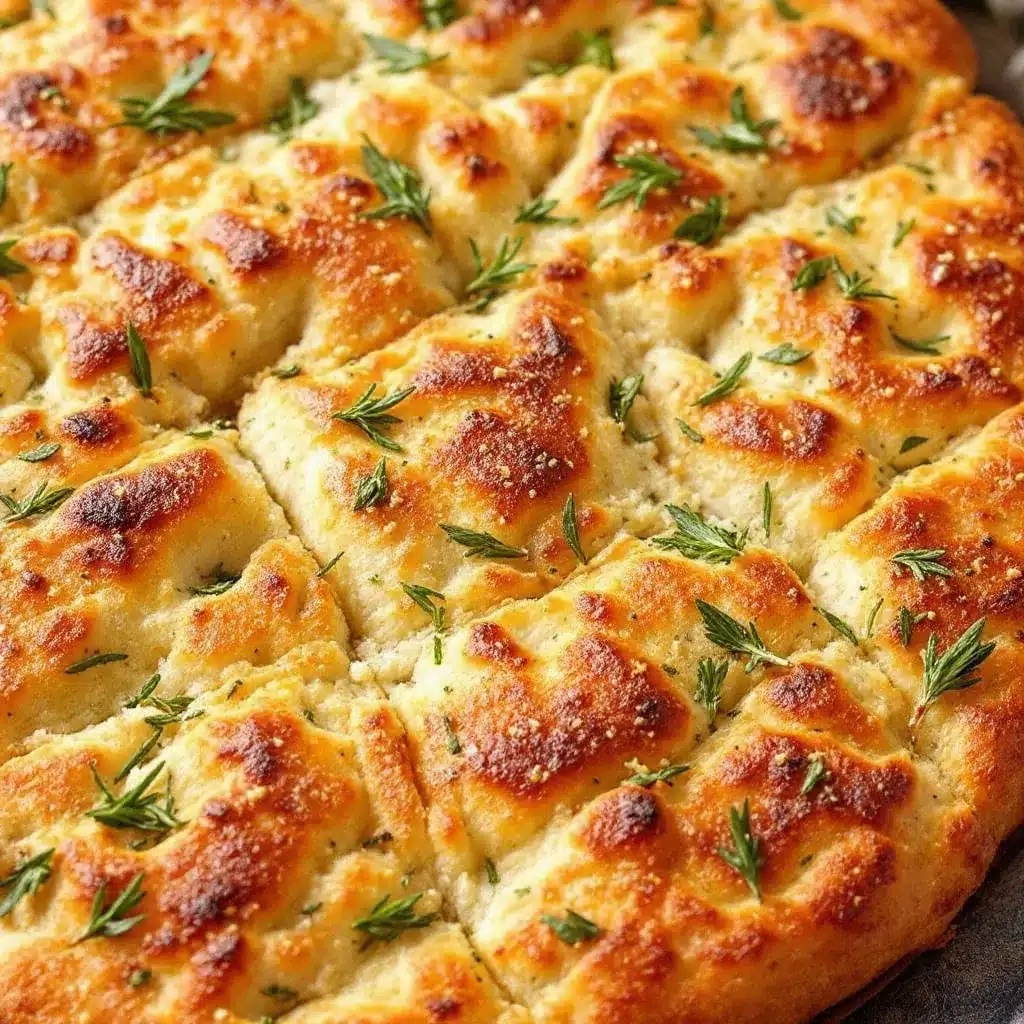
This recipe requires patience, not skill. The dough does the heavy lifting — you just need to give it time and a little attention. Here’s how to make the best rosemary garlic sourdough focaccia bread:
- Mix the dough (10 minutes): In a large bowl, combine 500g flour, 350g warm water, 200g active sourdough starter, and 10g fine sea salt. Mix with your hands or a wooden spoon until a shaggy, sticky dough forms. It will look rough — that’s normal. Cover the bowl with plastic wrap and let it rest for 30 minutes. This autolyse step lets the flour absorb the water and makes the dough easier to work with.
- First stretch and fold (30 minutes): After the rest, wet your hands slightly and grab one side of the dough. Stretch it up and fold it over the center. Rotate the bowl 90 degrees and repeat. Do 4 stretches total, then cover and rest for 30 minutes. You’ll repeat this stretch-and-fold process 3 more times, every 30 minutes. By the last fold, the dough should feel smoother and more elastic.
- Bulk fermentation (6-10 hours): After the final stretch and fold, cover the bowl and let it rise at room temperature (70-75°F is ideal). The dough needs to double in size and look bubbly on the surface. This can take anywhere from 6 to 10 hours depending on your starter’s activity and room temperature. In winter, I set the bowl near a sunny window. In summer, the counter is fine.
- Prepare the pan (5 minutes): Pour 2-3 tablespoons of olive oil into your 9×13-inch pan. Use your fingers to spread it evenly over the bottom and up the sides. The oil should pool slightly — this prevents sticking and creates that crispy bottom crust.
- Transfer the dough (5 minutes): Gently scrape the dough into the oiled pan. It will be sticky and slack. Don’t fight it — just let it fall into the pan. Cover with plastic wrap and let it rest for 30 minutes.
- Stretch the dough (5 minutes): After resting, the dough will be more relaxed. Use oiled fingers to gently stretch it toward the edges of the pan. If it resists, let it rest another 15 minutes and try again. You want it evenly distributed across the pan.
- Second rise (2-3 hours): Cover the pan and let the dough rise until it’s puffy and jiggly — about 2-3 hours. The surface should look aerated, with small bubbles visible. When you poke it gently, the indentation should spring back slowly.
- Dimple and top (5 minutes): Preheat your oven to 450°F. Drizzle 1-2 tablespoons of olive oil over the dough. Then, using oiled fingertips, press dimples all across the surface — push all the way down to the bottom of the pan. This creates those signature focaccia pockets. Scatter the sliced garlic and chopped rosemary evenly over the top, pressing them gently into the dimples. Sprinkle generously with flaky sea salt.
- Bake (25-30 minutes): Place the pan on the middle rack and bake until the focaccia is deep golden brown. The bottom should be crisp when you lift it with a spatula. If it’s browning too quickly, tent loosely with foil for the last 5 minutes.
- Cool (20 minutes): Slide the focaccia out of the pan onto a cooling rack. Let it cool for at least 20 minutes before cutting. The steam inside needs to settle — cutting too early will make it gummy.
Sensory Cues: During baking, your kitchen will smell like garlic and rosemary — that’s when you know it’s working. The focaccia is done when the top is deeply golden and the bottom sounds hollow when tapped. If you’re unsure, use an instant-read thermometer: 200°F in the center means it’s ready.
Cooking Tips & Techniques
After dozens of batches, here’s what I’ve learned about making this rosemary garlic sourdough focaccia bread:
- Wet hands are your friend: When handling sticky dough, wet your hands slightly. It prevents sticking without adding extra flour, which would toughen the crumb.
- Don’t rush the bulk fermentation: The dough needs to double in size. If it’s under-proofed, the focaccia will be dense. If it’s over-proofed, it will collapse in the oven. Look for a jiggly, aerated surface with visible bubbles.
- Oil is not optional: The olive oil in the pan does more than prevent sticking — it fries the bottom crust, creating that signature crispiness. Don’t skimp on it.
- Dimple with confidence: Press your fingers all the way to the bottom of the pan. Shallow dimples won’t hold the oil and toppings. I learned this the hard way when my first batch came out flat on top.
- Fresh rosemary only: Dried rosemary becomes hard and sharp when baked. Fresh rosemary softens and releases its oils into the dough. If you only have dried, infuse it in olive oil first for 15 minutes.
One mistake I made early on was adding the garlic too early. I mixed it into the dough, and it never roasted properly — just stayed raw and harsh. Now I scatter it on top after dimpling, where it roasts into sweet, buttery pockets. That’s the kind of lesson you only learn by messing up.
Variations & Adaptations
This rosemary garlic sourdough focaccia bread is endlessly adaptable. Here are some variations I’ve tried and loved:
- Herb Swap: Replace rosemary with fresh thyme, oregano, or sage. Each brings a different aromatic quality. Thyme is more subtle, sage is earthier, and oregano adds a Mediterranean warmth.
- Cheese Topping: Sprinkle grated Parmesan or crumbled feta over the top before baking. The cheese gets crispy and salty — perfect for serving alongside a bowl of soup.
- Caramelized Onion Version: Spread a layer of caramelized onions over the dough before dimpling. The sweetness balances the garlic and rosemary beautifully.
- Gluten-Free Option: Use a gluten-free all-purpose flour blend and increase the water by 50g. The texture will be denser, but the flavor is still there. I’ve tested this with Bob’s Red Mill 1-to-1 and it worked reasonably well.
- Stuffed Focaccia: Before the second rise, press half the dough into the pan, add a layer of roasted red peppers and mozzarella, then top with the remaining dough. Bake as directed — it’s like a pizza-focaccia hybrid.
My personal favorite variation is adding a handful of Kalamata olives along with the garlic and rosemary. The briny olives contrast with the rich olive oil and tangy sourdough. It’s the version I make when I want something a little more decadent.
Serving & Storage Suggestions
This rosemary garlic sourdough focaccia bread is best served warm, but it’s still delicious at room temperature. Here’s how to enjoy it and keep it fresh:
- Serving Temperature: Warm from the oven is ideal. Let it cool for 20 minutes, then serve. The crust stays crisp and the interior is pillowy soft.
- Pairing Ideas: Serve alongside a bowl of harissa lamb meatballs with couscous for a Mediterranean-inspired dinner. Or slice it in half and use it for sandwiches — it’s sturdy enough to hold up to hearty fillings.
- Dipping: This focaccia is made for dipping. Serve with balsamic vinegar and olive oil, or alongside a bowl of spicy Korean-Mexican street corn dip for a flavor mashup that works surprisingly well.
- Storage: Store leftover focaccia in an airtight container at room temperature for up to 2 days. Do not refrigerate — it will dry out the crumb. To reheat, wrap in foil and warm in a 350°F oven for 5-7 minutes.
- Freezing: Focaccia freezes beautifully. Wrap tightly in plastic wrap, then foil, and freeze for up to 3 months. Thaw at room temperature and reheat in the oven before serving.
The flavors actually improve after a day — the garlic mellows further and the rosemary infuses deeper into the crumb. I’ve been known to make a double batch just so I have leftovers for breakfast the next day, toasted and topped with a fried egg.
Nutritional Information & Benefits
While this rosemary garlic sourdough focaccia bread is an indulgence, it does offer some surprising benefits:
- Estimated per serving (1/8 of the focaccia): Calories: 280, Fat: 8g, Carbohydrates: 44g, Protein: 7g, Fiber: 2g, Sodium: 480mg
- Sourdough Benefits: The fermentation process breaks down phytic acid, making the nutrients in the flour more bioavailable. It also produces beneficial bacteria that support gut health.
- Olive Oil: Extra virgin olive oil is rich in monounsaturated fats and antioxidants. It’s a heart-healthy fat that adds flavor and nutrition.
- Garlic and Rosemary: Both are packed with antioxidants and anti-inflammatory compounds. Garlic is known for its immune-supporting properties, while rosemary contains compounds that improve digestion.
- Dietary Considerations: This recipe is naturally vegan and dairy-free. For a lower-carb option, serve smaller portions alongside a salad or protein-rich dish like Thai coconut curry pulled pork.
I don’t make this focaccia for health reasons — I make it because it’s delicious. But knowing that the fermentation process makes it easier to digest than conventional bread is a nice bonus. It’s the kind of bread that feels nourishing, not heavy.
Conclusion
This rosemary garlic sourdough focaccia bread is the kind of recipe that becomes a staple — the one you make for dinner parties, lazy weekends, and Tuesday nights when you need something comforting. It’s forgiving enough for beginners but rewarding enough for experienced bakers. The tangy sourdough, the roasted garlic, the piney rosemary, the crispy olive oil crust — every element works together in a way that feels both rustic and refined.
I hope you make this and make it your own. Add more garlic if you’re bold. Swap the rosemary for thyme. Press olives into the surface. The beauty of focaccia is that it welcomes experimentation. And if you do try it, I’d love to hear how it turns out — drop a comment below or tag me in your photos. This is the bread that brings people together, and I can’t wait for you to experience that first warm, fragrant bite.
Frequently Asked Questions
Can I use sourdough discard instead of active starter?
Yes, but the rise will be slower and the crumb will be denser. If using discard, expect the bulk fermentation to take 12-16 hours instead of 6-10. The flavor will still be excellent — just slightly less airy.
Why is my focaccia dough so sticky?
That’s normal! Focaccia dough is intentionally wet — that’s what creates the open, airy crumb. Don’t add extra flour. Use wet hands or oiled fingers to handle the dough, and trust the process.
Can I make this without a sourdough starter?
Absolutely. Replace the 200g of starter with 100g water and 100g flour, plus 2 teaspoons of active dry yeast. Reduce the bulk fermentation to 2-3 hours. The flavor won’t have that sourdough tang, but it will still be delicious.
How do I get a crispier bottom crust?
Use more olive oil in the pan — at least 3 tablespoons. Also, bake the focaccia on the bottom rack of the oven for the first 15 minutes, then move it to the middle rack to finish browning the top.
Can I add other toppings besides garlic and rosemary?
Definitely. Cherry tomatoes, olives, caramelized onions, roasted red peppers, or grated Parmesan all work beautifully. Just press them into the dimples before baking so they stay embedded in the dough.
Pin This Recipe!
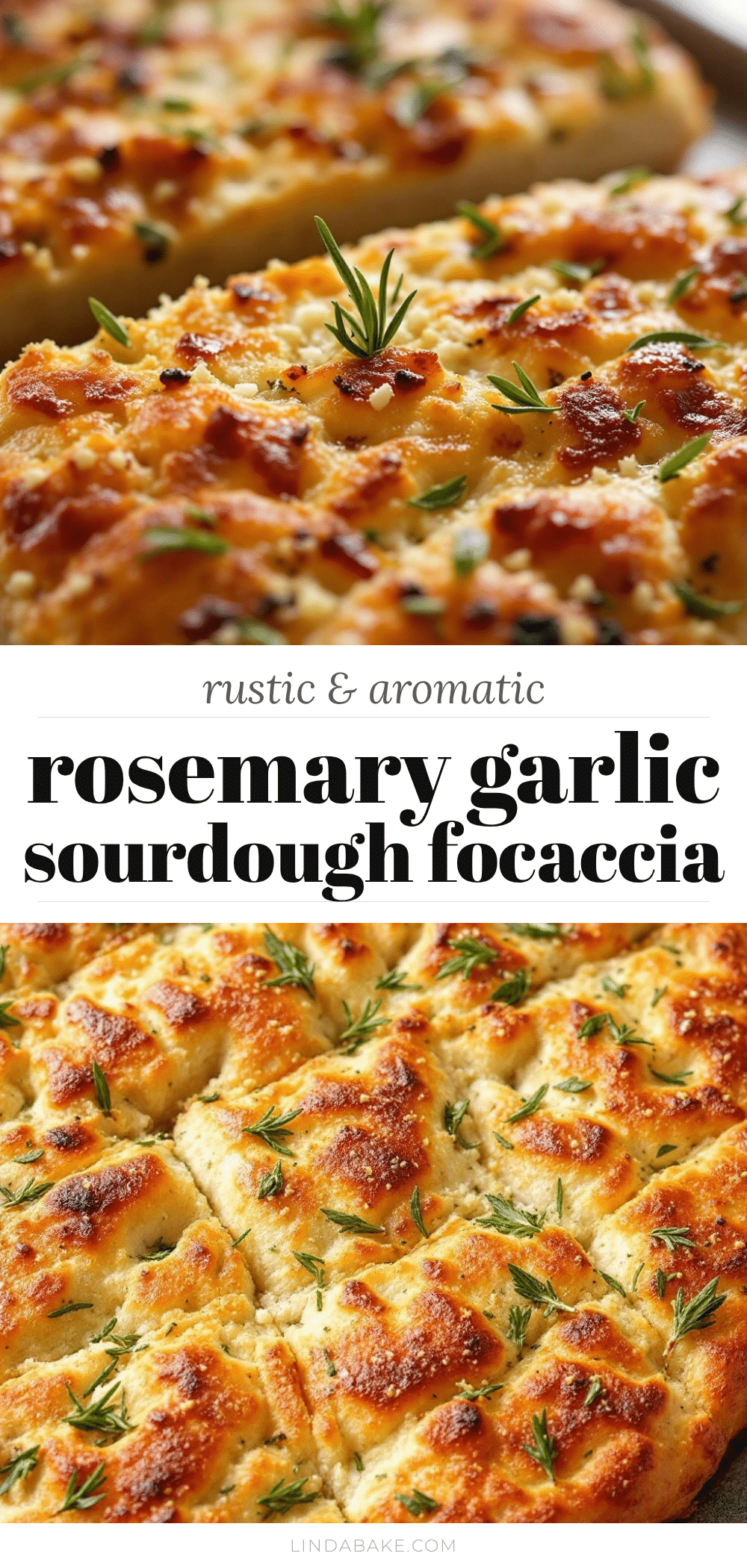
Best Easy Rosemary Garlic Sourdough Focaccia Bread
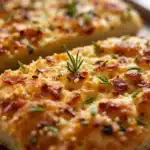
This rosemary garlic sourdough focaccia bread is obsessed with those irregular, blistered pockets of air trapped in the dough, and honestly, everything else follows from there. It’s the kind of bread that makes you close your eyes after the first bite — not because it’s fancy, but because it’s honest.
- Prep Time: 20 minutes
- Cook Time: 25-30 minutes
- Total Time: 8-13 hours (including rising time)
- Yield: 8 servings 1x
- Category: Bread
- Cuisine: Italian
Ingredients
- 500g bread flour or all-purpose flour (about 4 cups)
- 200g active sourdough starter (about 1 cup, fed and bubbly)
- 350g warm water (about 1 ½ cups, around 80°F)
- 60g extra virgin olive oil (about ¼ cup, plus more for the pan)
- 4–5 cloves fresh garlic, thinly sliced
- 2 tablespoons fresh rosemary, chopped
- 10g fine sea salt (about 2 teaspoons)
- Flaky sea salt (for finishing, like Maldon)
Instructions
- Mix the dough: In a large bowl, combine 500g flour, 350g warm water, 200g active sourdough starter, and 10g fine sea salt. Mix with your hands or a wooden spoon until a shaggy, sticky dough forms. Cover the bowl with plastic wrap and let it rest for 30 minutes.
- First stretch and fold: After the rest, wet your hands slightly and grab one side of the dough. Stretch it up and fold it over the center. Rotate the bowl 90 degrees and repeat. Do 4 stretches total, then cover and rest for 30 minutes. Repeat this stretch-and-fold process 3 more times, every 30 minutes.
- Bulk fermentation: After the final stretch and fold, cover the bowl and let it rise at room temperature (70-75°F) until doubled in size and bubbly on the surface, about 6-10 hours.
- Prepare the pan: Pour 2-3 tablespoons of olive oil into a 9×13-inch baking pan. Spread it evenly over the bottom and up the sides.
- Transfer the dough: Gently scrape the dough into the oiled pan. Cover with plastic wrap and let it rest for 30 minutes.
- Stretch the dough: Use oiled fingers to gently stretch the dough toward the edges of the pan. If it resists, let it rest another 15 minutes and try again.
- Second rise: Cover the pan and let the dough rise until puffy and jiggly, about 2-3 hours.
- Dimple and top: Preheat oven to 450°F. Drizzle 1-2 tablespoons of olive oil over the dough. Using oiled fingertips, press dimples all across the surface, pushing all the way down to the bottom of the pan. Scatter sliced garlic and chopped rosemary evenly over the top, pressing them gently into the dimples. Sprinkle generously with flaky sea salt.
- Bake: Place the pan on the middle rack and bake until deep golden brown, about 25-30 minutes. If browning too quickly, tent loosely with foil for the last 5 minutes.
- Cool: Slide the focaccia out of the pan onto a cooling rack. Let it cool for at least 20 minutes before cutting.
Notes
For the best texture, weigh your flour and water. Volume measurements can vary wildly. If your starter is sluggish, feed it 8-12 hours before mixing. Fresh rosemary is essential; dried rosemary becomes hard and sharp when baked. The olive oil in the pan is not optional—it creates the crispy bottom crust. Wet hands are your friend when handling sticky dough. Don’t rush the bulk fermentation; the dough needs to double in size. Store leftovers in an airtight container at room temperature for up to 2 days. Focaccia freezes well for up to 3 months.
Nutrition
- Serving Size: 1/8 of the focaccia
- Calories: 280
- Sodium: 480
- Fat: 8
- Saturated Fat: 1
- Carbohydrates: 44
- Fiber: 2
- Protein: 7
Keywords: sourdough focaccia, rosemary garlic bread, homemade focaccia, artisan bread, easy sourdough recipe