There is a specific moment, right around 4:30 PM on Thanksgiving morning, when the kitchen air changes. It gets heavy with the smell of rendered fat and drying bread. I stand in front of the oven, waiting for that particular shade of deep amber that only appears when cornbread meets sage and butter just right. The crumbly, golden-brown surface is what I made this for — everything else is secondary. You know how people talk about the “perfect” roast chicken or the ideal mashed potato? Those are important, sure. But this? This is the soul of the table.
I remember the first time I tried to make dressing without using actual bread. I used leftover biscuits. Big mistake. It turned into a dense, savory brick that nobody wanted to touch. My grandmother watched me struggle with a spatula and just shook her head. She didn’t say much, but her silence was louder than any lecture. She told me later that the secret wasn’t the sausage or the herbs. It was the texture of the cornbread itself. It had to be dry. It had to be coarse. It had to absorb the broth without turning into mush.
Honestly, I spent years trying to force other recipes to work. I added too much chicken stock. I under-salted the mix. I even tried using white bread once, which was a disaster from start to finish. But this Southern sage sausage cornbread dressing? It’s the one that stuck. It’s the one I make when I need comfort, when I need to feel like I’m exactly where I’m supposed to be. The edges get crispy, almost fried in their own juices, while the center stays soft and moist. That contrast is everything.
It’s not just about feeding people. It’s about that quiet realization that you’ve done something right. You’ve created something that brings everyone to the table, forks in hand, before the turkey is even carved. And let’s face it, if the dressing is good, the whole meal feels like a success. I don’t need a fancy garnish or a complex plating style. I just need that golden crust and that herbal scent drifting through the house. It’s simple, it’s reliable, and it’s mine.
Why You’ll Love This Southern Sage Sausage Cornbread Dressing
This isn’t just another side dish to shovel onto your plate. This recipe is the result of years of trial, error, and a lot of tasting spoons. I’ve tested this with different types of sausage, different broilers, and even different brands of chicken broth. Here is why this version stands out from the crowd:
- Quick & Easy Prep: While it does need time to absorb flavors, the active prep time is straightforward. You’re not spending hours chopping or sautéing. It comes together in under an hour of hands-on work, perfect for busy holiday mornings when you’re juggling a turkey, pie, and a million other tasks.
- Simple Ingredients: No fancy grocery trips needed. You likely already have most of this in your pantry or freezer. The magic comes from technique, not obscure ingredients. It’s wholesome, rustic cooking at its finest.
- Perfect for Thanksgiving: This is the ultimate holiday side. It pairs beautifully with roasted meats and gravies. But honestly? It’s great for any Sunday dinner or potluck where you want to bring something that feels homemade and hearty.
- Crowd-Pleaser: Always gets rave reviews from kids and adults alike. Even the picky eaters who usually refuse to touch “stuffing” will ask for seconds of this dressing. The savory sausage and sweet corn balance out perfectly.
- Unbelievably Delicious: The texture and flavor combo is next-level comfort food. The sage provides an earthy depth that cuts through the richness of the sausage, while the cornbread adds a subtle sweetness and a crumbly texture that melts in your mouth.
What makes this recipe different is the focus on the cornbread base. Many recipes use store-bought stuffing cubes, which are often dry and flavorless. By making your own cornbread base, you control the moisture content and the flavor profile. I also use a generous amount of fresh sage, which makes a huge difference compared to dried herbs. It’s not just a variation; it’s the best version because it respects the traditional Southern method while keeping things manageable for a home cook. It’s the kind of dish that makes you close your eyes after the first bite. It’s comfort food reimagined—simpler, faster, but with the same soul-soothing satisfaction.
What Ingredients You Will Need
This recipe uses simple, wholesome ingredients to deliver bold flavor and satisfying texture without the fuss. The beauty of Southern sage sausage cornbread dressing lies in its accessibility. Most of these items are staples you probably already have on hand. The key is quality, especially with the sausage and the herbs, as they carry the most weight in the final flavor profile.
For the Cornbread Base
- Yellow Cornmeal (1 cup): Use a fine grind for a smoother texture, or coarse for a more rustic bite. I prefer stone-ground cornmeal for that authentic flavor.
- All-Purpose Flour (1 cup): Helps bind the cornbread together so it doesn’t crumble too much before it absorbs the broth.
- Baking Powder (1 tablespoon): Essential for lift. Make sure it’s fresh for the best rise.
- Salt (1 teaspoon): Enhances the natural sweetness of the corn.
- Eggs (2 large): Room temperature eggs mix more evenly into the batter.
- Buttermilk (1 cup): Adds tang and moisture. If you don’t have buttermilk, add 1 tablespoon of vinegar or lemon juice to regular milk and let it sit for 5 minutes.
- Unsalted Butter, melted (1/4 cup): Adds richness. You can substitute with oil if needed, but butter tastes better.
- Canned Corn (1 cup, drained): Adds bursts of sweetness and moisture. I recommend brands like Del Monte or Green Giant for consistent quality.
For the Savory Mix-In

- Breakfast Sausage (1 pound): Pork sausage with sage or fennel works best. Remove the casings if using links. Look for a brand with a good meat-to-fat ratio for flavor.
- Yellow Onion, diced (1 medium): Provides a sweet, aromatic base. Vidalia onions are great in the fall.
- Celery, diced (2 stalks): Adds a crunchy texture and fresh flavor. Don’t skip this; it’s crucial for the classic dressing profile.
- Fresh Sage Leaves (1/4 cup, chopped): Fresh sage is non-negotiable here. Dried sage can be bitter. If you can’t find fresh, use 1 tablespoon of dried, but fresh is superior.
- Chicken Broth (3-4 cups): Use a low-sodium version so you can control the salt level. I prefer bone broth for extra richness, but standard low-sodium works fine.
- Unsalted Butter (4 tablespoons): For sautéing the vegetables and adding richness to the final dish.
- Black Pepper (1 teaspoon): Freshly cracked pepper adds a nice heat.
- Salt (to taste): Add gradually, especially since the sausage and broth may already contain sodium.
Equipment Needed
You don’t need a fancy kitchen to make this, but having the right tools helps. A 9×13 inch baking dish is standard, but a deep casserole dish works too. I use a cast-iron skillet to cook the sausage and veggies because it distributes heat evenly and keeps everything warm while I prep the rest. A large mixing bowl is essential for combining the cornbread cubes with the wet ingredients. I recommend a sturdy wooden spoon or a silicone spatula for folding, as it prevents breaking up the cornbread too much. If you don’t have a cast-iron skillet, a non-stick pan works, but you might need to add a bit more butter. For the baking dish, glass or ceramic is best for even browning. Avoid metal pans if you want a softer interior, as they conduct heat too quickly and might burn the edges before the center is heated through.
Preparation Method
Step 1: Make the Cornbread (30 minutes + cooling time)
Preheat your oven to 400°F (200°C). Grease a 9×13 inch baking pan or a cast-iron skillet with butter. In a large bowl, whisk together the cornmeal, flour, baking powder, and salt. In a separate bowl, whisk the eggs, buttermilk, and melted butter. Pour the wet ingredients into the dry ingredients and stir until just combined. Fold in the drained corn. Be careful not to overmix; the batter should be thick and slightly lumpy. Spread it evenly into the prepared pan. Bake for 20-25 minutes, or until the top is golden and a toothpick inserted in the center comes out clean. Let it cool completely. This step is crucial. If the cornbread is warm, it will turn into mush when you add the broth.
Step 2: Prep the Cornbread (10 minutes)
Once the cornbread is cool, crumble it into large, uneven chunks. You want a mix of sizes. Some small crumbs will help bind the dressing, while larger chunks provide texture. Aim for about 8-10 cups of crumbled cornbread. Place it in a very large mixing bowl.
Step 3: Cook the Sausage and Veggies (15 minutes)
In a large skillet over medium heat, add the sausage. Break it up with a spoon as it cooks. Once browned, drain excess grease, leaving about a tablespoon in the pan. Add the diced onion and celery to the skillet. Sauté for 5-7 minutes until softened and translucent. Add the fresh sage in the last minute of cooking to release its oils. Transfer this mixture directly into the bowl with the cornbread.
Step 4: Combine and Season (10 minutes)
Melt the 4 tablespoons of butter in a saucepan or microwave. Pour the melted butter over the cornbread and sausage mixture. Add 3 cups of chicken broth and 1 teaspoon of black pepper. Gently fold everything together. Use your hands if needed to ensure even distribution. Taste a small piece of the mixture (it’s okay if it’s raw at this stage) to check for seasoning. Add more salt and pepper if needed. If the mixture looks too dry, add the remaining 1 cup of broth gradually. It should look moist but not soupy.
Step 5: Bake (45-60 minutes)
Transfer the mixture to a greased 9×13 inch baking dish. Smooth the top. Cover loosely with aluminum foil and bake at 350°F (175°C) for 30 minutes. Remove the foil and bake for another 15-30 minutes, or until the top is golden brown and crispy. Let it rest for 10 minutes before serving. This allows the dressing to set and makes it easier to scoop.
Cooking Tips & Techniques
The biggest mistake people make is using wet cornbread. I cannot stress this enough. Dry cornbread absorbs the broth like a sponge without getting soggy. If you’re in a rush, you can spread your crumbled cornbread on a baking sheet and dry it in the oven at 300°F for 10 minutes. This mimics the effect of letting it cool for hours. Another tip is to save some of the sausage grease. If your sausage is lean, add a bit more butter. The fat carries the flavor of the sage and onion. Also, don’t skimp on the salt. Dressing needs to be well-seasoned because the cornbread is bland. Taste as you go. If you’re baking in a glass dish, keep an eye on the edges, as they cook faster than in metal pans. You might want to tent the edges with foil if they start to darken too quickly.
Variations & Adaptations
This recipe is quite flexible. For a vegetarian version, swap the sausage for sautéed mushrooms and walnuts. The earthiness of the mushrooms mimics the meat well. If you’re watching carbs, you can substitute half the cornbread with gluten-free cornbread or even cauliflower rice, though the texture will change significantly. For a spicy kick, add diced jalapeños to the sausage mix or use a hot sausage. You can also add dried cranberries or chopped apples for a touch of sweetness and fruitiness. I once tried adding chopped pecans for crunch, and it was a hit. For dietary restrictions, use a dairy-free butter and almond milk (with vinegar) for the cornbread. The core technique remains the same regardless of the variations.
Serving & Storage Suggestions
Serve this dressing warm, straight from the oven. It pairs perfectly with roasted turkey, ham, or even grilled chicken. A side of cranberry sauce cuts through the richness nicely. For storage, let it cool completely, then cover tightly with plastic wrap or transfer to an airtight container. It will keep in the refrigerator for up to 4 days. To reheat, place portions in an oven-safe dish, cover with foil, and warm at 350°F for 15-20 minutes. You can also freeze the unbaked dressing. Assemble it in the dish, cover tightly, and freeze. When ready to cook, thaw in the fridge overnight and bake as directed, adding 10-15 minutes to the baking time. The flavors actually meld and improve after a day in the fridge, making it great for leftovers.
Nutritional Information & Benefits
This dressing is a hearty side dish, rich in carbohydrates and fats from the cornbread and sausage. A typical serving contains approximately 350-400 calories, depending on the amount of butter and sausage used. It provides protein from the sausage and eggs, and some fiber from the corn and vegetables. It is not gluten-free unless you use GF cornbread and flour. It is not low-carb. However, it is a good source of energy for a busy holiday meal. I try to balance it with lighter sides like green beans or a salad. It’s a treat, so enjoy it in moderation. The fresh sage adds antioxidants, and the corn provides lutein, which is good for eye health. It’s comfort food, but it’s made with real, whole ingredients.
Conclusion
This Southern sage sausage cornbread dressing is more than just a side dish; it’s a tradition. It’s the kind of recipe that brings people together, filling the kitchen with warmth and aroma. I hope you try it and make it your own. Feel free to adjust the herbs or add your favorite mix-ins. It’s a canvas for your own culinary creativity. If you make this, I’d love to hear how it turned out. Leave a comment below with your thoughts or share a photo. And if you loved this, check out my bacon-wrapped little smokies for another savory favorite. Or try these loaded pulled pork nachos for a game-day twist. Thanks for cooking with me. Happy baking!
FAQs
Can I make this dressing ahead of time?
Yes! You can assemble the entire dish up to 24 hours in advance. Cover it tightly and refrigerate. When ready to bake, let it sit at room temperature for 30 minutes, then bake as directed. You may need to add a few minutes to the baking time since it’s starting cold.
Can I use bread instead of cornbread?
You can, but the flavor and texture will be different. Traditional Southern dressing uses cornbread for its sweetness and crumbly texture. If you use bread, use day-old, sturdy bread like sourdough or French bread, and reduce the broth slightly as bread absorbs liquid differently.
Why is my dressing soggy?
This usually happens if the cornbread was too moist or if you added too much broth. Make sure your cornbread is completely cool and dry before crumbling. Also, reserve some broth and add it gradually until the mixture reaches the right consistency. It should look damp, not wet.
Can I freeze leftover dressing?
Yes, dressing freezes well. Store it in an airtight container or freezer-safe bag for up to 3 months. Thaw in the refrigerator overnight and reheat in the oven at 350°F until warmed through. The texture might be slightly softer after freezing, but the flavor will remain great.
What type of sausage is best?
Pork breakfast sausage with sage is the classic choice. You can also use Italian sausage (mild or hot) for a different flavor profile. Avoid heavily seasoned sausages like chorizo, as they might overpower the other ingredients. Look for sausage with a good amount of fat for flavor.
Pin This Recipe!
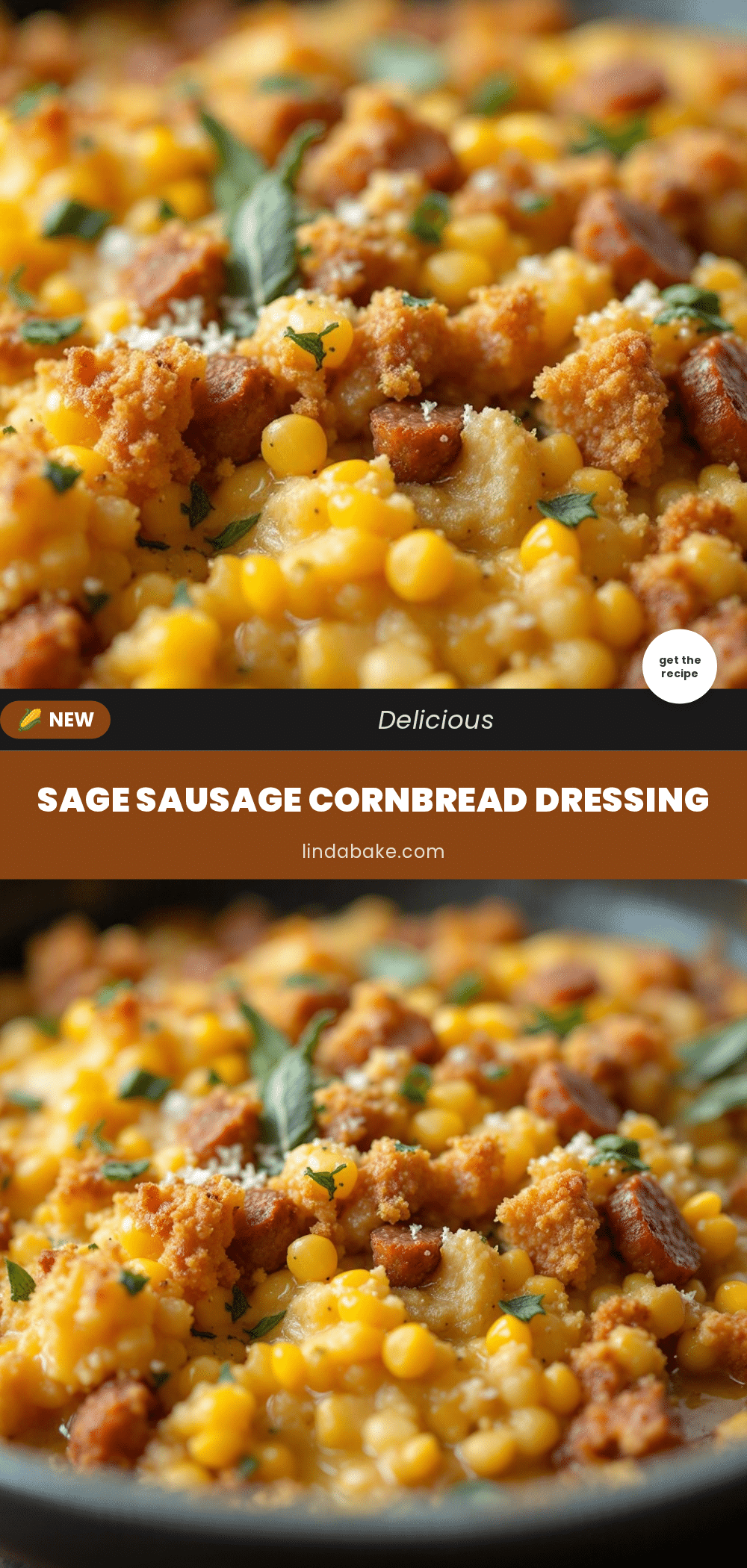
Best Southern Sage Sausage Cornbread Dressing: Easy Holiday Side

A traditional Southern cornbread dressing featuring crispy edges, a moist center, and savory sausage with fresh sage. This recipe uses a homemade cornbread base for superior texture and flavor, making it the perfect holiday side dish.
- Prep Time: 45 minutes
- Cook Time: 90 minutes
- Total Time: 2 hours 15 minutes
- Yield: 12 servings 1x
- Category: Side Dish
- Cuisine: Southern
Ingredients
- 1 cup yellow cornmeal (fine or stone-ground)
- 1 cup all-purpose flour
- 1 tablespoon baking powder
- 1 teaspoon salt
- 2 large eggs, room temperature
- 1 cup buttermilk
- 1/4 cup unsalted butter, melted
- 1 cup canned corn, drained
- 1 pound breakfast sausage (pork with sage or fennel)
- 1 medium yellow onion, diced
- 2 stalks celery, diced
- 1/4 cup fresh sage leaves, chopped
- 3–4 cups chicken broth (low-sodium)
- 4 tablespoons unsalted butter
- 1 teaspoon black pepper, freshly cracked
- Salt to taste
Instructions
- Preheat oven to 400°F (200°C). Grease a 9×13 inch baking pan or cast-iron skillet.
- In a large bowl, whisk together cornmeal, flour, baking powder, and salt.
- In a separate bowl, whisk eggs, buttermilk, and melted butter.
- Pour wet ingredients into dry ingredients and stir until just combined. Fold in drained corn.
- Spread batter into prepared pan and bake for 20-25 minutes until golden and a toothpick comes out clean.
- Let cornbread cool completely, then crumble into large, uneven chunks (approx. 8-10 cups). Place in a very large mixing bowl.
- In a large skillet over medium heat, cook sausage until browned. Drain excess grease, leaving about 1 tablespoon.
- Add diced onion and celery to the skillet. Sauté for 5-7 minutes until softened. Add fresh sage in the last minute.
- Transfer sausage and vegetable mixture to the bowl with crumbled cornbread.
- Melt 4 tablespoons of butter. Pour over the cornbread mixture along with 3 cups of chicken broth and black pepper.
- Gently fold everything together. Taste and adjust seasoning with salt and pepper. Add remaining broth if mixture is too dry.
- Transfer mixture to a greased 9×13 inch baking dish. Cover loosely with foil and bake at 350°F (175°C) for 30 minutes.
- Remove foil and bake for another 15-30 minutes until top is golden brown and crispy.
- Let rest for 10 minutes before serving.
Notes
Ensure cornbread is completely cool and dry before crumbling to prevent mushiness. If in a rush, dry crumbled cornbread in a 300°F oven for 10 minutes. Save some sausage grease for added flavor. Dressing needs to be well-seasoned as cornbread is bland. Can be assembled 24 hours in advance and refrigerated.
Nutrition
- Serving Size: 1 cup
- Calories: 375
- Sugar: 4
- Sodium: 650
- Fat: 22
- Saturated Fat: 8
- Carbohydrates: 35
- Fiber: 3
- Protein: 12
Keywords: Southern dressing, cornbread dressing, Thanksgiving side dish, sage sausage, holiday recipes, comfort food, easy dressing