That was my roommate Sarah’s exact question, delivered with a fork hovering suspiciously over my bowl. It was a cold November Tuesday, the kind where the wind howls through the cracks in the window frames and the only thing keeping you sane is the promise of warmth. I had just stirred the spoon through the thick, white broth, watching the steam rise in lazy spirals. I looked up at her, wiped a bit of splatter from my cheek, and said, “It’s called comfort, Sarah. And yes, it’s dairy. A lot of it.”
She took a tentative sip. Then another. Then she didn’t speak for a full minute, which in our house is basically a standing ovation. That moment stuck with me. Not because I had invented a new culinary technique, but because I had finally nailed the ratio. For years, I had chased that perfect New England chowder texture—the kind that coats the back of a spoon but still flows like velvet. Too much flour, and it’s paste. Too little, and it’s just clam juice with potatoes. This version? It’s the Goldilocks of soups.
I’ve made this creamy New England clam chowder recipe dozens of times. Sometimes I rush it on weeknights when I’m too tired to chop veggies properly. Other times, I take my time, using fresh clams if I can find them at the market, though canned works just fine if you drain them well. The secret isn’t really a secret at all; it’s about patience and respecting the ingredients. You know how some recipes feel like homework? This one feels like a hug in a bowl.
There’s something deeply satisfying about peeling back the layers of a dish that has been around for centuries but still feels fresh on your palate. I remember trying to make this for a dinner party once, and a guest asked if I’d been to Boston. I laughed and told her I’d just been to the grocery store three blocks away. But honestly, the difference between a good chowder and a great one is in the details. The smoky bacon fat. The buttery potatoes. The briny punch of the clams. It’s simple, but it’s not easy to get right every single time.
That’s why I’m sharing this version with you. It’s reliable. It’s forgiving. And it tastes like you spent all day simmering it, even though it only takes about an hour. If you’ve ever been intimidated by the idea of making chowder from scratch, let me assure you: you can do this. It’s just food. And when it’s done right, it’s the kind of food that makes you forget about the cold weather outside.
Why You’ll Love This Recipe
Let’s be honest for a second. We’ve all had bad soup experiences. You know the type: watery, bland, or so salty you need a gallon of water to survive. I’ve been there. I’ve scraped pots of failed attempts down the sink more times than I care to admit. But this creamy New England clam chowder recipe is different. It’s the result of trial, error, and a lot of tasting. I tested this recipe with my family, my friends, and even a few skeptical neighbors who claimed they “don’t really like seafood.” They went back for seconds. That’s the kind of proof I trust.
- Quick & Easy: You can have this from start to finish in under an hour. It’s perfect for those busy weeknights when you want something hearty but don’t have hours to stand over the stove. Plus, it’s a one-pot wonder, which means less cleanup. Who doesn’t love that?
- Simple Ingredients: You don’t need to go to three different specialty stores. Everything you need is likely already in your pantry or fridge. Bacon, potatoes, onions, celery, flour, butter, milk, and canned clams. That’s it. No fancy gadgets or obscure spices.
- Perfect for Cold Evenings: This chowder is basically a warm blanket for your stomach. It’s ideal for rainy days, movie nights, or when you just need to decompress after a long week. It’s comfort food in its purest form.
- Crowd-Pleaser: Kids love the creamy texture, and adults appreciate the depth of flavor. It’s a dish that brings people together. I’ve served this at potlucks, holiday dinners, and casual Tuesday nights, and it’s always the first bowl to disappear.
- Unbelievably Delicious: The combination of smoky bacon, sweet potatoes, and briny clams creates a flavor profile that is next-level. It’s rich without being heavy, and savory without being overwhelming. Every spoonful is a balance of textures and tastes.
What makes this recipe stand out from the rest is the technique. Many recipes tell you to just dump everything in a pot and stir. But if you want that ultra-smooth, restaurant-quality texture, you need to pay attention to the roux. By cooking the flour in the butter and bacon fat for a minute or two before adding the liquid, you eliminate any raw flour taste and create a silky base. It’s a small step that makes a huge difference. Also, using canned clams is not a cheat; it’s a practical choice that ensures consistent flavor year-round, unlike fresh clams which can vary wildly in quality.
This isn’t just soup. It’s a moment of peace. It’s the kind of meal that makes you close your eyes after the first bite and just breathe. It’s healthier than it looks because of the vegetables, but it tastes like a cheat meal. Whether you’re feeding a family or just treating yourself, this chowder delivers. It’s the kind of recipe that sticks with you, the one you pull out when you need a reminder that simple things can be extraordinary.
What Ingredients You Will Need
This recipe uses simple, wholesome ingredients to deliver bold flavor and satisfying texture without the fuss. You don’t need a PhD in gastronomy to understand what goes into this bowl. It’s about quality over quantity. Each ingredient plays a specific role in building the final dish, from the smoky base to the creamy finish. Here is what you’ll need to make it happen.
- Bacon (6 slices): Thick-cut bacon is best here because it renders more fat and stays crispy. I recommend Applewood smoked bacon for a deep, smoky flavor that permeates the entire soup. If you can’t find thick-cut, regular bacon works, just keep an eye on it so it doesn’t burn.
- Unsalted Butter (2 tablespoons): Butter adds richness and helps create the roux. Since bacon is salty, using unsalted butter gives you more control over the final salt level. Don’t skip this; it’s what gives the chowder its velvety mouthfeel.
- Yellow Onion (1 medium, diced): The onion provides the aromatic base. Yellow onions are sweet when cooked down, which balances the saltiness of the bacon and clams. Make sure to dice them finely so they melt into the soup.
- Celery (2 stalks, finely chopped): Celery adds a subtle crunch and earthy flavor. It’s a classic pairing with onions and carrots in a mirepoix, but here it stands out on its own. Chop it small so it integrates well with the potatoes.
- Garlic (2 cloves, minced): Fresh garlic is non-negotiable. Jarred garlic just doesn’t have the same punch. Add it in the last minute of sautéing the veggies so it doesn’t burn and turn bitter.
- All-Purpose Flour (3 tablespoons): This is your thickening agent. It’s mixed with the butter and fat to form a roux. Use standard all-purpose flour; whole wheat or gluten-free blends might change the texture too much for this specific recipe.
- Potatoes (1.5 lbs, Yukon Gold or Russet, cubed): Yukon Gold potatoes are my top pick because they have a buttery flavor and hold their shape well. Russets work too but will break down more, making the soup thicker. Peel them if you prefer a smoother texture, but leaving the skins on adds a nice rustic touch.
- Chicken or Seafood Stock (2 cups): Use low-sodium stock so you can control the saltiness. Chicken stock adds body, while seafood stock enhances the clam flavor. If you can’t find seafood stock, chicken works fine.
- Canned Clams (2 6.5-oz cans, chopped): Look for brands like Long Island Sound or Sea Force. Save the clam juice! That liquid is liquid gold for flavor. Drain the clams gently to keep them tender.
- Heavy Cream (1 cup): This is what makes it “New England” style. Half-and-half is lighter, but heavy cream gives you that luxurious, thick consistency. If you’re watching calories, you can use half-and-half, but it won’t be as rich.
- Dried Thyme (1 teaspoon): Thyme is the signature herb of New England chowder. It adds an earthy, slightly floral note. Fresh thyme works too, but use twice the amount. Avoid strong herbs like basil or oregano, as they clash with the delicate clam flavor.
- Bay Leaf (1): Adds a subtle background note of complexity. Remove it before serving, of course.
- Black Pepper (to taste): Freshly cracked black pepper adds heat and aroma. Add it at the end to preserve its flavor.
- Oyster Crackers (for serving): These are the classic topping. They add a necessary crunch to contrast the creamy soup. If you can’t find them, saltines or homemade croutons work as a substitute.
Which equipment do I need?
You don’t need a fancy kitchen to make this chowder. A large heavy-bottomed pot or Dutch oven is ideal because it distributes heat evenly and prevents burning. If you don’t have one, a large saucepan works fine, just stir more often. A wooden spoon is perfect for stirring the roux and veggies. A colander is needed to drain the clams. And a ladle for serving. That’s basically it. Keep it simple.
Preparation Method

Let’s get cooking. This process is straightforward, but timing is key. Don’t rush the sautéing step; that’s where the flavor builds. Here is how you bring it all together.
- Cook the Bacon (5 minutes): Start by placing the sliced bacon in your large pot over medium heat. Cook it until it’s crispy but not burnt. This should take about 5-7 minutes. Once done, remove the bacon with a slotted spoon and set it aside on a paper towel. Leave the bacon fat in the pot; this is your flavor base.
- Sauté the Aromatics (5 minutes): Reduce the heat to medium-low. Add the butter to the hot bacon fat. Once melted, add the diced onions and chopped celery. Sauté these for about 5 minutes until they are soft and translucent. Don’t let them brown; you just want them to soften. Add the minced garlic in the last 30 seconds so it doesn’t burn.
- Make the Roux (2 minutes): Sprinkle the flour over the onions and celery. Stir constantly for about 1-2 minutes. You want the flour to cook slightly to remove the raw taste, but don’t let it get too dark. It should look like wet sand.
- Add the Liquids (10 minutes): Slowly pour in the chicken or seafood stock while whisking or stirring constantly. This prevents lumps from forming. Once the stock is incorporated, add the cubed potatoes and the reserved clam juice. Stir well. Bring the mixture to a gentle simmer.
- Simmer the Potatoes (15-20 minutes): Let the soup simmer uncovered. Stir occasionally. The potatoes are done when they are tender when pierced with a fork. This usually takes 15-20 minutes depending on the size of your cubes. Do not overcook them, or they will disintegrate.
- Add the Clams and Cream (5 minutes): Once the potatoes are tender, stir in the heavy cream, drained chopped clams, dried thyme, and bay leaf. Heat this through gently. Do not boil vigorously after adding the cream, or it might curdle. Just let it warm up for about 3-5 minutes.
- Season and Serve (2 minutes): Taste the chowder. Add black pepper and salt if needed. Remember, the bacon, clams, and stock already have salt, so go easy. Remove the bay leaf. Ladle the hot chowder into bowls and top with the crispy bacon bits and oyster crackers. Enjoy immediately.
Cooking Tips & Techniques
I’ve made my share of mistakes in the kitchen, and some of them involved soup. One time, I boiled the cream too hard and it separated into a weird, oily mess. Lesson learned: never boil after adding dairy. Just heat gently. Another time, I used waxy red potatoes that didn’t cook through. Stick to Yukon Golds or Russets for the best texture.
Here are a few more tips to ensure success. First, don’t skip the roux. Some recipes tell you to thicken the soup with cornstarch or just mash the potatoes. While mashing some potatoes works, the roux gives you a smoother, more consistent base. Second, taste as you go. Every brand of bacon and clam juice is different in saltiness. Your palate is the best tool you have. Third, if the chowder is too thick, add a splash more stock or milk. If it’s too thin, let it simmer a bit longer to reduce.
Also, multitask wisely. While the potatoes are simmering, you can prep the garnishes or set the table. This helps you manage your time better, especially if you’re serving guests. And finally, don’t be afraid of fat. The butter and cream are essential for the texture. If you try to make this with skim milk, it won’t be the same. Trust the process.
Variations & Adaptations
This recipe is flexible. If you want to switch things up, here are a few ideas. For a lighter version, swap the heavy cream for half-and-half or even whole milk. It won’t be as thick, but it’s still delicious. If you’re gluten-free, use a gluten-free flour blend for the roux or skip the flour entirely and mash some of the potatoes against the side of the pot to thicken it naturally.
For extra veggies, add diced carrots or corn. Corn adds a nice sweetness that pairs well with the clams. If you like spice, add a pinch of cayenne pepper or a dash of hot sauce. I once added some chopped spinach at the very end, and it was a great way to sneak in some greens. For a seafood lover’s twist, add cooked shrimp or lobster chunks at the end. Just warm them through so they don’t get rubbery.
If you don’t like clams, you can make a corn chowder using the same base. Or try a potato leek chowder. The technique remains the same. The key is to keep the balance of flavors. Don’t overpower the delicate taste of the clams with too many strong spices. Keep it simple and let the main ingredients shine.
Serving & Storage Suggestions
Chowder is best served hot, straight out of the pot. Pair it with a crisp green salad or some crusty bread to soak up the extra broth. A glass of white wine, like a Chardonnay or Sauvignon Blanc, goes beautifully with this dish. For dessert, something light like a fruit tart or sorbet works well to cut through the richness.
If you have leftovers, store them in an airtight container in the refrigerator for up to 3 days. The flavors will actually deepen overnight, making it taste even better the next day. To reheat, warm it gently on the stove over low heat. Add a splash of milk or stock if it has thickened too much in the fridge. Do not microwave it on high, as the dairy might separate. Low and slow is the way to go.
You can also freeze this chowder, but the texture of the potatoes may change slightly upon thawing. They might become a bit mushy. If you plan to freeze it, undercook the potatoes slightly. When you reheat, add a little fresh cream to restore the richness. It’s not perfect for freezing, but it’s still tasty.
Nutritional Information & Benefits
This creamy New England clam chowder recipe is rich and indulgent, but it also has some nutritional benefits. Clams are an excellent source of protein, vitamin B12, and selenium. Potatoes provide potassium and vitamin C. Bacon adds flavor but also saturated fat, so enjoy in moderation. The cream adds calcium and vitamin D. Overall, it’s a balanced meal when paired with a side salad or whole-grain bread.
For those watching their sodium, use low-sodium stock and rinse the clams thoroughly. You can also reduce the amount of bacon used. This recipe is not gluten-free unless you use a GF flour substitute. It is not vegetarian due to the bacon and clams. But for most people, it’s a hearty, satisfying meal that provides energy and comfort.
Conclusion
There you have it. A creamy New England clam chowder recipe that is easy to make, delicious to eat, and perfect for any occasion. It’s a dish that brings people together, whether it’s a cozy night in or a gathering with friends. I hope you try it and enjoy it as much as I do. Feel free to customize it to your liking. Add more veggies, less cream, or extra bacon. Make it your own.
If you make this recipe, I’d love to hear how it turns out. Leave a comment below and let me know your thoughts. Did you add any special twists? How did your family like it? Sharing your experiences helps me create better content and helps others discover new favorites. And if you have friends who love seafood, share this recipe with them. Spread the warmth.
Thanks for reading, and happy cooking. May your bowls always be full and your winters be warm.
Frequently Asked Questions
Can I use fresh clams instead of canned?
Yes, you can use fresh clams. You’ll need to steam them open, remove the meat from the shells, and use the cooking liquid as part of your stock. It adds a fresher flavor, but canned is more convenient and consistent.
Why is my chowder too thin?
If your chowder is too thin, you can simmer it longer to reduce the liquid. Alternatively, you can make a slurry with cornstarch and water and stir it in. Or, mash some of the potatoes against the side of the pot to release their starch.
Can I make this chowder ahead of time?
Yes, this chowder tastes even better the next day. Store it in the fridge for up to 3 days. Reheat gently on the stove, adding a splash of milk if needed.
What can I use instead of oyster crackers?
You can use saltines, rye crisps, or homemade croutons. Any crunchy cracker works well to add texture to the creamy soup.
Is this recipe gluten-free?
The traditional recipe uses all-purpose flour. To make it gluten-free, use a gluten-free flour blend for the roux or skip the flour and use a cornstarch slurry or mashed potatoes to thicken.
Pin This Recipe!
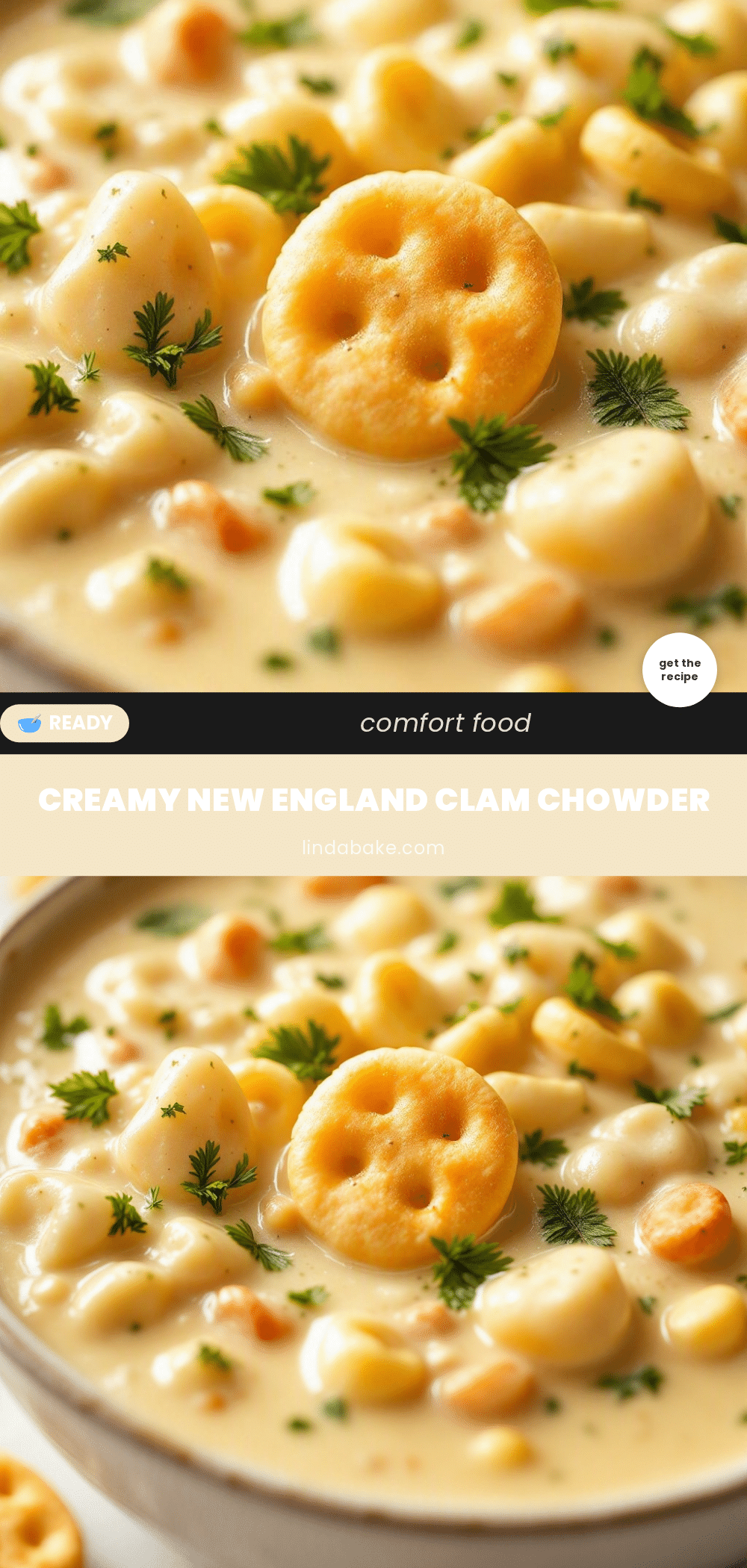
Creamy New England Clam Chowder: Easy 1-Hour Recipe

A rich, creamy, and comforting New England clam chowder made with smoky bacon, tender potatoes, and briny clams. This reliable one-pot recipe delivers restaurant-quality texture in under an hour.
- Prep Time: 15 minutes
- Cook Time: 45 minutes
- Total Time: 1 hour
- Yield: 6 servings 1x
- Category: Main Course
- Cuisine: American
Ingredients
- 6 slices thick-cut bacon (Applewood smoked recommended)
- 2 tablespoons unsalted butter
- 1 medium yellow onion, diced
- 2 stalks celery, finely chopped
- 2 cloves garlic, minced
- 3 tablespoons all-purpose flour
- 1.5 lbs Yukon Gold or Russet potatoes, cubed
- 2 cups low-sodium chicken or seafood stock
- 2 (6.5-oz) cans chopped clams, drained (reserve juice)
- 1 cup heavy cream
- 1 teaspoon dried thyme
- 1 bay leaf
- Black pepper to taste
- Oyster crackers for serving
Instructions
- Cook bacon in a large heavy-bottomed pot over medium heat until crispy (5-7 minutes). Remove bacon with a slotted spoon, set aside, and leave fat in the pot.
- Reduce heat to medium-low. Add butter to the bacon fat. Once melted, add onions and celery. Sauté for 5 minutes until soft and translucent. Add garlic in the last 30 seconds.
- Sprinkle flour over the vegetables. Stir constantly for 1-2 minutes to create a roux; it should look like wet sand.
- Slowly pour in stock while stirring constantly to prevent lumps. Add cubed potatoes and reserved clam juice. Stir well and bring to a gentle simmer.
- Simmer uncovered for 15-20 minutes until potatoes are tender when pierced with a fork. Do not overcook.
- Stir in heavy cream, drained clams, thyme, and bay leaf. Heat gently for 3-5 minutes. Do not boil vigorously.
- Season with black pepper and salt if needed. Remove bay leaf. Ladle into bowls and top with crispy bacon bits and oyster crackers.
Notes
Do not boil the soup after adding cream to prevent curdling. If the chowder is too thick, add a splash of stock or milk. If too thin, simmer longer or mash some potatoes. For a gluten-free version, use GF flour or skip the flour and mash potatoes. Store leftovers in the fridge for up to 3 days.
Nutrition
- Serving Size: 1 bowl with oyster c
- Calories: 450
- Sugar: 4
- Sodium: 900
- Fat: 28
- Saturated Fat: 14
- Carbohydrates: 35
- Fiber: 3
- Protein: 18
Keywords: New England clam chowder, creamy soup, comfort food, seafood recipe, one pot meal, winter soup, bacon chowder