The power went out at 6:15 PM on a Tuesday, right in the middle of a thunderstorm that sounded like gravel hitting the roof. I stared at the dark kitchen, my hand hovering over the light switch, realizing I had exactly thirty minutes before my husband and his two friends walked through the door from their hike. The fridge was humming a silent, useless tune in the dark. I had a half-cubed butternut squash, a jar of maple syrup that was sticky with age, and a handful of dried sage leaves from a garden gift that had sat in the back of the cupboard for six months.
Honestly, I didn’t plan to cook. I just grabbed the roasting pan because it was the only thing I could see by the window light. I tossed the squash with olive oil and salt, shoved it into the oven, and waited. The smell started to fill the house, sweet and earthy, cutting through the storm’s damp chill. When the timer dinged, I blended it with a little coconut milk and that maple syrup, adding the crispy sage I fried in a pan on the stovetop burner.
They arrived dripping wet, expecting takeout or cereal. Instead, they got bowls of steaming, orange soup that tasted like comfort itself. My husband took one sip and stopped talking. It wasn’t fancy, and it certainly wasn’t planned, but it was perfect. That night taught me that the best meals often come from having nothing left to lose but a squash and a little bit of patience.
Why You’ll Love This Recipe
You know, I used to think soup was just a fallback option for bad days. But this creamy maple roasted butternut squash soup with sage changed my mind completely. It’s not just warm; it’s deeply satisfying. The first time I made it, I closed my eyes after the first spoonful and just sighed. It’s the kind of dish that makes you forget about the rain outside or the emails waiting for you back at home.
Here is why this recipe has earned a permanent spot in my weekly rotation:
- Quick & Easy: While roasting takes time, it’s mostly hands-off. Once the squash is in the oven, you can prep the rest in about 20 minutes total. It’s perfect for those busy weeknights when you’re tired but still want something homemade.
- Simple Ingredients: You likely have most of these items in your kitchen right now. No exotic trips to the store are needed. It’s wholesome, pantry-friendly cooking at its finest.
- Perfect for Cozy Dinners: This is the ultimate autumn comfort food. It pairs beautifully with a crusty bread or a simple salad, making it great for intimate dinners or potlucks where you want to impress without stressing.
- Crowd-Pleaser: Even my picky eater kids love it. The natural sweetness from the maple syrup masks any “veggie” taste they might fuss about, and the creamy texture is just appealing to everyone.
- Unbelievably Delicious: The combo of earthy squash, sweet maple, and salty sage is next-level. It’s rich and velvety without being heavy, leaving you feeling satisfied but not stuffed.
What makes this version different from the rest? A lot of recipes use cream, which can feel heavy. I use a bit of coconut milk or just blend the squash itself until it’s silky smooth. Also, frying fresh sage leaves at the end adds a texture contrast that most people skip. It’s not just another soup; it’s your best version of a classic fall flavor profile. It’s healthier, faster, but with the same soul-soothing satisfaction you crave when the weather turns cold.
What Ingredients You Will Need
This recipe uses simple, wholesome ingredients to deliver bold flavor and satisfying texture without the fuss. The key here is quality over quantity. Since there are so few components, each one needs to shine. I like to use pantry staples that I know I’ll use again, so nothing goes to waste.
Here is what you need to gather:
- Butternut Squash: One large squash, peeled, seeded, and cubed. Look for one that feels heavy for its size and has a matte finish, not shiny. Shiny can mean it was picked too early. I prefer buying it pre-cut if possible, but peeling it yourself gives you the best control over the shape.
- Maple Syrup: Half a cup of pure maple syrup. Not the pancake syrup stuff! You need the real deal, preferably Grade B for a stronger maple flavor. It adds that deep, caramel-like sweetness that balances the savory elements.
- Vegetable Broth: Four cups of low-sodium vegetable broth. I use a carton from the store, but if you have homemade stock, that works too. Just watch the salt level since we add soy sauce later.
- Coconut Milk: One can (13.5 oz) of full-fat coconut milk. This gives the soup its creamy texture without needing heavy cream. It adds a subtle richness that pairs well with the squash. You can use dairy milk if you prefer, but coconut is more stable when reheating.
- Fresh Sage Leaves: A large handful of fresh sage. Dried sage works in a pinch, but fresh has that peppery, pine-like aroma that is essential here. I buy it from the produce section in a small plastic tub.
- Butter or Olive Oil: Two tablespoons for roasting and another tablespoon for frying the sage. I use olive oil for roasting to keep it light, but butter adds a nice nutty flavor when frying the leaves.
- Onion and Garlic: One yellow onion, diced, and three cloves of garlic, minced. These form the aromatic base. Don’t skip the onion; it adds a necessary savory depth.
- Spices: One teaspoon of smoked paprika for warmth and a pinch of red pepper flakes if you like a little kick. I also add a teaspoon of salt and half a teaspoon of black pepper.
- Soy Sauce: One tablespoon. This is the secret ingredient. It adds umami and saltiness, balancing the sweet maple syrup. It won’t make the soup taste like Asian cuisine; it just makes it taste “more.”
If you are looking for substitutions, you can swap the maple syrup for honey, though the flavor will be lighter. For a dairy-free and vegan option, stick with the coconut milk and olive oil. In the summer, this recipe doesn’t work as well, but in fall, the squash is sweetest and cheapest at the farmers market.
Equipment Needed
You don’t need a fancy kitchen to make this soup. The main tool you need is a large roasting pan or a baking sheet. I use a rimmed baking sheet because it makes cleanup easier. If you have a heavy-bottomed pot, that’s ideal for the final blending stage, but a large stockpot works fine too.
For blending, an immersion blender is the best friend here. It saves you from transferring hot soup to a countertop blender, which can be dangerous and messy. If you don’t have one, a standard blender works, but be sure to vent the lid to let steam escape.
A small skillet is needed for frying the sage leaves. I use a non-stick pan for this so the butter doesn’t burn. A sharp knife and a sturdy vegetable peeler are essential for prepping the squash. Peeling butternut squash can be tricky, so make sure your knife is sharp to avoid slipping.
For storage, glass jars with lids are great for keeping leftovers fresh in the fridge. I also like to freeze portions in freezer-safe bags for quick weeknight meals. The equipment list is short, which is part of why I love this recipe. It doesn’t clutter up the counter or require a trip to the store for special gadgets.
Preparation Method

Let’s get into the actual cooking. It’s straightforward, but timing matters a bit to get that perfect texture.
- Preheat and Prep: Start by preheating your oven to 400°F (200°C). Line your baking sheet with parchment paper for easy cleanup. Peel the butternut squash and remove the seeds. Cut it into 1-inch cubes. Uniform size helps them cook evenly. Toss the cubes with olive oil, salt, and pepper on the baking sheet. Spread them out in a single layer. Do not crowd the pan, or they will steam instead of roast. Roast for 25-30 minutes until tender and slightly caramelized at the edges. Time: 30 minutes
- Sauté Aromatics: While the squash is roasting, heat a large pot over medium heat. Add a tablespoon of olive oil. Add the diced onion and cook for 5 minutes until soft and translucent. Add the minced garlic and smoked paprika. Cook for another minute until fragrant. Be careful not to burn the garlic, or it will turn bitter. Time: 6 minutes
- Combine and Simmer: Once the squash is roasted, add it to the pot with the onions. Pour in the vegetable broth and the maple syrup. Stir well to combine. Bring the mixture to a boil, then reduce the heat to low. Cover and simmer for 10 minutes. This helps the flavors meld together. Time: 10 minutes
- Blend Until Smooth: Remove the pot from heat. Let it cool slightly for a minute. Use an immersion blender to puree the soup directly in the pot. Blend until completely smooth. If you use a countertop blender, blend in batches. Add the coconut milk and soy sauce now. Stir well. Taste and adjust seasoning. If it’s too thick, add a little more broth. If it needs more sweetness, add a splash more maple syrup. Time: 5 minutes
- Fry the Sage: In a small skillet, melt the remaining tablespoon of butter over medium heat. Add the fresh sage leaves. Fry them for 30-60 seconds until they are crispy and bright green. Watch them closely; they burn fast. Remove them to a paper towel to drain excess oil. Time: 2 minutes
- Serve: Ladle the hot soup into bowls. Top with the crispy sage leaves. Drizzle with a little extra maple syrup if you like it sweeter. Serve immediately with crusty bread. Time: 2 minutes
Cooking Tips & Techniques
I’ve made this soup a dozen times, and I’ve learned a few things the hard way. First, don’t rush the roasting. If the squash isn’t caramelized, the soup will taste flat. The browning adds a depth of flavor that boiling or steaming just can’t match. Also, when you blend the soup, don’t over-blend if you want a bit of texture. But honestly, for this recipe, smooth is better.
Another tip is to save the squash seeds. Rinse them, toss them with a little salt and olive oil, and roast them at 350°F for 10 minutes. They make a great topping for the soup, adding a crunchy contrast to the creamy texture. It’s a zero-waste move that feels fancy.
When frying the sage, keep the heat medium-low. High heat will burn the delicate leaves before they crisp up. If they turn brown, they’re burnt. They should stay a vibrant green. If you miss the window, just discard them and fry a new batch. It’s worth the effort.
Also, let the soup rest for a few minutes after blending. The flavors settle and become more cohesive. If you serve it immediately, it might taste a bit disjointed. Patience pays off in soup making.
Variations & Adaptations
This recipe is quite flexible, so you can tweak it to suit your taste or dietary needs.
- Spicy Version: Add a diced jalapeño or red pepper when sautéing the onions. It adds a nice heat that cuts through the sweetness.
- Curry Twist: Swap the smoked paprika for curry powder. It changes the flavor profile completely to something warm and exotic. This pairs well with a dollop of yogurt.
- Chicken Addition: For a heartier meal, shred some rotisserie chicken and stir it in at the end. It turns the soup into a full dinner.
- Vegan Option: Use vegetable broth and coconut oil instead of butter for frying the sage. The soup is naturally vegan if you skip the butter.
- Gluten-Free: This recipe is naturally gluten-free, but just double-check your broth and soy sauce (use tamari instead for strict GF needs).
I once tried adding a diced apple to the roasting pan with the squash. It added a tartness that balanced the maple syrup beautifully. It’s a variation I’ll keep trying.
Serving & Storage Suggestions
Serve this soup hot, right out of the pot. It’s best paired with a crusty baguette or some garlic bread. I also like a simple green salad with a vinaigrette to cut the richness. A glass of crisp white wine or a dark beer works well too.
For storage, let the soup cool completely. Transfer it to an airtight container and refrigerate for up to 4 days. The flavors actually get better after a day or two as they meld together. To reheat, warm it gently on the stove over medium-low heat, stirring occasionally. If it’s too thick, add a splash of broth or water.
You can also freeze this soup for up to 3 months. I portion it into freezer bags for easy lunches. When reheating from frozen, thaw it in the fridge overnight first. The texture might change slightly after freezing, but it’s still delicious. Just give it a good stir when you heat it up.
Nutritional Information & Benefits
This soup is not just tasty; it’s good for you. Butternut squash is packed with vitamin A, which is great for eye health and immunity. It’s also high in fiber, which helps with digestion. The maple syrup provides natural sweetness without refined sugars, though it should still be used in moderation. Sage has anti-inflammatory properties and adds a unique flavor that makes healthy eating feel indulgent.
One serving has approximately 250 calories, 8g of protein, and 15g of fat. It’s relatively low in sodium if you use low-sodium broth. For those watching their carb intake, the squash is starchy, so keep portions in mind. But for most people, this is a nutrient-dense meal that supports overall wellness. It’s a great way to get your daily veggies in a way that doesn’t feel like a chore.
Conclusion
This creamy maple roasted butternut squash soup with sage is more than just a recipe. It’s a reminder that good food can come from simple, unexpected moments. It’s warm, comforting, and surprisingly easy to make. I hope you try it and find your own happy memories around this bowl. Feel free to tweak the spices or add your favorite toppings. Let me know how it turns out in the comments below. Share your variations with me!
Frequently Asked Questions
Can I use frozen butternut squash?
Yes, you can use frozen cubes. Just thaw them slightly before roasting. They may release more water, so you might need to roast them a bit longer to get that caramelization.
What if I don’t have fresh sage?
Dried sage works, but use less. One teaspoon of dried sage is usually enough for the amount of fresh leaves called for. Fresh has a brighter flavor, though.
How do I make it spicier?
Add red pepper flakes during the sauté step, or garnish with a drizzle of chili oil. You can also add a diced jalapeño for more heat.
Can I make this in a slow cooker?
Yes. Roast the squash first, then add everything to the slow cooker. Cook on low for 6-8 hours. Blend at the end. It’s a great hands-off option.
Why is my soup too thin?
Add a little more roasted squash or let it simmer uncovered to reduce. You can also add a potato while cooking to thicken it naturally.
Pin This Recipe!
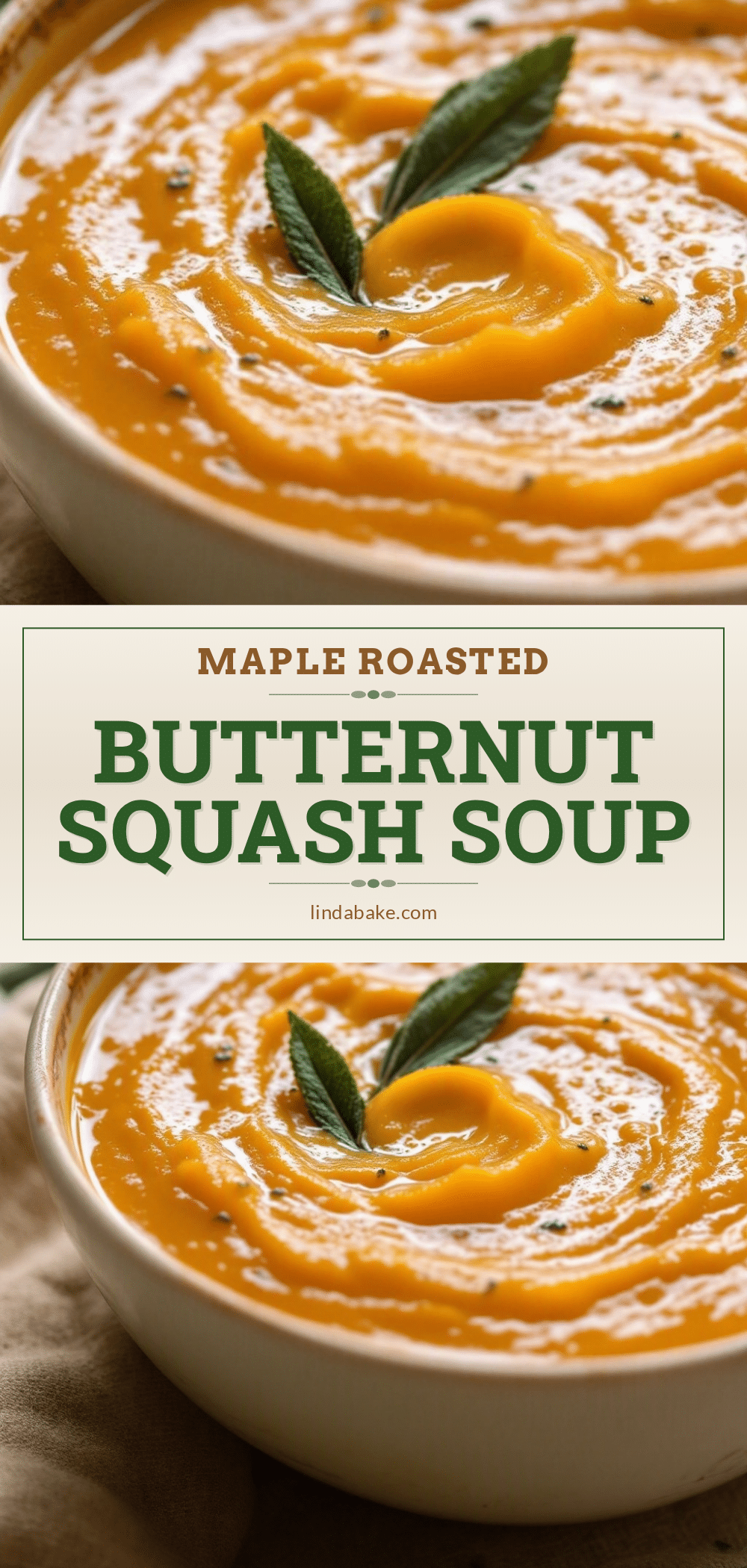
Creamy Maple Roasted Butternut Squash Soup with Sage

A comforting, creamy fall soup made with roasted butternut squash, sweet maple syrup, and crispy fried sage leaves. This easy, wholesome recipe uses coconut milk for richness and is perfect for cozy weeknight dinners.
- Prep Time: 20 minutes
- Cook Time: 48 minutes
- Total Time: 68 minutes
- Yield: 4 servings 1x
- Category: Main Course
- Cuisine: American
Ingredients
- 1 large butternut squash, peeled, seeded, and cubed
- 1/2 cup pure maple syrup
- 4 cups low-sodium vegetable broth
- 1 can (13.5 oz) full-fat coconut milk
- 1 large handful fresh sage leaves
- 3 tablespoons olive oil or butter (divided)
- 1 yellow onion, diced
- 3 cloves garlic, minced
- 1 teaspoon smoked paprika
- 1/2 teaspoon red pepper flakes (optional)
- 1 teaspoon salt
- 1/2 teaspoon black pepper
- 1 tablespoon soy sauce
Instructions
- Preheat oven to 400°F (200°C). Line a baking sheet with parchment paper.
- Toss squash cubes with olive oil, salt, and pepper. Spread in a single layer on the baking sheet.
- Roast squash for 25-30 minutes until tender and caramelized.
- While squash roasts, heat a large pot over medium heat with 1 tablespoon olive oil.
- Sauté diced onion for 5 minutes until soft. Add garlic and smoked paprika; cook for 1 minute until fragrant.
- Add roasted squash, vegetable broth, and maple syrup to the pot. Bring to a boil, then reduce heat to low.
- Cover and simmer for 10 minutes to meld flavors.
- Remove from heat and blend with an immersion blender until smooth. Stir in coconut milk and soy sauce. Adjust seasoning if needed.
- In a small skillet, melt remaining butter or oil over medium heat. Fry sage leaves for 30-60 seconds until crispy. Drain on paper towels.
- Ladle soup into bowls and top with crispy sage leaves. Serve immediately with crusty bread.
Notes
For best results, ensure the squash is caramelized before blending to add depth of flavor. When frying sage, keep heat medium-low to prevent burning. The soup can be frozen for up to 3 months. If using dried sage, use 1 teaspoon instead of fresh.
Nutrition
- Serving Size: 1 bowl
- Calories: 250
- Sugar: 18
- Sodium: 400
- Fat: 15
- Saturated Fat: 8
- Carbohydrates: 30
- Fiber: 6
- Protein: 8
Keywords: butternut squash soup, maple syrup, sage, fall recipe, vegan soup, gluten-free, comfort food, easy dinner, roasted vegetables