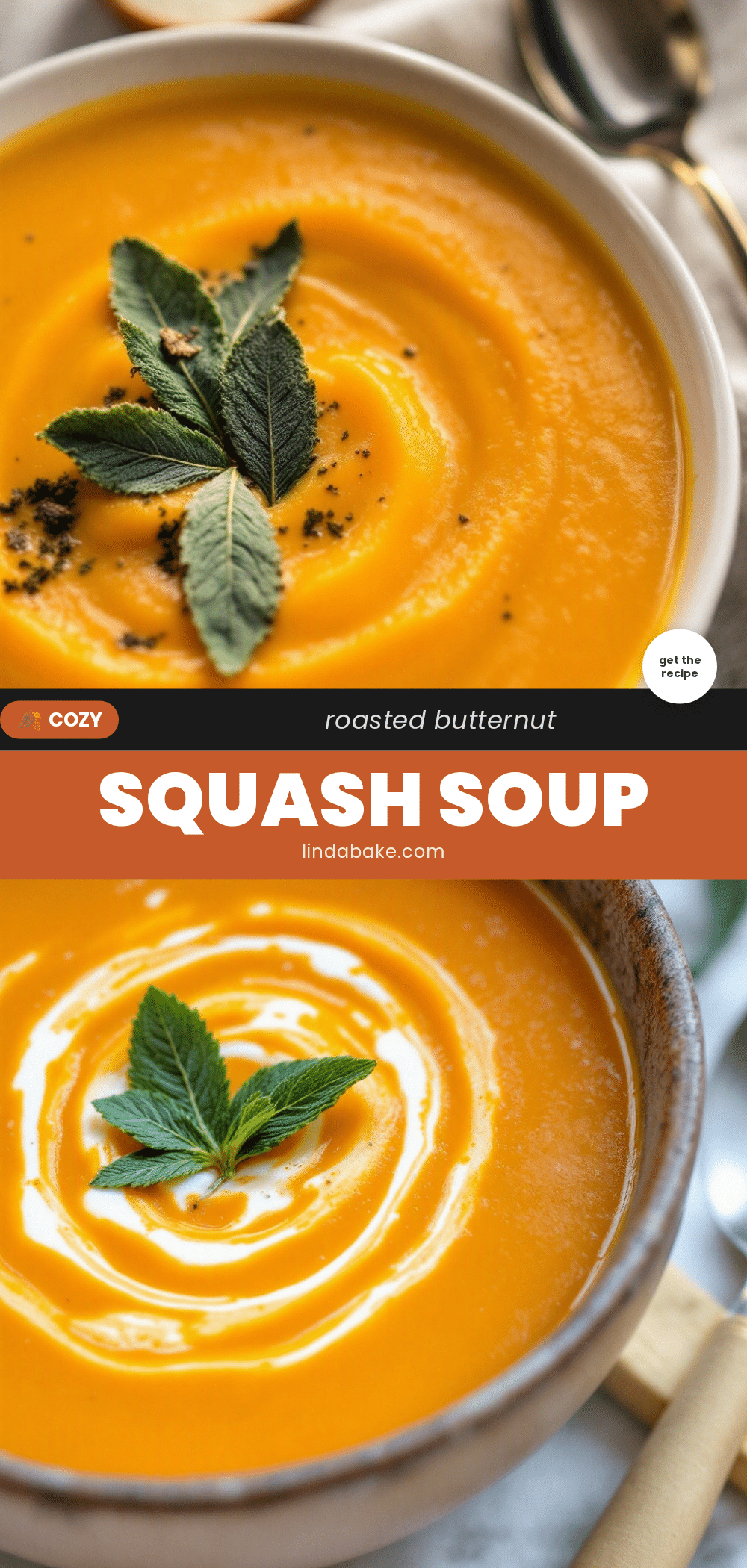
Honestly, I think I make this roasted butternut squash soup just to watch it happen. You pour the creamy, velvety liquid into the bowl, and it moves like heavy silk, catching the light in a way that feels almost unfair for something so simple. The color alone is a promise. It’s the color of late afternoon sun in October, the color of leaves that haven’t quite let go yet. And that first spoonful? It’s quiet. It doesn’t shout. It just settles into your chest like a deep breath you didn’t know you were holding.
I stumbled onto this cozy roasted butternut squash soup with sage a few autumns ago, not because I was trying to be fancy, but because I had a squash sitting on my counter that I kept ignoring. You know how that goes. It stared at me every time I walked into the kitchen. Finally, on a chilly Tuesday when I needed something warm that didn’t require a lot of thinking, I caved. I roasted it until the edges got all jammy and caramelized, threw in some sage because it felt right, and blitzed the whole thing together. I wasn’t expecting much — just a warm bowl of something edible. Instead, I got a bowl of soup that made me want to sit down and stay a while.
It’s not complicated. That’s the point. It’s the kind of recipe that proves you don’t need a dozen ingredients or fancy techniques to make something that feels like a hug in a bowl. It’s just squash, a few aromatics, some broth, and sage — but the way it comes together is honestly a little magical. The roasting does the heavy lifting, concentrating the sweetness of the squash and giving the whole thing a depth you can’t get from boiling or steaming. And the sage? It’s not just a garnish here. It’s woven into the soup itself, lending this earthy, slightly peppery note that keeps every spoonful interesting.
The first time I made this, I ate two bowls in a row. Then I texted my sister a photo of the empty bowl, which is basically my version of a five-star review. She made it the next day. Then our mom made it. It became one of those recipes that just travels, you know? The kind you pass along because it feels too good to keep to yourself. And now I’m passing it to you. Trust me — you’re going to want this one in your back pocket for the season ahead.
Why You’ll Love This Recipe
I’ve tested this cozy roasted butternut squash soup with sage more times than I can count — tweaking the roast time, playing with the sage ratio, even trying it with different broths. This version is the one I keep coming back to, and here’s why I think you’ll feel the same way.
- Seriously Simple Ingredients: You only need a handful of things — butternut squash, onion, garlic, vegetable broth, fresh sage, and a little cream or coconut milk. No hunting down obscure spices or specialty items. You probably already have most of it.
- Minimal Hands-On Time: The oven does most of the work here. You toss everything on a sheet pan, let it roast until it’s soft and caramelized, then blend it all together. Active prep time is maybe 15 minutes. The rest is just waiting (and the waiting smells incredible).
- Perfect for Meal Prep: This soup actually gets better after a day in the fridge. The flavors have time to get cozy with each other. Make a big batch on Sunday and you’ve got lunches or quick dinners all week.
- Naturally Gluten-Free and Dairy-Free Friendly: Skip the cream or use full-fat coconut milk, and this soup fits right into those dietary needs without sacrificing any of the creamy texture. It’s rich and satisfying either way.
- That Sage, Though: Most squash soups use sage as an afterthought — a fried leaf on top for looks. Not this one. The sage gets roasted right alongside the squash, infusing the whole soup with its warm, woodsy flavor. It’s the backbone of the dish, not just a decoration.
I’ve made this for dinner parties where people went back for thirds, and I’ve made it on solo nights when I needed something comforting after a long day. It works for both. There’s something about that first warm spoonful that just resets your whole mood. It’s the kind of soup that makes you close your eyes without thinking about it.
What Ingredients You Will Need
This recipe keeps things refreshingly simple. Each ingredient has a job to do, and together they create something that tastes far more complex than the sum of its parts. Here’s what you’ll need to pull together this cozy roasted butternut squash soup with sage.
- 1 medium butternut squash (about 2 ½ to 3 pounds) — Look for one that feels heavy for its size and has a firm, unblemished skin. I prefer the long-neck varieties because they have fewer seeds and more solid flesh, but any butternut will work beautifully. You’ll peel, seed, and cube it into roughly 1-inch chunks.
- 2 tablespoons olive oil — A good quality extra virgin olive oil adds a subtle fruitiness that complements the squash. You’ll use it for roasting, so don’t break out the really fancy stuff, but don’t use the cheapest bottle either. Something in the middle works great.
- 1 large yellow onion, roughly chopped — Onion adds a savory backbone that balances the natural sweetness of the roasted squash. Yellow onions are my go-to here because they’re mellow and sweet when cooked, but a white onion would work in a pinch.
- 3 cloves garlic, smashed — Smashed, not minced, because we’re roasting them whole. They get soft and sweet and almost buttery in the oven, and they blend into the soup seamlessly. If you’re a garlic lover (I am), feel free to add an extra clove or two.
- 10 to 12 fresh sage leaves — This is non-negotiable for me. Fresh sage has a flavor that dried sage just can’t replicate here. It’s earthy and slightly peppery with a hint of lemon. Reserve a few leaves for garnish if you want to get fancy.
- 3 cups vegetable broth — Use a good quality broth here since it’s the liquid base of the soup. I like Pacific Foods or Imagine brand for their clean flavor. Low-sodium is best so you can control the salt level yourself.
- ½ cup heavy cream or full-fat coconut milk — This adds the luxurious, velvety texture that makes the soup feel indulgent. For a dairy-free version, coconut milk is my top pick — it adds a subtle richness without tasting like coconut. If you’re using cream, go for the good stuff.
- Salt and freshly ground black pepper, to taste — Don’t skimp on the salt. It’s what makes all the other flavors pop. I use fine sea salt for cooking and flaky salt for finishing.
- Optional garnish: crispy fried sage leaves, pumpkin seeds, a drizzle of cream or coconut milk, and crusty bread for serving — These extras turn a simple bowl of soup into something you’d be proud to serve to company.
One thing I’ve learned the hard way — don’t skip the roasting step. I know it’s tempting to just boil the squash to save time, but you will absolutely notice the difference. Roasting concentrates the sugars and adds those beautiful caramelized brown bits that give the soup its deep, almost nutty flavor. It’s worth the extra 30 minutes, I promise.
Equipment Needed
You don’t need a fully stocked professional kitchen to make this cozy roasted butternut squash soup with sage. Here’s what you’ll actually use.
- Large baking sheet (half-sheet pan) — A rimmed baking sheet is ideal for roasting the squash without losing any of those precious juices. I use my Nordic Ware sheet pan for everything — it’s sturdy, doesn’t warp, and cleans up easily.
- Sharp chef’s knife and sturdy vegetable peeler — Butternut squash has a tough skin, so a good peeler makes a world of difference. I prefer a Y-shaped peeler for better control. And please, use a sharp knife. Dull knives are dangerous, especially with hard squash.
- Large soup pot or Dutch oven — You’ll need something big enough to hold all the roasted vegetables and broth. A 5 to 6-quart Dutch oven is perfect. If you don’t have one, any heavy-bottomed pot will work.
- Immersion blender or regular blender — An immersion blender lets you blend the soup right in the pot, which means less cleanup. But a regular blender works just as well — just be careful with hot liquids. Blend in batches and hold the lid down with a kitchen towel.
- Wooden spoon or spatula — For stirring and scraping up all those delicious browned bits from the bottom of the pot.
If you don’t have an immersion blender, don’t run out and buy one just for this. A regular blender does the job perfectly. Just let the soup cool for a few minutes before blending, and never fill the blender more than halfway with hot liquid. Trust me on that one — I learned the hard way.
Preparation Method

Let’s get cooking. This cozy roasted butternut squash soup with sage comes together in a few simple steps, and I’ll walk you through each one so you feel confident from start to finish.
- Preheat your oven to 400°F (200°C). Give it a good 15 to 20 minutes to come to temperature. A properly hot oven is key for getting that caramelization on the squash.
- Prep the butternut squash. Using a sharp vegetable peeler, remove the skin from the squash. Cut off the stem end and the bottom, then slice the squash in half where the narrow neck meets the bulbous bottom. Scoop out the seeds from the bulb section with a spoon. Cut the flesh into roughly 1-inch cubes. Don’t stress about perfect uniformity, but try to keep them close in size so they roast evenly. You should end up with about 5 to 6 cups of cubed squash.
- Arrange everything on the baking sheet. Spread the cubed squash, chopped onion, smashed garlic cloves, and fresh sage leaves in a single layer on your baking sheet. Drizzle with the olive oil and season generously with salt and black pepper. Toss everything with your hands to coat evenly — yes, get in there. It’s the best way to make sure every piece is lightly oiled.
- Roast for 30 to 35 minutes. Place the baking sheet in the preheated oven and roast until the squash is fork-tender and the edges are starting to brown and caramelize. About halfway through, give the pan a shake or stir the vegetables so they cook evenly. The sage leaves will get crispy and dark — that’s exactly what you want. They’ll smell incredible.
- Transfer roasted vegetables to your soup pot. Using a spatula, scrape everything from the baking sheet into your Dutch oven or soup pot. Don’t leave any of those caramelized bits behind — they’re pure flavor. Add the 3 cups of vegetable broth and bring to a simmer over medium-high heat.
- Simmer for 10 minutes. Once the broth is simmering, reduce the heat to low and let everything cook together for about 10 minutes. This gives the flavors a chance to meld. The squash should be very soft at this point — almost falling apart.
- Blend until smooth. Remove the pot from the heat. If using an immersion blender, submerge it into the soup and blend until completely smooth. If using a regular blender, let the soup cool for about 5 minutes, then carefully transfer it in batches (no more than halfway full) and blend until silky. Return the blended soup to the pot.
- Stir in the cream or coconut milk. Add the ½ cup of heavy cream (or full-fat coconut milk for a dairy-free version) and stir until fully incorporated. Taste and adjust the seasoning with more salt and pepper if needed. I usually add another pinch of salt at this stage — the cream tends to mellow the seasoning a bit.
- Serve hot with your favorite garnishes. Ladle the soup into bowls and top with crispy fried sage leaves, a sprinkle of pumpkin seeds, a drizzle of extra cream, or just a crack of black pepper. Crusty bread on the side is non-negotiable in my house.
One thing I want to emphasize — when you’re blending hot soup in a regular blender, please be careful. The steam can build up and blow the lid off if you’re not paying attention. Always remove the center cap from the blender lid and cover it with a folded kitchen towel. This lets the steam escape while you blend. It’s a small step that makes a big difference in safety.
Cooking Tips & Techniques
After making this cozy roasted butternut squash soup with sage more times than I can count, I’ve picked up a few tricks that make the process smoother and the results even better. Here are the ones I think matter most.
Don’t crowd the baking sheet. This is probably the most common mistake I see. If you pile the squash too high on the pan, it steams instead of roasts, and you lose all that beautiful caramelization. Use two baking sheets if you need to. The squash should be in a single layer with a little space around each piece. That’s how you get those golden-brown edges.
Roast the sage with everything else. I know some recipes call for frying sage leaves separately and using them only as a garnish. And that’s fine. But roasting the sage alongside the squash infuses the entire soup with its flavor in a way that garnishing alone can’t match. The leaves get crispy and dark, almost like they’re candied, and they blend into the soup beautifully. Save a few fresh leaves for garnish if you want, but definitely roast most of them.
Use low-sodium broth and season at the end. Different brands of broth have wildly different salt levels. If you use a salted broth and then add more salt during cooking, you might end up with soup that’s way too salty. Start with low-sodium broth and season at the end, after you’ve added the cream. This gives you full control over the final flavor.
Let the soup cool slightly before blending. I know you’re hungry and the soup smells amazing, but patience here pays off. Hot liquid expands when blended, and the pressure can cause the blender lid to pop off. A five-minute cool-down is all it takes to make the process safer and less stressful.
Adjust the consistency to your liking. Some people like their squash soup thick and creamy, almost like a puree. Others prefer it thinner and more sippable. After blending, if the soup feels too thick for your taste, just stir in a little extra broth or water until it reaches your ideal consistency. I usually add about ¼ cup more broth because I like mine on the thinner side.
I once forgot to add the salt entirely — just completely blanked on it. The soup tasted flat and sad, and I couldn’t figure out why. A pinch of salt later, and it was like a completely different dish. Don’t skip that final seasoning adjustment. It makes all the difference.
Variations & Adaptations
One of the best things about this cozy roasted butternut squash soup with sage is how adaptable it is. I’ve tried several variations over the years, and here are my favorites.
Spicy Roasted Squash Soup: If you like a little heat, add ½ teaspoon of red pepper flakes to the roasting pan along with the squash. The heat mellows during roasting and adds a gentle warmth that plays beautifully with the sweet squash and earthy sage. I also like to garnish with a drizzle of chili oil for an extra kick.
Apple and Squash Soup: Toss one peeled and chopped apple (Honeycrisp or Fuji work great) onto the baking sheet with the squash. The apple adds a subtle sweetness and a hint of acidity that brightens the whole soup. It’s a classic combination for a reason. I first tried this on a whim and now it’s my go-to fall variation.
Coconut Curry Squash Soup: Swap the heavy cream for full-fat coconut milk and add 1 tablespoon of curry powder to the roasting vegetables. The curry adds warmth and complexity without overpowering the squash. This version is completely dairy-free and absolutely delicious. I like to top it with toasted coconut flakes for texture.
Smoky Squash Soup: Add ½ teaspoon of smoked paprika to the roasting vegetables. The smoky flavor adds a whole new dimension that pairs surprisingly well with the sage. It’s a subtle change, but it makes the soup feel totally different — almost like it has bacon in it, without any actual bacon.
Thicker, Heartier Version: If you want a soup that’s almost like a stew, add a peeled and cubed potato or a small sweet potato to the roasting pan. The extra starch thickens the soup naturally and makes it even more filling. This is my go-to when I want the soup to be a full meal on its own.
If you’re in the mood for something completely different but still in that cozy fall vibe, you might enjoy my harissa lamb meatballs with couscous — it’s a 30-minute recipe that packs a similar kind of warmth and comfort, just in a different form.
Serving & Storage Suggestions
This soup is incredibly forgiving when it comes to serving and storing. Here’s what I’ve learned from making it over and over.
Serving: Serve this cozy roasted butternut squash soup with sage piping hot. Ladle it into warmed bowls if you want to be extra nice about it. A drizzle of cream or coconut milk on top, a few crispy sage leaves, and a sprinkle of pumpkin seeds or toasted pepitas make for a beautiful presentation. Crusty sourdough or a warm baguette is my favorite accompaniment — perfect for dipping and soaking up every last drop. For a lighter option, a simple side salad with a tangy vinaigrette works beautifully to cut through the richness.
Storage: This soup stores beautifully. Let it cool completely, then transfer it to an airtight container. It will keep in the refrigerator for up to 5 days. The flavors actually deepen and meld overnight, so it often tastes even better the next day. I’ve been known to make a double batch just for the leftovers.
Freezing: This soup freezes like a dream. Pour the cooled soup into freezer-safe containers or zip-top bags, leaving a little room for expansion. It will keep for up to 3 months. Thaw overnight in the refrigerator before reheating. I like to freeze it in individual portions so I can grab one for a quick lunch whenever the craving hits.
Reheating: Reheat the soup gently on the stovetop over medium-low heat, stirring occasionally. If it’s thickened too much after refrigeration, just stir in a splash of broth or water until it reaches your desired consistency. You can also reheat individual portions in the microwave — just cover the bowl and heat in 30-second intervals, stirring between each.
Make-Ahead Tip: You can roast the squash and vegetables up to 2 days in advance. Store them in the refrigerator, then proceed with the soup-making when you’re ready. This is a huge time-saver if you’re planning to serve this for a dinner party or holiday meal.
Nutritional Information & Benefits
This cozy roasted butternut squash soup with sage isn’t just delicious — it’s packed with good-for-you ingredients that make it a smart choice for a nourishing meal.
Estimated nutrition per serving (based on 6 servings, using heavy cream):
- Calories: 210
- Fat: 12g
- Carbohydrates: 26g
- Fiber: 4g
- Sugar: 8g
- Protein: 3g
- Sodium: 480mg (varies based on broth)
Health highlights: Butternut squash is a nutritional powerhouse. It’s loaded with vitamin A (one serving provides over 100% of your daily needs), which supports eye health and immune function. It’s also a great source of vitamin C, potassium, and fiber. Sage isn’t just for flavor — it’s been used in traditional medicine for its anti-inflammatory and antioxidant properties. And garlic? We all know garlic is good for the immune system, especially during cold and flu season.
Dietary considerations: This soup is naturally gluten-free and can easily be made dairy-free by using full-fat coconut milk instead of heavy cream. It’s also vegetarian and can be made vegan with the coconut milk swap. For a lower-carb version, simply reduce the amount of squash and add extra cauliflower or zucchini to the roasting pan.
Allergen note: This recipe is free of the top eight allergens when made with coconut milk. If using heavy cream, it contains dairy. Always check your broth label if you have specific allergies or sensitivities.
I personally love that this soup feels indulgent while actually being pretty healthy. It’s the kind of meal that fills you up without weighing you down — comfort food that actually makes you feel good after eating it.
Conclusion
This cozy roasted butternut squash soup with sage has become my fall season staple for a reason. It’s simple enough for a quiet weeknight dinner but impressive enough to serve to company. The roasting process does all the heavy lifting, transforming humble ingredients into something that tastes far more complex than the effort required. And that sage — roasted right alongside the squash — gives the whole soup a depth of flavor that keeps me coming back bowl after bowl.
I hope you give this one a try. Customize it however you like — add a little heat, swap in coconut milk, throw in an apple. Make it your own. That’s the beauty of a recipe like this. It’s forgiving, it’s flexible, and it always delivers.
If you make this soup, I’d love to hear about it. Drop a comment below and let me know how it turned out — did you add any twists? What did you serve with it? Your feedback helps other readers too, and honestly, I just love hearing about people enjoying recipes in their own kitchens.
And if you’re looking for more cozy, comforting recipes to get you through the season, don’t miss my mango jalapeño agua fresca for a bright, refreshing contrast, or my Thai coconut curry pulled pork for another weeknight dinner that’s big on flavor and low on fuss. Happy cooking, friends!
Frequently Asked Questions
Can I use frozen butternut squash instead of fresh?
Yes, you can use frozen cubed butternut squash. However, you won’t get the same caramelization from roasting because frozen squash releases more moisture. If using frozen, I recommend roasting it a little longer — about 40 to 45 minutes — and spreading it in a single layer on the pan. The texture will still be good, just slightly less concentrated in flavor.
Can I make this soup in a slow cooker or Instant Pot?
Absolutely. For a slow cooker, roast the squash and vegetables first, then transfer them to the slow cooker with the broth. Cook on low for 4 to 6 hours or high for 2 to 3 hours, then blend and stir in the cream. For an Instant Pot, use the sauté function to cook the onion and garlic first, then add the roasted squash and broth. Pressure cook on high for 5 minutes, do a quick release, then blend and finish with cream.
How do I make this soup vegan?
It’s easy! Simply swap the heavy cream for full-fat coconut milk or a high-quality unsweetened plant-based cream. Use vegetable broth (which is already vegan) and skip any dairy-based garnishes. The coconut milk version is actually one of my favorite variations — it adds a subtle richness that works beautifully with the roasted squash and sage.
Can I freeze this soup?
Yes, this soup freezes wonderfully. Let it cool completely, then transfer it to freezer-safe containers or zip-top bags. Leave about an inch of headspace for expansion. It will keep for up to 3 months. Thaw overnight in the refrigerator and reheat gently on the stovetop. If the soup seems a little thin after thawing, just simmer it for a few minutes to let some of the excess moisture evaporate.
What can I use instead of sage?
If you don’t have fresh sage, you can use dried sage — but use it sparingly. Start with 1 teaspoon of dried sage and add more to taste. Thyme and rosemary also work well as substitutes, though they’ll change the flavor profile. Thyme adds a more subtle, slightly floral note, while rosemary brings a pine-like aroma that pairs nicely with the sweetness of the squash. For a completely different twist, try using fresh curry leaves or a pinch of garam masala.
Pin This Recipe!
Cozy Roasted Butternut Squash Soup with Sage (Easy Fall Recipe)

A creamy, velvety roasted butternut squash soup infused with earthy sage. Simple ingredients and minimal hands-on time make this the perfect comforting fall recipe.
- Prep Time: 15 minutes
- Cook Time: 45 minutes
- Total Time: 1 hour
- Yield: 6 servings 1x
- Category: Soup
- Cuisine: American
Ingredients
- 1 medium butternut squash (about 2 ½ to 3 pounds), peeled, seeded, and cubed into 1-inch chunks
- 2 tablespoons olive oil
- 1 large yellow onion, roughly chopped
- 3 cloves garlic, smashed
- 10 to 12 fresh sage leaves
- 3 cups vegetable broth (low-sodium recommended)
- ½ cup heavy cream or full-fat coconut milk
- Salt and freshly ground black pepper, to taste
- Optional garnish: crispy fried sage leaves, pumpkin seeds, a drizzle of cream or coconut milk, and crusty bread for serving
Instructions
- Preheat your oven to 400°F (200°C).
- Prep the butternut squash: peel, seed, and cut into 1-inch cubes (about 5 to 6 cups).
- Spread the cubed squash, chopped onion, smashed garlic cloves, and fresh sage leaves in a single layer on a large baking sheet. Drizzle with olive oil and season generously with salt and black pepper. Toss to coat evenly.
- Roast for 30 to 35 minutes, until the squash is fork-tender and edges are caramelized. Stir halfway through.
- Transfer the roasted vegetables to a large soup pot or Dutch oven. Add the vegetable broth and bring to a simmer over medium-high heat.
- Reduce heat to low and simmer for 10 minutes, allowing flavors to meld.
- Remove from heat. Using an immersion blender, blend until smooth. Alternatively, let cool slightly and blend in batches in a regular blender (do not fill more than halfway; cover lid with a towel to allow steam to escape).
- Stir in the heavy cream or coconut milk until fully incorporated. Taste and adjust seasoning with more salt and pepper if needed.
- Serve hot with desired garnishes.
Notes
For best flavor, do not skip roasting the squash. Use low-sodium broth and season at the end. Let soup cool slightly before blending for safety. Adjust consistency with extra broth if desired. Soup can be stored in the refrigerator for up to 5 days or frozen for up to 3 months.
Nutrition
- Serving Size: 1 serving (about 1 ½
- Calories: 210
- Sugar: 8
- Sodium: 480
- Fat: 12
- Saturated Fat: 6
- Carbohydrates: 26
- Fiber: 4
- Protein: 3
Keywords: roasted butternut squash soup, sage, fall recipe, creamy soup, gluten-free, vegetarian, easy soup