Third time in a week I’d made this pumpkin bread, and the nutty smell of browning butter had finally started to cling to my kitchen curtains. I couldn’t tell you why it took me three tries to realize the secret wasn’t in the pumpkin—it was in the pan. The first loaf was good, sure. The second was better, because I finally let the butter go that extra thirty seconds until it turned the color of a worn leather boot. By the third, I was standing over the cooling rack, fork in hand, cutting off the crust before it had even settled. That’s the thing about this bread. It doesn’t scream for attention. It just sits there, all dark and speckled with toasted pecans, and waits for you to take a slice. And then another. And then you’re texting your neighbor at 9 PM asking if they want a loaf, just so you don’t eat the whole thing yourself.
There’s something almost meditative about the process—watching the butter foam and hiss, then settle into that deep, caramelized gold. It smells like the inside of a fancy bakery, but it happens right on your stove. And when you pour that liquid gold into the pumpkin puree, the whole kitchen shifts. It’s not just fall baking anymore. It’s something quieter, more personal. This bread became my Friday night ritual, my Sunday morning peace offering, my “I don’t know what to do with this energy” project. It’s not fancy. It’s just really, really good. And honestly? That’s the kind of recipe that sticks.
Why You’ll Love This Recipe
I’ve tested this pumpkin bread more times than I care to admit. I wanted it to be the one—the loaf you make when you need to feel capable in the kitchen. Here’s why it delivers every single time.
- Quick & Easy: From mixing bowl to oven in under 15 minutes. No stand mixer required. Just a whisk, a spatula, and a little patience for the butter to do its thing.
- Simple Ingredients: You probably have most of this already. Canned pumpkin, flour, sugar, eggs, a can of evaporated milk (or regular milk, we’ll get to that). No weird extracts or hard-to-find spices.
- Perfect for Fall Baking: This isn’t just a Thanksgiving bread. It’s a “I’m having a rough Tuesday” bread. A “book club is coming over” bread. A “I want the house to smell amazing without trying too hard” bread.
- Crowd-Pleaser: I brought a loaf to a potluck last month, and three people asked for the recipe before I’d even set it down. It’s that kind of bread—unassuming but unforgettable.
- Unbelievably Delicious: The brown butter adds a nutty, almost toffee-like depth that plain butter just can’t touch. It transforms canned pumpkin into something that tastes like it came from a farmhouse kitchen.
What makes this recipe different from the dozens of pumpkin breads out there? It’s the brown butter, plain and simple. That one extra step—browning the butter until it smells like toasted hazelnuts—changes everything. It’s not just another pumpkin bread. It’s your pumpkin bread, the one people will request. And honestly, it’s the kind of bread that makes you close your eyes after the first bite. That’s not hype. That’s just what happens when butter and pumpkin and pecans get together and decide to be extraordinary.
What Ingredients You Will Need
This recipe uses simple, everyday ingredients, but each one plays a specific role. The brown butter is the star, but the supporting cast is just as important. Here’s what you’ll need and why it matters.
- Unsalted butter (1 cup / 2 sticks): This is non-negotiable for browning. Unsalted lets you control the salt level. I use Kerrygold for its higher fat content—it browns more evenly and tastes richer. Cut it into pieces so it melts faster and more uniformly.
- Canned pumpkin puree (1 cup / 240g): Not pumpkin pie filling. Make sure the label says “100% pumpkin.” I prefer Libby’s for its consistent texture, but store brands work fine. If you’re feeling ambitious, you can roast and puree your own sugar pumpkin—just make sure to squeeze out excess moisture with a clean kitchen towel.
- Evaporated milk (1/2 cup / 120ml): This is my secret weapon. It adds richness without making the bread soggy. Regular whole milk works in a pinch, but evaporated milk gives a slightly denser, more velvety crumb. If you’re dairy-free, full-fat coconut milk (canned, shaken well) is a solid swap.
- Large eggs (2, room temperature): Room temperature eggs emulsify better into the batter, creating a more uniform texture. If you forgot to take them out, place them in a bowl of warm water for 5 minutes.
- Granulated sugar (1 cup / 200g): It adds sweetness and helps with browning. You can reduce it to 3/4 cup if you prefer a less sweet bread, but don’t go lower—sugar also affects moisture and texture.
- Brown sugar (1/2 cup / 100g, packed): Light or dark—dark adds more molasses flavor, which pairs beautifully with the brown butter. Pack it firmly into the measuring cup.
- All-purpose flour (2 cups / 250g): Spoon and level it. Scooping directly from the bag can pack in too much flour, making the bread dry. For a whole wheat version, swap 1 cup with whole wheat pastry flour.
- Baking soda (1 teaspoon) + Baking powder (1/2 teaspoon): The double leavening gives a nice rise without that metallic aftertaste. Make sure they’re fresh—test by dropping a pinch in hot water; it should fizz.
- Salt (1/2 teaspoon): Use fine sea salt. It balances the sweetness and enhances the nutty notes from the brown butter.
- Pumpkin pie spice (2 teaspoons): Store-bought is fine, but I make my own: 1 tsp cinnamon, 1/2 tsp ginger, 1/4 tsp nutmeg, 1/4 tsp cloves, 1/8 tsp allspice. It’s cheaper and you can adjust it to your taste.
- Vanilla extract (1 teaspoon): Pure vanilla, not imitation. It rounds out the flavors. If you have vanilla bean paste, use that—the little specks look gorgeous in the finished bread.
- Pecans (1 cup / 120g, chopped): Toast them first! Spread on a baking sheet at 350°F for 5-7 minutes, until fragrant. It wakes up their oils and makes them crunchier. Reserve a handful to press into the top of the batter before baking—it looks beautiful and adds texture.
Equipment Needed
You don’t need a professional bakery setup for this recipe. Just a few basics that you probably already own.
- 9×5-inch loaf pan: The standard size. If you use an 8×4, the bread will take longer to bake and might dome more. Glass or metal both work—metal gives a crisper crust.
- Light-colored saucepan (for browning butter): A stainless steel or light-colored nonstick pan lets you see the color change. Dark pans make it hard to judge when the butter is done.
- Mixing bowls (2 medium): One for dry ingredients, one for wet. I use glass so I can see if everything is combined.
- Whisk and rubber spatula: A whisk for the dry ingredients and a spatula for folding. Don’t overmix—the spatula helps you be gentle.
- Cooling rack: Essential for even cooling. If you leave the bread in the pan, the bottom will get soggy.
- Parchment paper: Line the pan with a sling (two long strips crossed) so you can lift the bread out easily. No scraping, no sticking.
- Kitchen scale (optional but helpful): Measuring flour by weight is more accurate. If you don’t have one, spoon and level carefully.
Preparation Method
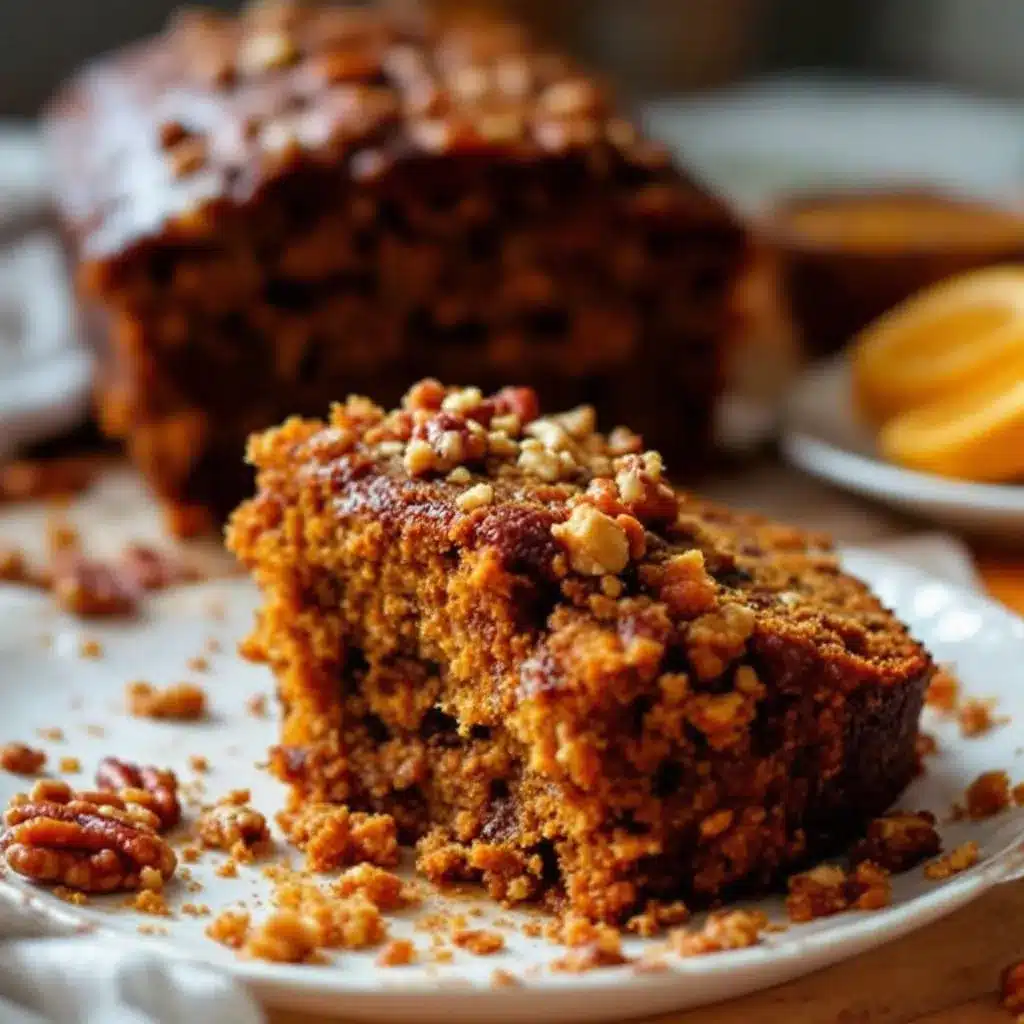
Let’s make some bread. This process is straightforward, but the brown butter step requires your full attention. Don’t walk away. Trust me—I’ve burned butter more times than I want to admit.
- Preheat your oven to 350°F (175°C). Position the rack in the center. Grease your 9×5 loaf pan with butter or nonstick spray, then line it with parchment paper, leaving a 2-inch overhang on the long sides. This makes lifting the bread out effortless.
- Brown the butter. Place the 1 cup (2 sticks) of unsalted butter in a light-colored saucepan over medium heat. Stir occasionally with a rubber spatula. The butter will melt, foam, then start to crackle. After about 5-7 minutes, the foam will subside and you’ll see golden-brown specks forming at the bottom. The butter will smell nutty and toasty. Immediately remove it from the heat and pour it into a heatproof bowl (including all those brown bits—that’s the flavor!). Let it cool for 10 minutes. It should be warm but not hot when you add it to the batter.
- Whisk dry ingredients. In a medium bowl, whisk together 2 cups all-purpose flour, 1 teaspoon baking soda, 1/2 teaspoon baking powder, 1/2 teaspoon salt, and 2 teaspoons pumpkin pie spice. Set aside.
- Mix wet ingredients. In a large bowl, whisk together 1 cup granulated sugar and 1/2 cup packed brown sugar. Add the 2 room-temperature eggs and whisk until smooth and slightly thickened, about 1 minute. Add the 1 cup pumpkin puree, 1/2 cup evaporated milk, 1 teaspoon vanilla extract, and the cooled brown butter (including the brown bits). Whisk until fully combined. The mixture will look glossy and smell incredible.
- Combine wet and dry. Pour the dry ingredients into the wet mixture. Use a rubber spatula to fold gently—just until no streaks of flour remain. A few lumps are okay. Overmixing will make the bread tough. Fold in 3/4 cup of the toasted pecans, reserving the rest for the top.
- Pour into pan. Scrape the batter into the prepared loaf pan. Spread it evenly with the spatula. Sprinkle the remaining 1/4 cup pecans on top, pressing them gently into the batter so they stick.
- Bake. Place the pan in the preheated oven and bake for 55-65 minutes. Start checking at 50 minutes. The bread is done when a wooden skewer inserted into the center comes out clean or with a few moist crumbs (not wet batter). If the top is browning too quickly, tent loosely with foil after 40 minutes.
- Cool. Let the bread cool in the pan on a wire rack for 15 minutes. Then use the parchment sling to lift it out and transfer it to the rack to cool completely. Resist the urge to slice it warm—it will crumble. Wait at least 1 hour. I know it’s hard. It’s worth it.
Cooking Tips & Techniques
I’ve made this bread enough times to know where things can go sideways. Here are the lessons I learned the hard way, so you don’t have to.
Don’t rush the brown butter. The first time I made this, I pulled the butter off the heat too early because I was scared of burning it. The bread was good, but it didn’t have that deep, nutty flavor. Let the butter go until it smells like toasted almonds and has amber specks. If it starts to smell burnt, you’ve gone too far—start over. It’s a 5-minute investment that pays off in flavor.
Measure your flour correctly. This is the most common baking mistake. Scooping flour with the measuring cup packs it in, and you can end up with 30% more flour than the recipe calls for. Spoon the flour into the cup, then level it with a knife. Or use a kitchen scale—250 grams is your target.
Room temperature ingredients matter. Cold eggs and cold milk can seize the brown butter, creating a greasy batter. Leave your eggs and milk on the counter for 30 minutes before starting. If you forgot, place the eggs in warm water for 5 minutes and microwave the milk for 10 seconds.
Don’t overmix. Once you add the flour, stop as soon as it’s combined. Overmixing develops gluten, which makes the bread dense and rubbery. You want a tender crumb, not a hockey puck.
Check for doneness with a thermometer. If you’re unsure about the skewer test, use an instant-read thermometer. The internal temperature should be around 200°F (93°C) when the bread is done. This is especially helpful if you’re baking at high altitude or in a humid climate.
Variations & Adaptations
This recipe is a great base for experimentation. Here are some variations I’ve tried and loved.
- Gluten-Free Version: Swap the all-purpose flour with a 1:1 gluten-free baking blend (I like King Arthur’s). Add 1/4 teaspoon xanthan gum if your blend doesn’t include it. The texture will be slightly more tender, but the flavor is still spot-on.
- Dairy-Free Version: Use a high-quality vegan butter for browning (Miyoko’s works beautifully) and replace the evaporated milk with full-fat coconut milk. The coconut flavor is subtle and complements the pumpkin.
- Chocolate Chip Pumpkin Bread: Fold in 1/2 cup dark chocolate chips along with the pecans. The bitterness of dark chocolate balances the sweetness beautifully. I did this once on a whim and now I can’t go back.
- Spiced Maple Glaze: Whisk 1 cup powdered sugar with 2 tablespoons maple syrup and 1 tablespoon milk (or non-dairy milk). Drizzle over the cooled bread. It adds a lovely sweetness and a pretty finish.
- Nut-Free Option: Skip the pecans entirely, or replace them with pumpkin seeds (pepitas) for a nut-free crunch. Toast the pepitas first for extra flavor.
- Muffins Instead of Loaf: Divide the batter into a 12-cup muffin tin lined with paper liners. Bake at 350°F for 18-22 minutes. Perfect for grab-and-go breakfasts.
Serving & Storage Suggestions
This bread is versatile. Here’s how to serve it and keep it fresh.
Serving: Slice and serve at room temperature. For an extra treat, warm a slice in the microwave for 10 seconds and spread with salted butter or cream cheese. It’s also amazing toasted—pop a slice in a toaster oven until the edges are slightly crisp. Pair it with a cup of coffee or a chai latte for the ultimate fall moment.
Storage: Wrap the cooled bread tightly in plastic wrap or aluminum foil. It will keep at room temperature for up to 3 days. For longer storage, refrigerate for up to a week. The cold actually firms up the crumb nicely, making it easier to slice thinly for toasting.
Freezing: This bread freezes beautifully. Wrap the whole loaf (or individual slices) in plastic wrap, then in foil. Place in a freezer bag and freeze for up to 3 months. To thaw, leave at room temperature for a few hours or microwave a slice for 20-30 seconds. The flavor actually improves after freezing—the spices meld even more.
Flavor development: This bread tastes even better the next day. The brown butter flavor deepens, and the pumpkin spice becomes more pronounced. If you can wait, make it a day ahead and let it rest overnight. Your patience will be rewarded.
Nutritional Information & Benefits
This bread is a treat, but it also has some redeeming qualities. Here’s a rough estimate per slice (assuming 10 slices).
- Calories: ~320
- Fat: 17g (mostly from butter and pecans—healthy fats from the nuts)
- Carbohydrates: 38g
- Fiber: 2g
- Protein: 5g
- Sugar: 22g
Health highlights: Pumpkin is packed with vitamin A (beta-carotene), which supports eye health and immunity. Pecans provide healthy monounsaturated fats, magnesium, and antioxidants. The brown butter adds flavor, so you can use less sugar overall compared to some recipes. If you’re watching your sugar intake, you can reduce the granulated sugar to 3/4 cup without sacrificing texture.
Dietary considerations: This recipe contains gluten, dairy, eggs, and nuts (pecans). See the variations section for substitutions. It’s not low-carb, but it’s a balanced treat when enjoyed in moderation.
Conclusion
This brown butter pumpkin bread with pecans is more than a recipe—it’s a moment. It’s the smell that fills your kitchen on a crisp fall afternoon. It’s the slice you sneak while no one’s looking. It’s the loaf you bring to a friend’s house and watch disappear in minutes. I’ve made it for brunches, for quiet mornings, for “I just need to bake something” evenings. And every time, it delivers.
I’d love to hear how it turns out for you. Did you add chocolate chips? Try it with a maple glaze? Share your version in the comments below—I read every single one. And if you loved it, share it with someone who needs a little comfort. That’s what this bread is for.
Happy baking, friends. May your butter always brown perfectly and your loaf always rise high.
Frequently Asked Questions
Can I use fresh pumpkin instead of canned?
Yes, but you need to roast and puree it first. Make sure to squeeze out excess moisture with a clean kitchen towel or cheesecloth. Fresh pumpkin has more water than canned, so your bread might be denser. I recommend starting with canned for consistent results.
Can I make this recipe without brown butter?
You can, but you’ll lose the signature nutty flavor. If you’re short on time, use melted unsalted butter instead. The bread will still be good, just not as complex. Honestly, the brown butter is what makes this recipe special—it’s worth the extra 5 minutes.
Why did my pumpkin bread sink in the middle?
This usually happens for one of three reasons: the oven temperature was too low (invest in an oven thermometer), the bread was underbaked (use the skewer test or thermometer), or the batter was overmixed (which creates too much gluten and traps air that collapses). Next time, check your oven temp and don’t open the door during baking.
Can I use a different nut instead of pecans?
Absolutely. Walnuts are a great substitute—they have a slightly bitter edge that balances the sweetness. Toasted almonds or hazelnuts also work well. If you’re using hazelnuts, toast and rub off the skins first to avoid bitterness.
How do I know when the brown butter is done?
Watch for three signs: the butter will turn a deep amber color (think of the color of a penny), you’ll see dark specks forming at the bottom of the pan, and it will smell intensely nutty—like toasted hazelnuts or roasted almonds. The process takes about 5-7 minutes over medium heat. Remove it from the heat immediately when you see the specks and smell the nuttiness. If it smells burnt, you’ve gone too far.
Pin This Recipe!
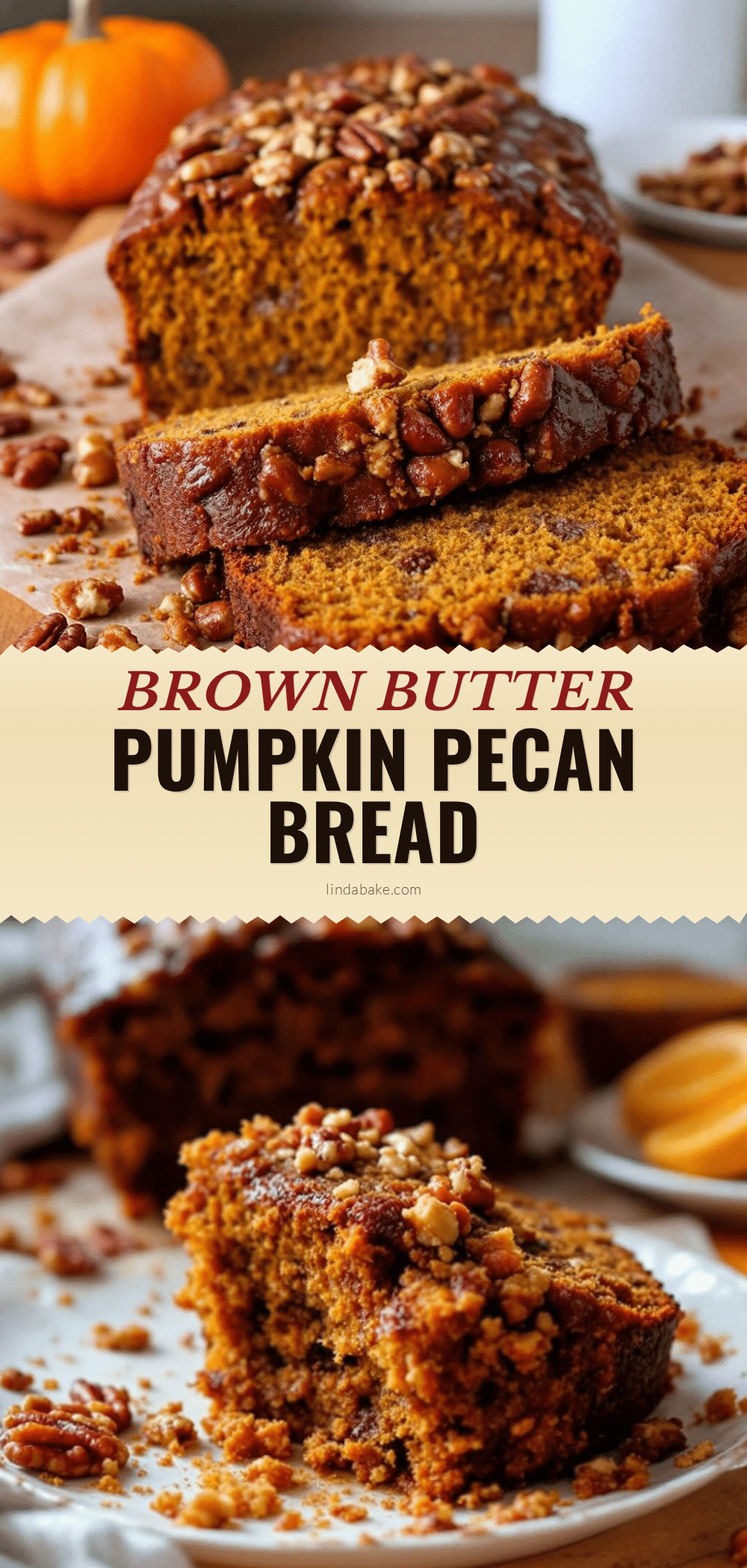
Best Easy Brown Butter Pumpkin Bread with Pecans
This brown butter pumpkin bread with toasted pecans is a fall favorite that’s quick and easy to make. The nutty depth of brown butter transforms simple ingredients into an unforgettable loaf that’s perfect for any occasion.
- Prep Time: 15 minutes
- Cook Time: 55-65 minutes
- Total Time: 1 hour 15 minutes (plus cooling time)
- Yield: 10 servings 1x
- Category: Dessert
- Cuisine: American
Ingredients
- 1 cup (2 sticks) unsalted butter
- 1 cup (240g) canned pumpkin puree (not pumpkin pie filling)
- 1/2 cup (120ml) evaporated milk
- 2 large eggs, room temperature
- 1 cup (200g) granulated sugar
- 1/2 cup (100g) packed brown sugar (light or dark)
- 2 cups (250g) all-purpose flour
- 1 teaspoon baking soda
- 1/2 teaspoon baking powder
- 1/2 teaspoon fine sea salt
- 2 teaspoons pumpkin pie spice
- 1 teaspoon vanilla extract
- 1 cup (120g) chopped pecans, toasted
Instructions
- Preheat oven to 350°F (175°C). Grease a 9×5-inch loaf pan and line with parchment paper, leaving a 2-inch overhang on the long sides.
- Brown the butter: Place 1 cup unsalted butter in a light-colored saucepan over medium heat. Stir occasionally. After 5-7 minutes, the butter will foam, then subside, and golden-brown specks will form. Remove from heat immediately and pour into a heatproof bowl (including the brown bits). Let cool for 10 minutes.
- In a medium bowl, whisk together flour, baking soda, baking powder, salt, and pumpkin pie spice. Set aside.
- In a large bowl, whisk together granulated sugar and brown sugar. Add eggs and whisk until smooth and slightly thickened, about 1 minute. Add pumpkin puree, evaporated milk, vanilla extract, and cooled brown butter. Whisk until fully combined.
- Pour dry ingredients into wet mixture. Fold gently with a rubber spatula until just combined (a few lumps are okay). Fold in 3/4 cup toasted pecans.
- Pour batter into prepared pan. Sprinkle remaining 1/4 cup pecans on top, pressing gently into the batter.
- Bake for 55-65 minutes, until a wooden skewer inserted in the center comes out clean or with a few moist crumbs. If top browns too quickly, tent with foil after 40 minutes.
- Cool in pan on a wire rack for 15 minutes. Use parchment sling to lift bread out and transfer to rack to cool completely (at least 1 hour before slicing).
Notes
Don’t rush the brown butter; let it develop a deep amber color and nutty aroma. Measure flour correctly by spooning and leveling. Use room temperature ingredients for best results. The bread tastes even better the next day.
Nutrition
- Serving Size: 1 slice
- Calories: 320
- Sugar: 22
- Sodium: 280
- Fat: 17
- Saturated Fat: 8
- Carbohydrates: 38
- Fiber: 2
- Protein: 5
Keywords: pumpkin bread, brown butter, pecans, fall baking, easy pumpkin bread, quick bread