Sunday evening, around six, when the kitchen light feels softer than it should and the fridge is full of leftovers that nobody wants to touch. That’s when I started throwing this Fresh Quinoa Avocado Sushi Salad Bowl together. Not out of inspiration, honestly—out of pure stubbornness. I had a block of tofu about to expire, half a cucumber from Tuesday’s lunch, and a sudden craving for sushi that my wallet couldn’t justify.
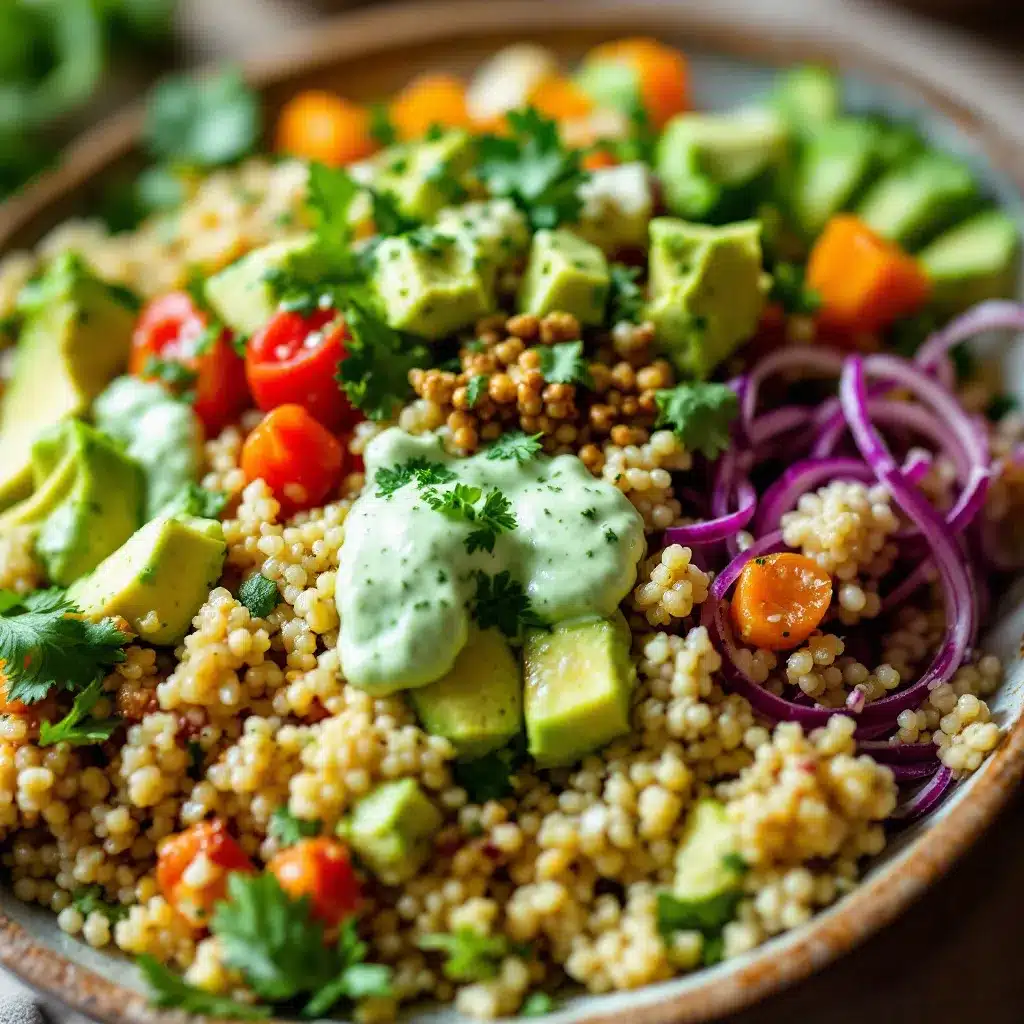
The first attempt was ugly. I mean, really ugly. Brown quinoa clumped with sticky rice vinegar, avocado mashed into a paste because I stirred too hard. But the second time, something clicked. I stopped trying to make it look like a sushi roll and let it be what it wanted to be—a bowl. A pile of textures and flavors that hit every note a California roll hits, but without the rolling mat stress or the rice cooker drama.
This quinoa avocado sushi salad bowl became my Friday night ritual after that. It’s the kind of meal that feels like a treat but takes less than thirty minutes to throw together. No special equipment, no fancy fish sourcing, just a bowl full of things that make you feel like you’re eating something smart. And the best part? It actually tastes better the next day, which is rare for anything with avocado.
I’ve made this for friends who swore they hated quinoa and for sushi purists who raised an eyebrow at the whole concept. Both groups asked for seconds. So trust me when I say—this one’s a keeper.
Why You’ll Love This Recipe
Let’s be real for a second. Most healthy recipes promise the world and deliver a sad plate of steamed broccoli. This quinoa avocado sushi salad bowl is not that recipe. It’s the one that makes you forget you’re eating something good for you because it actually tastes like something you’d order at a trendy little cafe.
- Ready in 25 minutes — From fridge to table faster than delivery, and way cheaper too.
- No rolling required — All the flavors of a sushi roll without the frustration of sticky rice and torn nori sheets.
- Pantry-friendly ingredients — Quinoa, rice vinegar, soy sauce, sesame oil. You probably have most of this already.
- Meal prep superstar — Keeps beautifully in the fridge for up to three days, just add avocado fresh each time.
- Naturally gluten-free and vegan — No one at the table will guess it’s plant-based.
I’ve tested this recipe about a dozen times, tweaking the quinoa-to-veggie ratio, playing with the dressing acidity, even trying it with black rice and brown rice. The version I’m sharing today is the one that got the most “can I have the recipe?” texts from friends. It’s balanced, it’s forgiving, and it’s genuinely satisfying in a way that cold salads rarely are.
There’s something about the way the warm quinoa soaks up that soy-sesame dressing, mingling with the cool cucumber and creamy avocado. It’s comfort food that doesn’t weigh you down. The kind of meal that makes you close your eyes on the first bite, not because it’s fancy, but because it’s exactly right.
What Ingredients You Will Need
This recipe keeps things simple. No obscure ingredients, no trips to specialty stores. Just good, honest components that work together like they were meant to be in the same bowl. Here’s what you’ll need and why each one matters.
For the Salad Base
- 1 cup quinoa, rinsed — I prefer white quinoa for its fluffier texture, but tricolor works beautifully too. Rinsing is non-negotiable; it removes the natural bitterness (saponins) that can make quinoa taste soapy.
- 2 cups water or vegetable broth — Broth adds a subtle savory depth, but water is perfectly fine. I’ve used both and honestly, with the dressing, you won’t notice the difference.
- 1 large ripe avocado, diced — Look for one that gives slightly when you press it, but isn’t mushy. Firm-ripe is the sweet spot.
- 1 cup English cucumber, diced — English cucumbers have thinner skin and fewer seeds. Regular cucumbers work too, just scoop out the seeds first.
- 1 cup shelled edamame, cooked — Frozen edamame, thawed and patted dry, is my go-to. Adds protein and that lovely pop of green.
- 1 medium carrot, julienned or shredded — Adds crunch and a touch of sweetness. I use a julienne peeler because I’m lazy, but a box grater works fine.
- 4 sheets nori, crumbled or cut into strips — This is what gives the bowl that unmistakable sushi flavor. I buy the snack-sized roasted nori sheets and crumble them right over the top.
- 2 green onions, thinly sliced — For a mild oniony bite that cuts through the richness.
- 1 tablespoon black or white sesame seeds — Toasted if you can find them. Adds nuttiness and makes it look professional.
For the Sushi Dressing
- 3 tablespoons rice vinegar — The heart of the sushi flavor. Unseasoned is best so you control the salt level.
- 2 tablespoons tamari or low-sodium soy sauce — Tamari is gluten-free and has a richer flavor. Coconut aminos work too if you’re soy-free.
- 1 tablespoon toasted sesame oil — A little goes a long way. This is where the magic happens.
- 1 tablespoon maple syrup or agave — Just enough sweetness to balance the vinegar and soy. I’ve used honey too, but maple keeps it vegan.
- 1 teaspoon fresh ginger, grated — Microplane is your friend here. Jarred ginger paste works in a pinch, but fresh is noticeably brighter.
- 1 small clove garlic, minced — Optional but recommended. Adds a little punch.
Optional Toppings
- Pickled ginger — The pink stuff that comes with sushi. Adds a bright, palate-cleansing pop.
- Wasabi paste — Mix a little into the dressing or serve on the side for heat seekers.
- Extra firm tofu, cubed and pan-seared — For extra protein. I’ll include a quick method in the variations section.
- Avocado oil spray — For toasting the nori strips if you want extra crispiness.
I usually buy my quinoa from the bulk bin at my local co-op—it’s cheaper and I can get exactly what I need. For the nori, I grab the Kirkland brand roasted seaweed snacks from Costco because they’re affordable and come in a giant bag that lasts forever. Just crumble them with your hands right before serving so they stay crispy.
Equipment Needed
Nothing fancy here. If you’ve got a pot and a knife, you’re pretty much set. But a few specific tools make the process smoother.
- Medium saucepan with tight-fitting lid — For cooking the quinoa. A heavy-bottomed pot prevents scorching.
- Fine-mesh strainer — Essential for rinsing quinoa thoroughly. A colander works but some grains might slip through.
- Sharp chef’s knife — Dicing avocado and cucumber cleanly makes a difference in texture. A dull knife just mashes things.
- Cutting board — Preferably one with a juice groove for the avocado.
- Large mixing bowl — Big enough to toss everything without spilling. I use my grandmother’s old ceramic one.
- Small bowl or jar — For whisking the dressing. A mason jar with a lid works perfectly—just shake it up.
- Microplane or fine grater — For grating ginger and garlic. You can mince them finely with a knife, but the microplane is faster and releases more flavor.
- Measuring cups and spoons — I’m usually an eyeball-it kind of cook, but this dressing benefits from precision the first time.
If you don’t have a microplane, don’t sweat it. Just grate the ginger on the smallest holes of a box grater, or mince it super fine. I went years without one and my ginger was just fine. The first time I used a microplane, though, I felt a little silly for waiting so long.
Preparation Method
Alright, let’s get into it. This comes together faster than you’d think, especially if you multitask a little. Here’s the step-by-step.
Step 1: Cook the Quinoa
Rinse your 1 cup of quinoa in a fine-mesh strainer under cold water for about 30 seconds, rubbing the grains gently with your fingers. This step matters—skip it and you risk bitter quinoa. Trust me, I learned the hard way.
Transfer the rinsed quinoa to your saucepan and add 2 cups of water (or vegetable broth). Bring it to a boil over medium-high heat, then reduce to low, cover, and let it simmer for 15 minutes. Don’t peek! Lifting the lid lets steam escape and messes with the cooking time.
After 15 minutes, turn off the heat but leave the lid on. Let it sit for 5 more minutes. This steam-finishing step makes the quinoa extra fluffy. Fluff with a fork and spread it on a baking sheet to cool for about 10 minutes. Warm quinoa will wilt the cucumber and avocado, so cooling is important.
Step 2: Make the Dressing
While the quinoa cooks, make your dressing. In a small bowl or mason jar, combine 3 tablespoons rice vinegar, 2 tablespoons tamari, 1 tablespoon toasted sesame oil, 1 tablespoon maple syrup, 1 teaspoon grated fresh ginger, and 1 minced garlic clove. Whisk or shake until the maple syrup dissolves completely.
Taste it. It should be tangy, salty, a little sweet, and deeply savory from the sesame oil. If it tastes too sharp, add another splash of maple syrup. If it’s too salty, a teaspoon of water will mellow it out. Set it aside—the flavors will meld while you prep the veggies.
Step 3: Prep the Vegetables
Now for the chopping. Dice your avocado into half-inch cubes and immediately toss it with a teaspoon of the dressing to prevent browning. I learned this trick from a sushi chef friend, and it works better than lemon juice because the vinegar does the same job without competing with the other flavors.
Dice your cucumber into similar-sized pieces. If you’re using an English cucumber, you can leave the skin on—it’s thin and adds color. Julienne or shred your carrot. Thinly slice your green onions, both white and green parts. Crumble your nori sheets into small pieces with your hands, or cut them into thin strips with kitchen scissors.
Step 4: Assemble the Bowl
In your large mixing bowl, combine the cooled quinoa, cucumber, edamame, and carrot. Pour about three-quarters of the dressing over the top and toss gently but thoroughly. You want every grain of quinoa to get some love.
Now, here’s the important part—add the avocado and nori last. Gently fold them in so the avocado stays chunky and the nori stays crispy. If you stir too aggressively, you’ll end up with green mush. I’ve done it. It’s still tasty, but it’s not pretty.
Divide the mixture into serving bowls. Sprinkle with sliced green onions and sesame seeds. Drizzle the remaining dressing over the top. Add pickled ginger and wasabi on the side if you’re using them.
Step 5: Serve Immediately or Store
This bowl is best enjoyed right away while the nori is still crispy and the avocado is perfect. But if you’re meal prepping, here’s the trick—leave the avocado, nori, and dressing off until you’re ready to eat. Store the base quinoa mixture in the fridge, then add fresh avocado, fresh nori, and dressing when you serve it. The base keeps for 3 days easily.
Cooking Tips & Techniques
Over the many times I’ve made this quinoa avocado sushi salad bowl, I’ve collected a few hard-earned lessons. Let me save you some trouble.
Don’t overcook the quinoa. Mushy quinoa ruins the texture of this dish. The grains should be tender but distinct, with a slight chew. If you see a white ring around each grain (the germ), that’s perfect. If the grains are splitting open and looking like porridge, you went too far. Reduce your water next time to 1.75 cups.
Toast your sesame seeds. This is a tiny step that makes a huge difference. Throw them in a dry pan over medium heat for about 2 minutes, shaking frequently, until they’re fragrant and just starting to brown. They’ll taste nuttier and look more appealing. I once forgot to do this and the bowl felt flat. Toasted seeds are non-negotiable now.
Warm quinoa is the enemy of good texture. I know it’s tempting to skip the cooling step, especially when you’re hungry. But warm quinoa will make your avocado mushy and your cucumber soggy. Spread it on a baking sheet and pop it in the fridge for 5 minutes if you’re in a hurry. Your patience will pay off.
Season as you go. Don’t just dump all the dressing on at the end. Toss the quinoa and heartier veggies first, taste, then adjust. I often find I need a little more vinegar or a pinch of salt at this stage. The avocado and nori are delicate, so season the base before they join the party.
Use your hands for the avocado. This sounds weird, I know. But when I’m dicing avocado, I gently feel for the pit with my fingers rather than hacking at it with a knife. It’s safer and you waste less fruit. Plus, you can feel if the avocado is too soft or has brown spots before it goes in the bowl.
One mistake I made early on—I used seasoned rice vinegar thinking it would save a step. It was way too sweet and threw off the whole balance. Stick with unseasoned rice vinegar and control the sweetness yourself. Your taste buds will thank you.
Variations & Adaptations
This recipe is incredibly flexible. Here are some ways I’ve adapted it for different moods, diets, and what’s in my fridge.
Protein-Packed Version
Add pan-seared tofu for a heartier meal. Press a block of extra-firm tofu for 15 minutes, cube it, and toss with a tablespoon of tamari and a teaspoon of sesame oil. Pan-fry in a non-stick skillet over medium-high heat for about 8 minutes, turning occasionally, until golden and crispy on all sides. Fold into the bowl with the avocado. I’ve also used canned chickpeas in a pinch—drained, patted dry, and tossed in the same dressing. Both work great.
Low-Carb / Keto Adaptation
Swap the quinoa for riced cauliflower. Cook it in a dry skillet over medium heat for about 5 minutes until tender, then let it cool completely. The rest of the recipe stays the same. It’s lighter but still satisfying, and the dressing does wonders for the cauliflower. I’ve made this for a friend who does keto and she asked for the recipe twice.
Spicy Mayo Drizzle
Mix 2 tablespoons of vegan mayo with 1 tablespoon of sriracha and a squeeze of lime. Drizzle it over the finished bowl for a creamy, spicy kick. This is my personal favorite variation and the one I make most often. It adds richness that balances the tangy dressing beautifully.
Warm Bowl Version
If you’re making this in winter and cold salad doesn’t appeal, serve the quinoa warm and skip the cucumber. Add steamed broccoli or roasted sweet potato instead. The warm quinoa soaks up the dressing even more intensely, and it feels like a completely different dish—cozier, more comforting.
Sushi Roll Wraps
If you have the patience, use the mixture as a filling for nori wraps. Lay a nori sheet shiny side down, add a strip of the quinoa mixture, roll tightly, and slice into pieces. It’s more work, but it’s fun for a sushi night with friends. I did this for a dinner party once and everyone loved the interactive element.
Serving & Storage Suggestions
This quinoa avocado sushi salad bowl is versatile enough for lunch, dinner, or even a fancy picnic. Here’s how to make the most of it.
Serving temperature: I prefer this bowl at room temperature or slightly chilled. If it’s straight from the fridge, let it sit on the counter for 10 minutes before serving. Cold dulls the flavors, especially the sesame oil and ginger.
Presentation ideas: Serve in wide, shallow bowls so you can see all the colorful layers. Arrange the avocado and nori on top rather than mixing them in completely. A sprinkle of sesame seeds and a pile of pickled ginger on the side makes it look like it came from a restaurant. I sometimes add a few cucumber ribbons made with a vegetable peeler for extra visual appeal.
What to serve alongside: Miso soup is the obvious companion, and it’s a classic for a reason. A simple cucumber salad with rice vinegar and a pinch of sugar works too. For drinks, cold sake or a crisp green tea (hot or iced) complements the flavors perfectly. If you’re feeling indulgent, serve with a side of edamame dusted with sea salt.
Storage instructions: Store the base quinoa mixture (without avocado, nori, and dressing) in an airtight container in the fridge for up to 3 days. Keep the dressing in a separate small jar. When you’re ready to eat, add fresh avocado, fresh nori, and the dressing. The avocado will brown if stored with the salad, so this separation is crucial.
Reheating: This is a cold or room temperature dish, so reheating isn’t really the goal. But if you prefer it warm, microwave the base quinoa mixture for 30-45 seconds, then add the cold avocado and nori. The contrast of warm quinoa and cool avocado is actually quite nice.
How flavors develop: The quinoa mixture actually gets better after a day in the fridge as the dressing soaks in. The flavors meld and deepen. If you’re meal prepping, make the base a day ahead—just save the fresh elements for serving. I’ve eaten this on day three and it was still delicious, though the texture of the quinoa softens slightly over time.
Nutritional Information & Benefits
Let’s talk about why this bowl is good for you, because it’s not just about the taste. Per serving (based on 4 servings), here’s the approximate breakdown.
| Nutrient | Amount Per Serving |
|---|---|
| Calories | 385 |
| Protein | 14g |
| Fat | 18g (mostly healthy fats from avocado and sesame) |
| Carbohydrates | 44g |
| Fiber | 10g |
| Sugar | 6g (naturally occurring) |
| Sodium | 520mg (varies with tamari) |
Quinoa is a complete protein, meaning it contains all nine essential amino acids. That’s rare for a plant food. It’s also high in fiber, magnesium, and iron. The avocado provides heart-healthy monounsaturated fats and potassium—actually more potassium than a banana, gram for gram.
The nori is packed with iodine, which supports thyroid function, and the edamame adds even more protein and fiber. This bowl is naturally gluten-free, dairy-free, and vegan. The only potential allergen is soy (from the tamari), but you can swap in coconut aminos if needed.
From a wellness perspective, this is the kind of meal that leaves you feeling energized, not sluggish. It’s substantial enough to be a main dish but light enough that you won’t need a nap afterward. I usually have it for lunch on days when I need to focus in the afternoon, and it never lets me down.
Conclusion
This quinoa avocado sushi salad bowl has earned a permanent spot in my weekly rotation. It’s one of those rare recipes that checks every box—quick, healthy, budget-friendly, and genuinely delicious. No compromises, no sad healthy-food vibes.
I love that it’s forgiving. You can swap ingredients based on what’s in your fridge, adjust the dressing to your taste, and it still comes together beautifully. It’s become my go-to for busy weeknights, lazy Sundays, and everything in between. Every time I make it, I’m reminded that good food doesn’t have to be complicated.
I’d love to hear how yours turns out. Did you add something unexpected? Did you try the spicy mayo drizzle? Drop a comment below and let me know. And if you share it on social media, tag me—I want to see your beautiful bowls. Happy cooking, friends.
Frequently Asked Questions
Can I use brown rice instead of quinoa?
Absolutely. Brown rice works great, though the cooking time is longer (about 40 minutes). For a quicker option, use pre-cooked brown rice from the freezer section. The texture will be slightly different but still delicious. Just make sure to cool it before assembling the bowl.
How do I keep the avocado from turning brown?
Toss the diced avocado in a small amount of the rice vinegar dressing immediately after cutting. The acidity slows down oxidation. If you’re meal prepping, store the avocado separately and add it fresh when serving. A squeeze of lime juice works too, but the dressing is more flavorful.
Is this recipe gluten-free?
Yes, as long as you use tamari or certified gluten-free soy sauce. Traditional soy sauce contains wheat, so check the label. Coconut aminos are another great gluten-free option that adds a slightly sweeter flavor. Everything else in the recipe is naturally gluten-free.
Can I make this ahead for a party?
Yes, with some planning. Make the quinoa base and dressing up to 2 days ahead and store them separately. On the day of your party, prep the vegetables and avocado, crumble the nori, and assemble everything just before serving. This way, the avocado stays green and the nori stays crispy.
What can I use instead of edamame?
Shelled edamame adds protein and color, but you can substitute cooked chickpeas, frozen peas (thawed), or even diced steamed broccoli. If you’re not worried about keeping it vegan, flaked smoked salmon or canned tuna are delicious options that lean into the sushi theme even more.
Pin This Recipe!
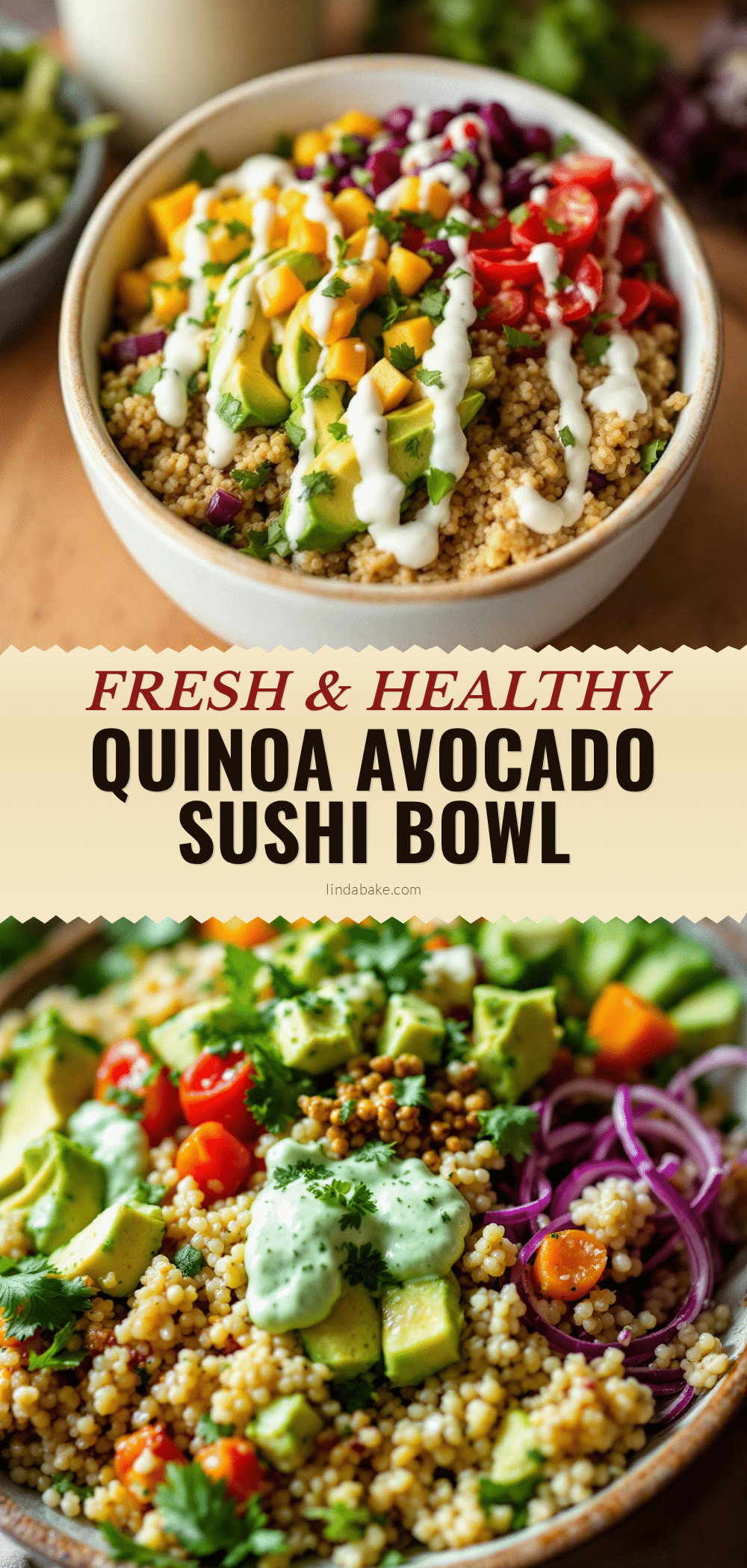
Fresh Quinoa Avocado Sushi Salad Bowl Easy Recipe
A quick and healthy sushi-inspired salad bowl made with quinoa, avocado, cucumber, edamame, and a tangy soy-sesame dressing. Ready in 25 minutes, no rolling required, and perfect for meal prep.
- Prep Time: 10 minutes
- Cook Time: 15 minutes
- Total Time: 25 minutes
- Yield: 4 servings 1x
- Category: Main Course
- Cuisine: Japanese-inspired
Ingredients
- 1 cup quinoa, rinsed
- 2 cups water or vegetable broth
- 1 large ripe avocado, diced
- 1 cup English cucumber, diced
- 1 cup shelled edamame, cooked
- 1 medium carrot, julienned or shredded
- 4 sheets nori, crumbled or cut into strips
- 2 green onions, thinly sliced
- 1 tablespoon black or white sesame seeds
- 3 tablespoons rice vinegar (unseasoned)
- 2 tablespoons tamari or low-sodium soy sauce
- 1 tablespoon toasted sesame oil
- 1 tablespoon maple syrup or agave
- 1 teaspoon fresh ginger, grated
- 1 small clove garlic, minced
- Pickled ginger (optional)
- Wasabi paste (optional)
- Extra firm tofu, cubed and pan-seared (optional)
- Avocado oil spray (optional)
Instructions
- Rinse 1 cup quinoa in a fine-mesh strainer under cold water for 30 seconds. Transfer to a saucepan with 2 cups water or vegetable broth. Bring to a boil, reduce heat to low, cover, and simmer for 15 minutes. Do not lift the lid. Turn off heat and let sit covered for 5 minutes. Fluff with a fork and spread on a baking sheet to cool for 10 minutes.
- While quinoa cooks, make the dressing: In a small bowl or mason jar, combine 3 tablespoons rice vinegar, 2 tablespoons tamari, 1 tablespoon toasted sesame oil, 1 tablespoon maple syrup, 1 teaspoon grated ginger, and 1 minced garlic clove. Whisk or shake until dissolved. Taste and adjust sweetness or saltiness as needed.
- Dice avocado into 1/2-inch cubes and toss with 1 teaspoon of dressing to prevent browning. Dice cucumber into similar-sized pieces. Julienne or shred carrot. Thinly slice green onions. Crumble nori sheets into small pieces or cut into thin strips.
- In a large mixing bowl, combine cooled quinoa, cucumber, edamame, and carrot. Pour about three-quarters of the dressing over the top and toss gently to coat evenly.
- Gently fold in avocado and nori last to keep avocado chunky and nori crispy. Divide into serving bowls. Sprinkle with sliced green onions and sesame seeds. Drizzle remaining dressing on top. Add pickled ginger and wasabi on the side if desired.
- Serve immediately for best texture. For meal prep, store base quinoa mixture (without avocado, nori, and dressing) in the fridge for up to 3 days. Add fresh avocado, nori, and dressing when serving.
Notes
Cool quinoa completely before assembling to prevent avocado from becoming mushy and cucumber from getting soggy. For meal prep, store avocado, nori, and dressing separately and add fresh when serving. The quinoa base keeps for up to 3 days in the fridge.
Nutrition
- Serving Size: 1 bowl (about 2 cups
- Calories: 385
- Sugar: 6
- Sodium: 520
- Fat: 18
- Saturated Fat: 2.5
- Carbohydrates: 44
- Fiber: 10
- Protein: 14
Keywords: quinoa sushi bowl, avocado salad, vegan sushi bowl, gluten-free meal prep, healthy bowl recipe